

Interactions and the Cosmos
Astrophotography is frequently approached as an effort to capture isolated targets across a void: faint nebulae, distant star clusters, or sweeping galactic arms framed against a backdrop of empty space. Yet when we examine these cosmic structures through the dual lens of modern physics and philosophical inquiry, the illusion of separation dissolves.
We do not stand outside the universe looking in; we are physical systems embedded within a continuous web of interactions. The following five principles outline this shared framework, synthesizing empirical astrophysics, relational mechanics, evolutionary continuity, and deep-space imaging into, from my perspective, a unified view of reality.
1. Reality is Built of Relationships, Not Isolated Things
Nothing in the universe possesses absolute, independent existence. Physical properties, quantum states, and macro-structures exist entirely through their relations with one another. Space-time itself is not a fundamental, static stage upon which the universe unfolds, but an emergent property born out of deeper quantum interactions and relational networks—a reality where the net velocity of our Earth and the fabric of distance and duration are relative illusions, as explored in Speeding Through an Illusion: Earth’s Velocity and the Fabric of Spacetime.
When we image deep-space nebulae, the tendrils of gas and dust we see are nodes in an ongoing physical dialogue, mirroring biological patterns on Earth like neural networks, branching blood vessels, and river deltas, as examined in The Living Tapestry: How Deep Space Nebulae Mirror Life on Earth. This structural echoing reveals that biology is not a strange anomaly dropped onto a dead rock; it is an extension of the same relational geometry that sculpts interstellar clouds. At the level of human affairs, our social fabrics, communities, and cultures are governed by this same type of connection, where individual human isolation is as physically impossible as a star existing independently of its interstellar medium.
This relational fabric is laid bare by the nature of light itself. As discussed in The Photonic Handshake: Why the Silver Sliver Galaxy is Touching Your Camera Sensor, a photon bridges an astronomical distance, yet its reality depends entirely on a frame of reference: from our perspective, it traverses millions of years of space-time; but from the photon’s own frame of reference, zero time elapses and distance collapses entirely. That flash of ancient starlight only completes its identity when it makes physical contact with the silicon pixels of our sensor today, binding past and present into a single relational event.

Inverted monochrome image of interstellar Dust Tendrils in Western Veil and Pickering’s Triangle of the Cygnus Veil Complex (NGC 6960 and NGC 6979): The filaments highlight structural interconnectedness, demonstrating that individual strands have no meaning apart from the wider, continuous network they form.
2. We Are at Home in the Universe, Not Alien Spectators
Humanity is not a foreign visitor cast into a wilderness; we are born of the exact same physical laws and material constituents that shape deep space. Geographic borders, national divisions, and tribal silos are merely local, earthbound artifacts of short-sighted historical conditioning.
As examined in Islands of Light: Mapping the Deep Sky, and The Living Tapestry: How Deep Space Nebulae Mirror Life on Earth, the act of imaging the night sky across multiple hemispheres forces a recalibration of scale. Looking out into the cosmos strips away artificial boundaries, revealing a togetherness rooted in physical reality. Just as interstellar clouds are knit together by shared gravitational and chemical ties, human societies are bound by an unbroken evolutionary lineage. Recognizing that every living organism on Earth shares stardust origins provides a concrete foundation for human unity.
This internal kinship extends far beyond shared stardust; it is written directly into our biological architecture. At every level, life is not a collection of isolated, autonomous individuals, but a profound expression of symbiosis. Microcellular organisms and microscopic communities drive macrocellular complexity, revealing that humans and all living things are not unified, singular beings, but complex ecosystems. Zooming into our own genetic code uncovers a swarming, cooperative mega-city of microscopic genetic hitchhikers—primarily ancient viruses and mobile elements—that work together across deep time, sharing the same path to the future. This biological reality mirrors our place in the cosmos: just as a nebula is a collaborative interplay of gas, dust, and radiation, human togetherness is born of countless intertwined threads, dissolving the illusion of isolated individuality both within our bodies and across our societies. The challenges facing our global community—migration, ecological sustainability, and cultural fragmentation—are best navigated when we view ourselves not as competing factions on a fractured stage, but as a singular planetary species coming to self-awareness under a common sky.
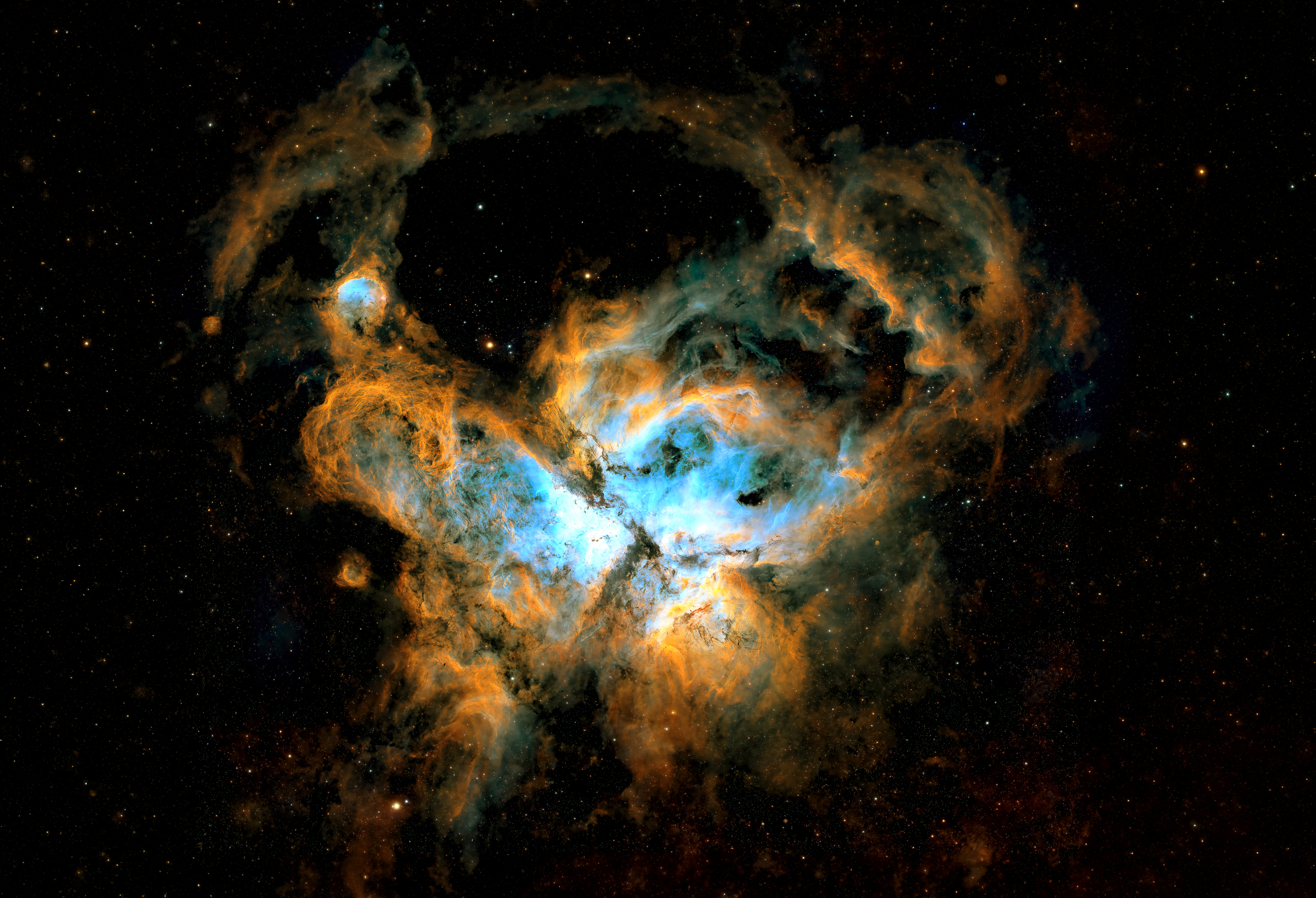
The Eta Carinae Nebula (NGC 3372): Serving as a luminous anchor of the southern sky, Carina reminds us of a vast, borderless continuum that belongs equally to all observers on Earth. (Image expanded with Adobe Photoshop; see Collection: Carina Nebula Complex for unadjusted images.
3. Physical Laws Are Multiple Lenses, Not a Single Final Dogma
No single framework—whether strictly empirical, mathematical, or dogmatic—can exhaustively capture the totality of reality. Physical laws are diverse, powerful windows, but they are part of a broader, pluralistic landscape of human experience.
In The Cosmic Free Lunch: Why the Universe Adds Up to Zero, we explore how total energy and mass balances can mathematically cancel out, revealing a universe that is far more self-contained and paradoxical than naive intuition suggests. Furthermore, in Decoding the Nebula: The Science of Narrowband Filters, isolating precise ionization lines demonstrates that measuring the universe involves translating multiple overlapping layers of physical reality into human awareness.
This pluralism demands multiple modes of inquiry. As reflected in The Fractured Cosmos and the Human Crisis: Reflections on Astronomy, History, and Literature, navigating the complexities of human existence requires balancing hard scientific measurement with insights of history, literature, and philosophy. Just as biological ecosystems thrive on biodiversity rather than monoculture, human affairs require diverse perspectives and intellectual humility. Embracing these multiple lenses prevents ideological dogmatism and allows human societies to adapt collaboratively to complex global challenges.
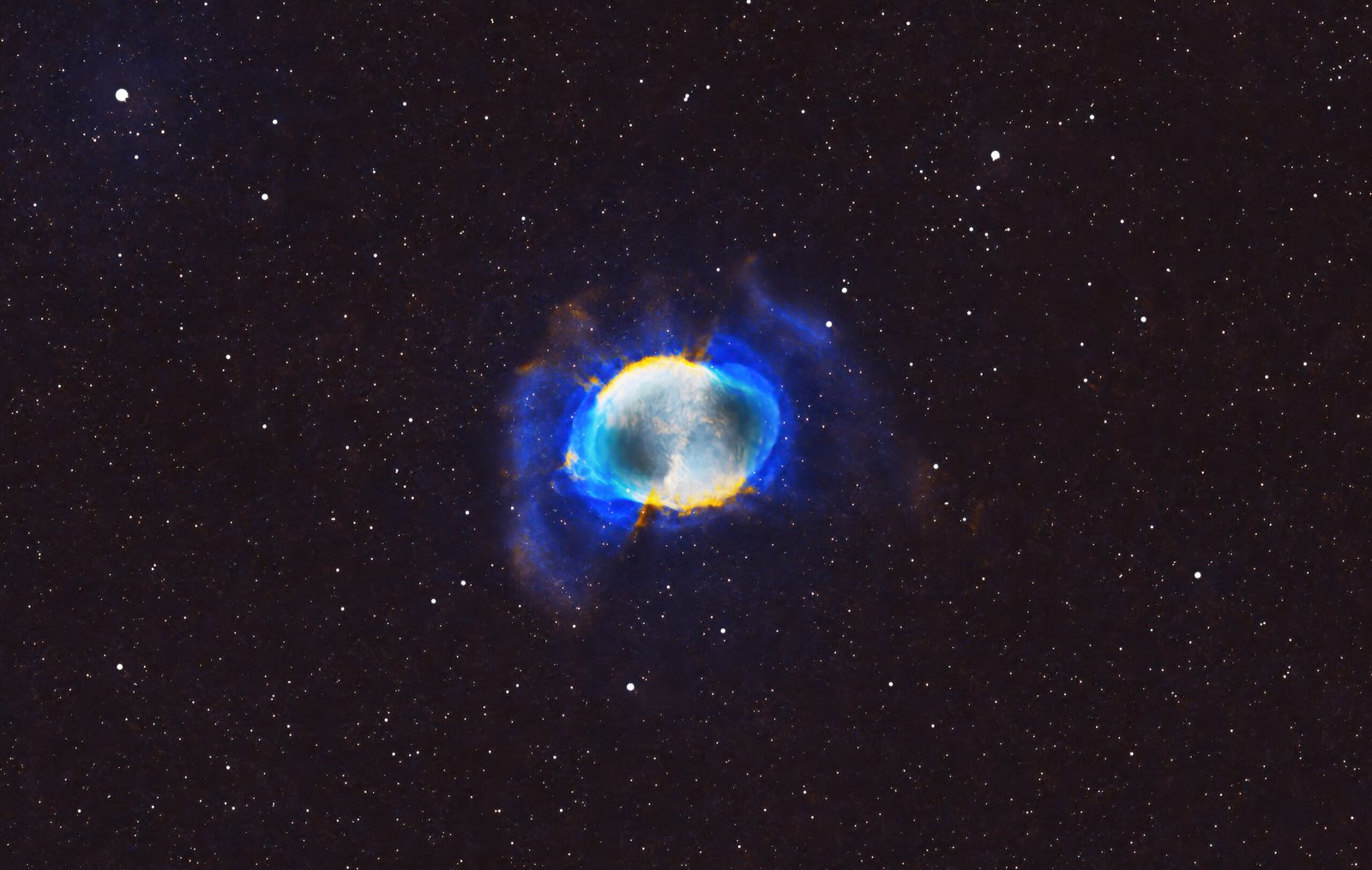
The Dumbbell Nebula (Messier 27): High-dynamic-range balancing of M27’s core and outer filaments illustrates how multiple exposures and processing perspectives must be synthesized to reveal the true underlying geometry of a complex object.
4. Radical Uncertainty is the Engine of Understanding
True insight begins not with absolute certainty, but with an honest embrace of what we do not know. Dogmatic rigidity closes off inquiry, whereas opening ourselves to ambiguity and the unknown drives both scientific and philosophical progress.
In Astro-Odyssey: Retracing Odysseus’s Voyage Through the Cosmos, navigation requires confronting the unknown, charting paths through shifting waters much like humanity uses the deep sky to map its conceptual limits. This spirit of open-ended exploration is mirrored in The Approach: Palettes of Spacetime, where processing complex images like the Pillars of Creation demands a comfort with interpretive choices rather than rigid, absolute formulas.
Underpinning both cosmic evolution and intellectual growth is a continuous engine of change driven by the foundational principles of variation, selective retention, and cumulative adaptation. As explored in Cosmic Nurseries and the Biological Ledger, reality does not blueprint a static future; it experiments endlessly through generative variation, filtering outcomes against the ledger of physical and environmental constraints, and retaining structures that achieve functional harmony. In human affairs, accepting this dynamic uncertainty is vital for social progress. It liberates us from rigid historical grievances and fixed dogmas, encouraging societies to remain flexible, curious, and resilient in the face of an unpredictable future.
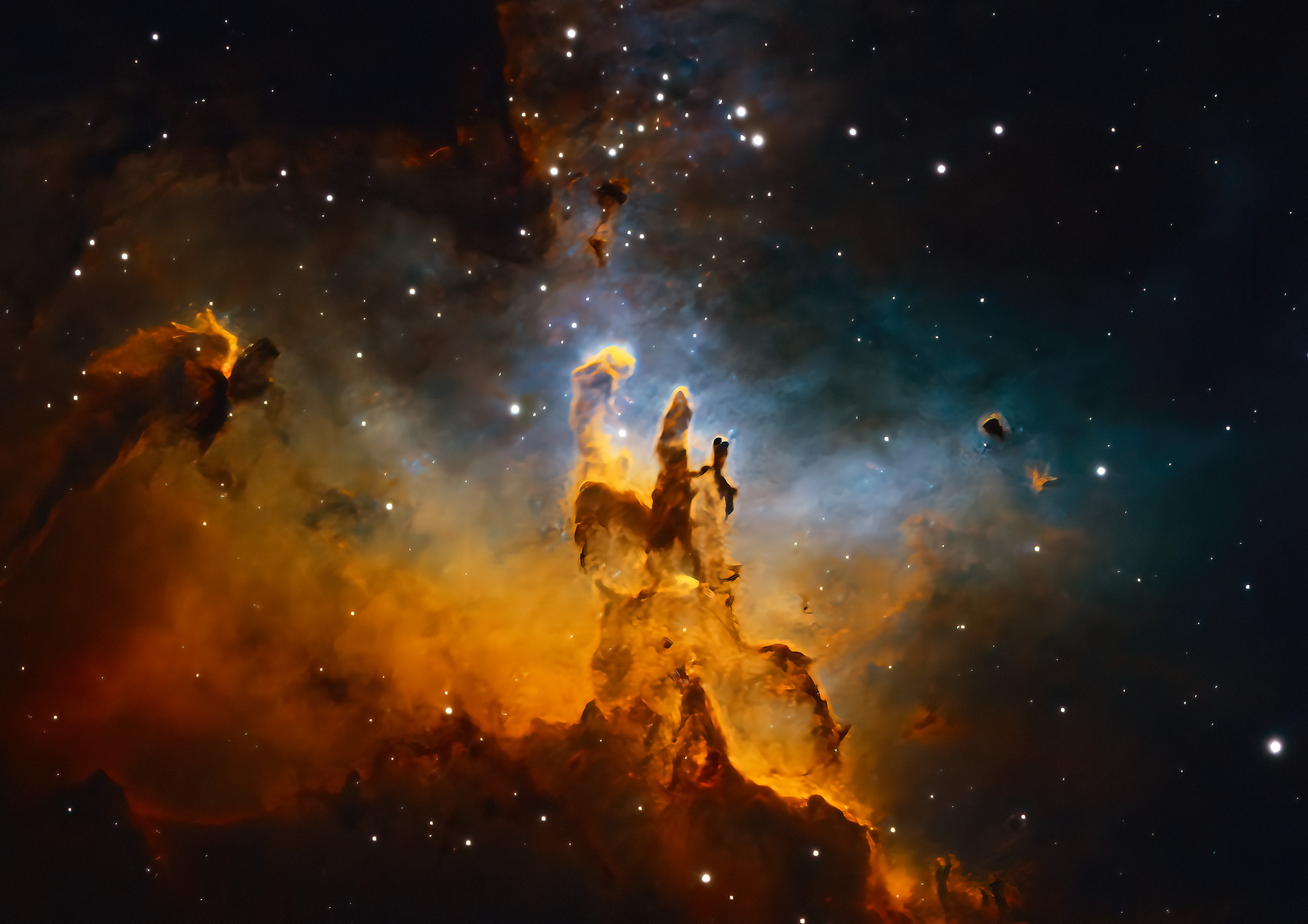
Pillars of Creation, Eagle Nebula (Messier 16): An iconic subject of active formation, M16 embodies the mysteries of stellar birth where exact physical mechanisms continue to unfold beyond our final grasp.
5. Change and Impermanence Are Generative, Not Destructive
Cosmic systems are defined by perpetual motion, transformation, and flux, where creation and destruction are co-dependent phases of a single, continuous process rather than absolute endings. Supernova remnants and active starburst regions eject heavy elements across the interstellar medium, actively seeding the next generation of solar systems.
As highlighted in Cosmic Cradles: The Science, Formation, and Evolution of Diffuse Emission Nebulae, Cosmic Mirrors: What Deep Space Teaches Us About Hope, Sustainability, and Overcoming Fear, and Leaving Argentina, destruction is not the final word in the cosmos. Deep space teaches us how to move past existential fear and paralysis, reframing the dissolution of structures not as a catastrophe, but as a catalyst for hope, renewal, and long-term sustainability. Endings are foundational preconditions for the birth of new systems. Whether navigating geographic relocations, changing planetary horizons, or observing stellar life cycles, impermanence is a vital, generative mechanism of systemic evolution.
This cosmic rhythm is mirrored directly in biological life and human history. Cellular death makes multicellular life possible; ecological succession turns burned forests into nutrient-rich soil; and cultural evolution requires the dissolution of outdated systems to give birth to new forms of human cooperation. Embracing impermanence allows us to face personal transitions and societal shifts not with despair, but with the recognition that renewal is built into the architecture of existence.
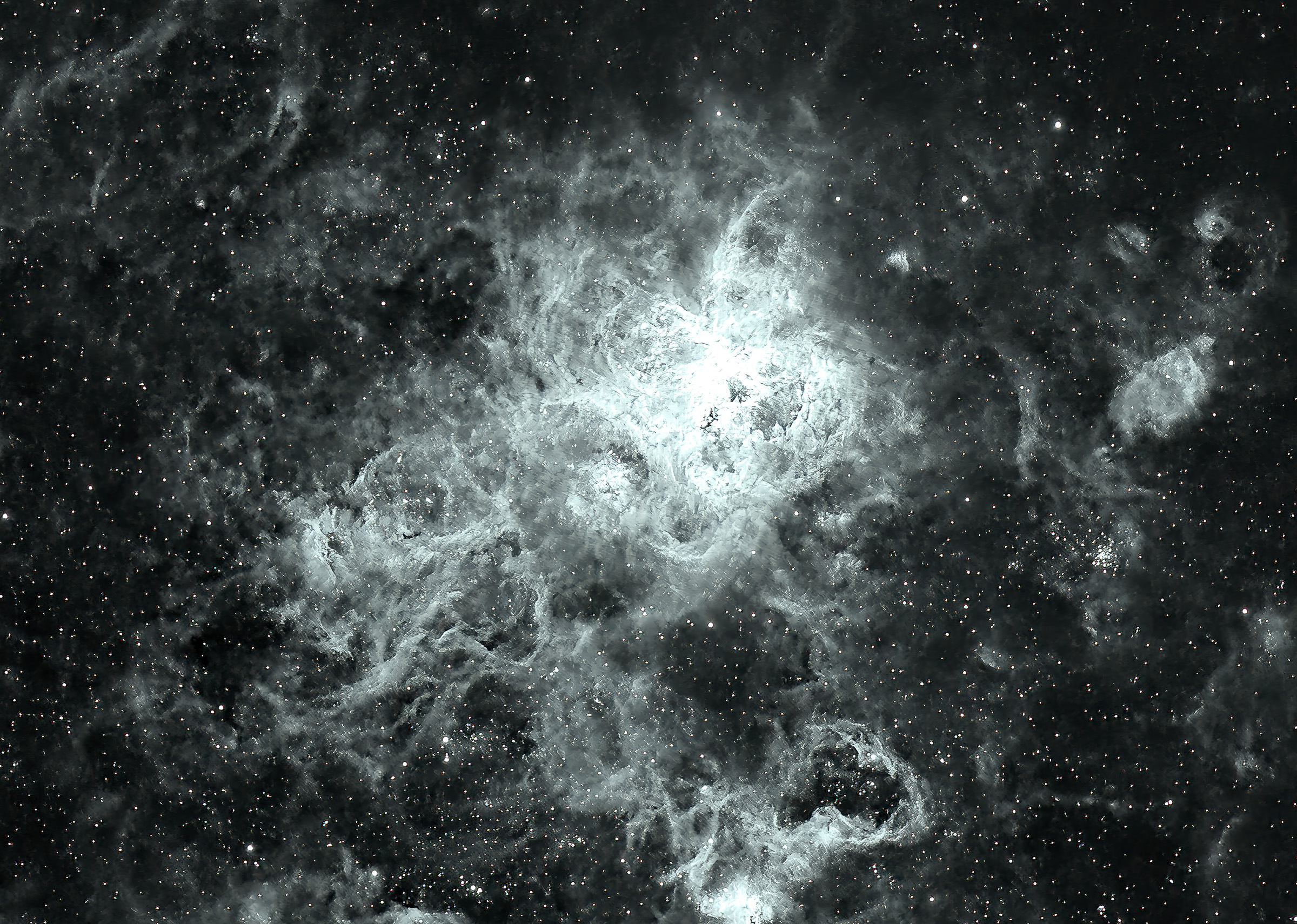
Tarantula Nebula (NGC 2070): As the most active starburst region in our cosmic neighborhood, the Tarantula Nebula vividly captures the violent, brilliant intersection of stellar destruction and explosive new birth.
A View from Home: Astrophotography for All
Astrophotography is ultimately a mirror. When we look into the night sky, tracing the delicate shockwaves of a supernova remnant or mapping the faint glow of what to us are ancient photons, we are not gazing into an empty, alien void. We are peering into our own deep history, observing the exact relational mechanics, evolutionary continuity, and physical laws that make life, consciousness, and human connection possible on Earth.
The architecture of light reminds us that we are neither isolated spectators nor fragile accidents present in a hostile universe. We are an active, living expression of a continuous cosmos: bound together by stardust, shaped by impermanence, and fundamentally at home under a single, shared sky.
In this light, the lens of the telescope becomes an equalizer. Just as ancient philosophy sought to make wisdom accessible to all in the public square, imaging the cosmos belongs to everyone, regardless of background, borders, or beliefs. As Diogenes of Oenoanda wrote some two thousand years ago:
while the various segments of the earth give different people a different country, the whole compass of this world gives all people a single country, the entire earth, and a single home, the world