
Sharing and unbroken physical history.....
Look closely at an astrophotograph of an interstellar cloud. You will see tendrils of cosmic dust branching out like the neural pathways of a brain, the intricate veins of a leaf, or the mycelial root networks hiding beneath a forest floor.
This visual similarity is not a coincidence.
When we photograph nebulae, we are capturing the literal, chaotic womb of our planet’s biosphere. These celestial structures demonstrate that all living things on Earth—humans, animals, forests, and microscopic organisms alike—share a single, unbroken physical history.
1. Re-thinking “Survival of the Fittest”
For centuries, we have been told that life on Earth is defined entirely by cold competition and isolation. But modern science is revealing a much different story. In his book Togetherness, for example, evolutionary biologist Rowan Hooper challenges the hyper-competitive narrative, showing that the natural world is actually forged and sustained by small miracles of co-operation. As Hooper notes:
“We are symbiotic creatures at the deepest level of our cells.”
When we look through our telescopes, we see that this rule of togetherness isn’t just an earthly biological phenomenon—it is a foundational cosmic law. Every heavy element that makes up our diverse biosphere was cooked in the cores of ancient stars and mixed in interstellar nurseries. The whale in the ocean, the moss on a damp rock, and the astronomer adjusting an equatorial mount are all made of the exact same recycled stardust. We are not separate entities placed onto a planet; we are an extension of the planet itself.
2. The Galaxy as a Living Organism
This deep interconnectivity bridges the gap between astrophysics and earth sciences, echoing James Lovelock’s groundbreaking Gaia Hypothesis, which views the Earth as a complex, self-regulating entity where living and non-living systems tightly interact.
Nebulae function on a macro-cosmic scale exactly like Lovelock’s Gaia. They are cosmic ecosystems. Shockwaves from dying stars compress gas to trigger the birth of new ones, which in turn illuminate and energize the surrounding dust. Matter is constantly recycled, moving smoothly from death to birth.
3. Cosmic Mirrors: Connecting the Sky to the Biosphere
By capturing targets on astroanderson.com beyond the usual showpieces, we can see specific biological designs repeated perfectly across light-years of empty space:
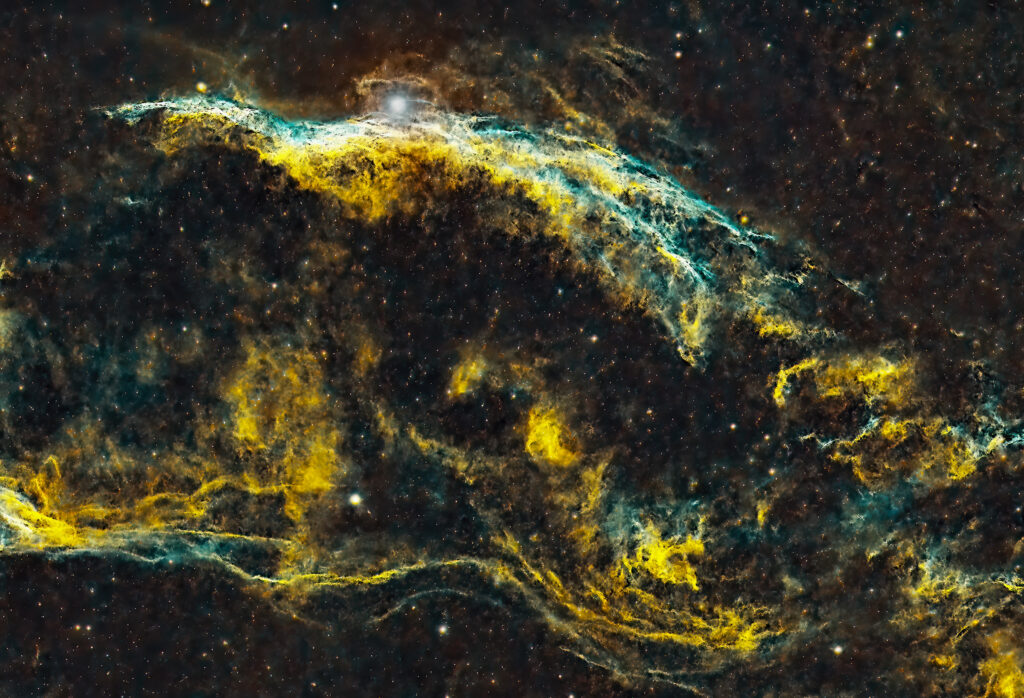
Target: The Western Veil Nebula (NGC 6960)
Celestial Phenomenon: Ripped filaments of a supernova remnant expanding through space.
Biological Mirror: The Cycle of Decay: Perfectly mirrors the decomposition of an autumn forest, where decay distributes vital nutrients to feed future generations.
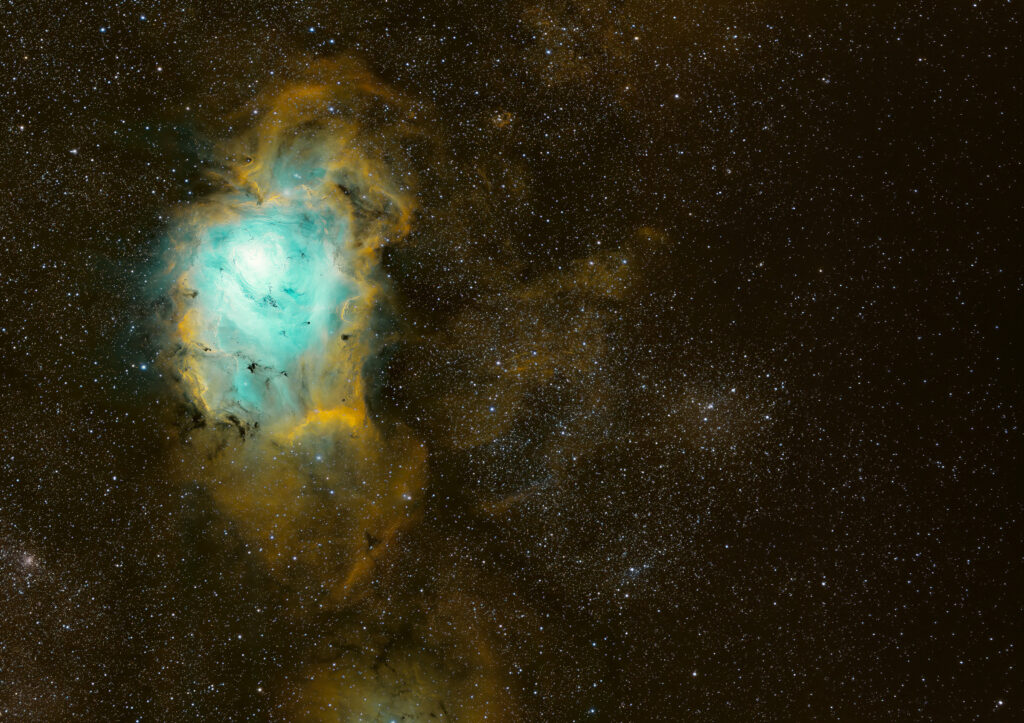
Target: The Lagoon Nebula (M8)
Celestial Phenomenon: Dark, dense twisting lanes of interstellar dust blocking background starlight.
Biological Mirror: The Protected Womb: Functions like soil or deep marine trenches, providing an insulated, nutrient-dense environment where new seeds of life can germinate safely.
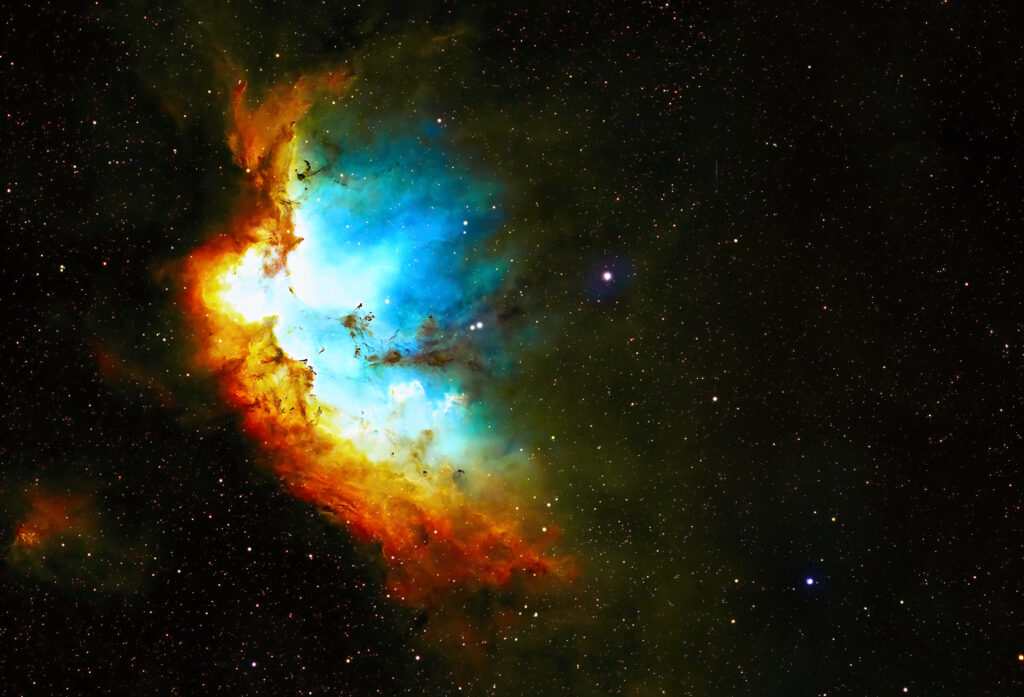
Target: The Wizard Nebula (NGC 7380)
Celestial Phenomenon: Active star-forming gas structures shaped and ionized by stellar winds.
Biological Mirror: Symbiotic Collaboration: Miracles of co-operation mimicking a coral reef, where massive cosmic forces interact dynamically to cultivate a thriving habitat.
Conclusion: One Biosphere under One Sky
Every time we stack and process a deep-sky image, we are not looking away from home; we are looking at the extended family portrait of Earth’s entire biosphere.
The universe is a story of integration, not isolation. By sharing these images, we provide a vital visual anchor to remind us that life is a collaborative masterpiece. Beneath the vast cosmic sky, we are all bound together by a beautiful, shared inheritance.