At its core, pareidolia is a neuro-cognitive phenomenon wherein the brain’s visual processing system misinterprets ambiguous sensory stimuli as distinct, recognizable patterns. Derived from the Greek words para (faulty) and eidolon (image), it occurs when the brain over-interprets random environmental data, constructing highly organized visual concepts—such as faces or animals—where none structurally exist.
The Evolutionary Blueprint: Hyper-Averaging and Threat Detection
Our susceptibility to pareidolia is an evolutionary byproduct of the human brain’s specialized architecture for survival. Neuroscientists trace this phenomenon to the fusiform face area, a region of the visual cortex hyper-optimized to detect facial structures in milliseconds.
From an evolutionary perspective, our ancestors operated under a high-stakes, asymmetric survival protocol. Misidentifying an inanimate object as a hidden predator carried a negligible metabolic cost. Conversely, failing to detect a real threat hidden in visual noise was fatal. Consequently, natural selection favored a hyper-sensitive pattern-recognition system. Today, this ancient survival mechanism remains active, projecting familiar biological structures onto entirely non-living environments.
Neurological and Genetic Variation in Visual Perception
Because pareidolia relies on the complex interplay between sensory input and cognitive decoding, the experience is profoundly subjective and varies significantly among individuals.
This variance is driven not only by personal memories and cultural environments, but also by inherent genetic variations in neural wiring. Individual differences in the density of synaptic connections within the visual cortex, as well as distinct neurochemical pathways, directly dictate how aggressively a brain filters noise to create order. As a result, two observers looking at the exact same visual data will experience entirely different cognitive outputs. One may perceive a highly detailed anatomical profile, while another, due to distinct genetic and neural configurations, perceives only structural chaos.
Where Neural Mechanisms Meet Cosmic Structure
Vast astrophotographical data sets—comprising the chaotic interstellar gas, cosmic dust lanes, and ionized plasmas of nebulae and galaxies across the northern and southern hemispheres—provide the ultimate environment for this neuro-cognitive interplay. These celestial structures span light-years, shaped entirely by fluid dynamics, stellar winds, and gravitational forces.
When we observe these deep-sky objects, our ancient, hardwired neural machinery immediately attempts to categorize the cosmic scale. The chaotic distribution of light and shadow triggers our survival-driven pattern-matching algorithms. This collection explores that exact boundary: where the physics of the deep universe intersects with the biological evolution of human sight, inviting our brains to map our own unique evolutionary and genetic blueprint onto the nebulae.
Curating the Pareidolia Collection: Parameters of the Search
This collection pesents an experiment in visual interpretation. Unlike standard astronomical catalogs that categorize deep-sky objects by their coordinates or structural classifications, the Pareidolia Collection focuses on the cognitive boundaries of human sight. Curatorial boundaries have been applied to the selection of the images.
1. Exclusion of Canonically Named Nebulae
Many deep-sky targets have already been permanently stamped by collective pareidolia. Iconic structures like the Statue of Liberty Nebula (NGC 3576) or the Gabriela Mistral Nebula (IC2559) are widely recognized precisely because their standard popular names dictate exactly what an observer should see.

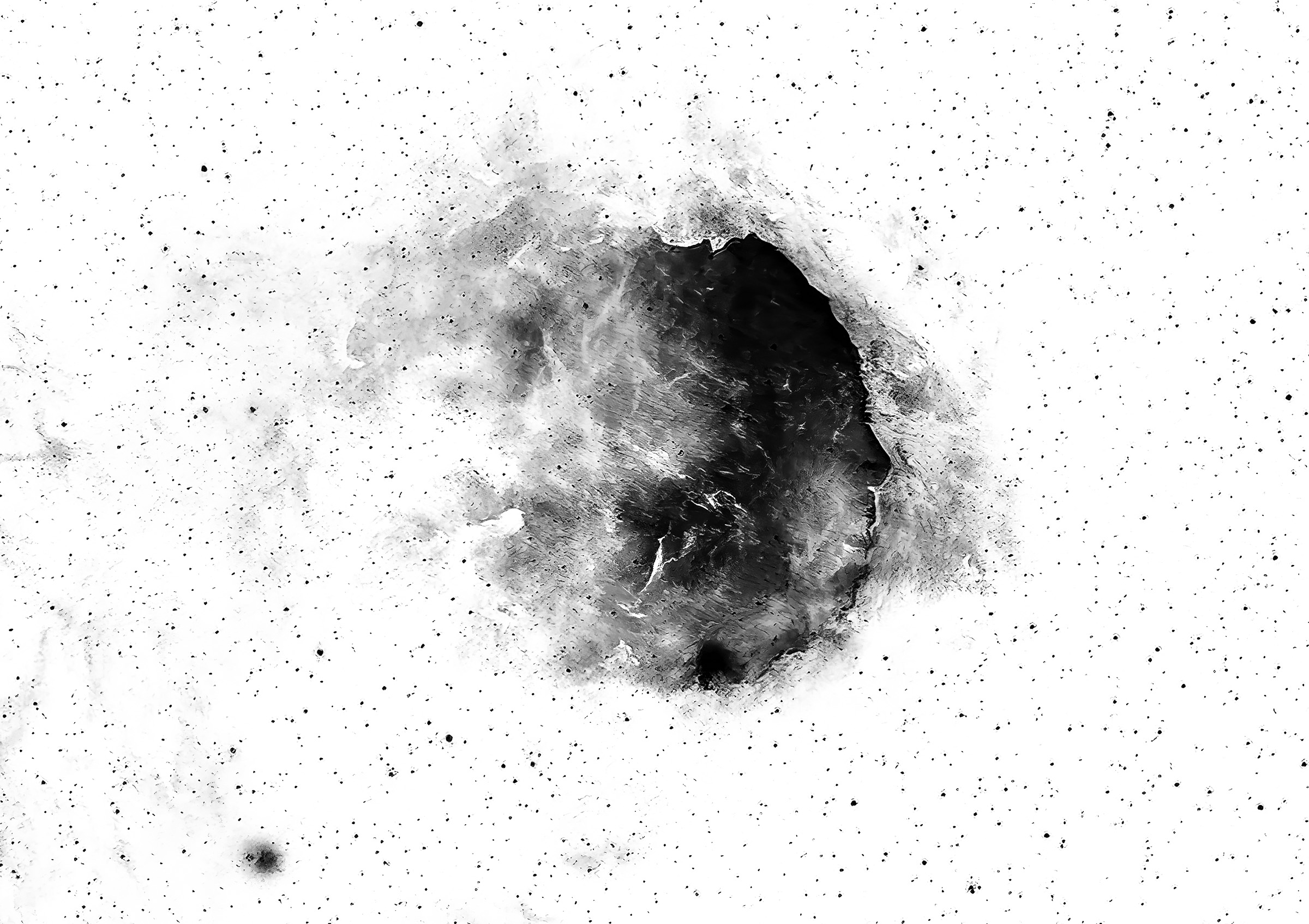
The Shadowed Silhouette | An inverted monochrome presentation isolating the deep molecular profile of the Gabriela Mistral Nebula (NGC 3324).
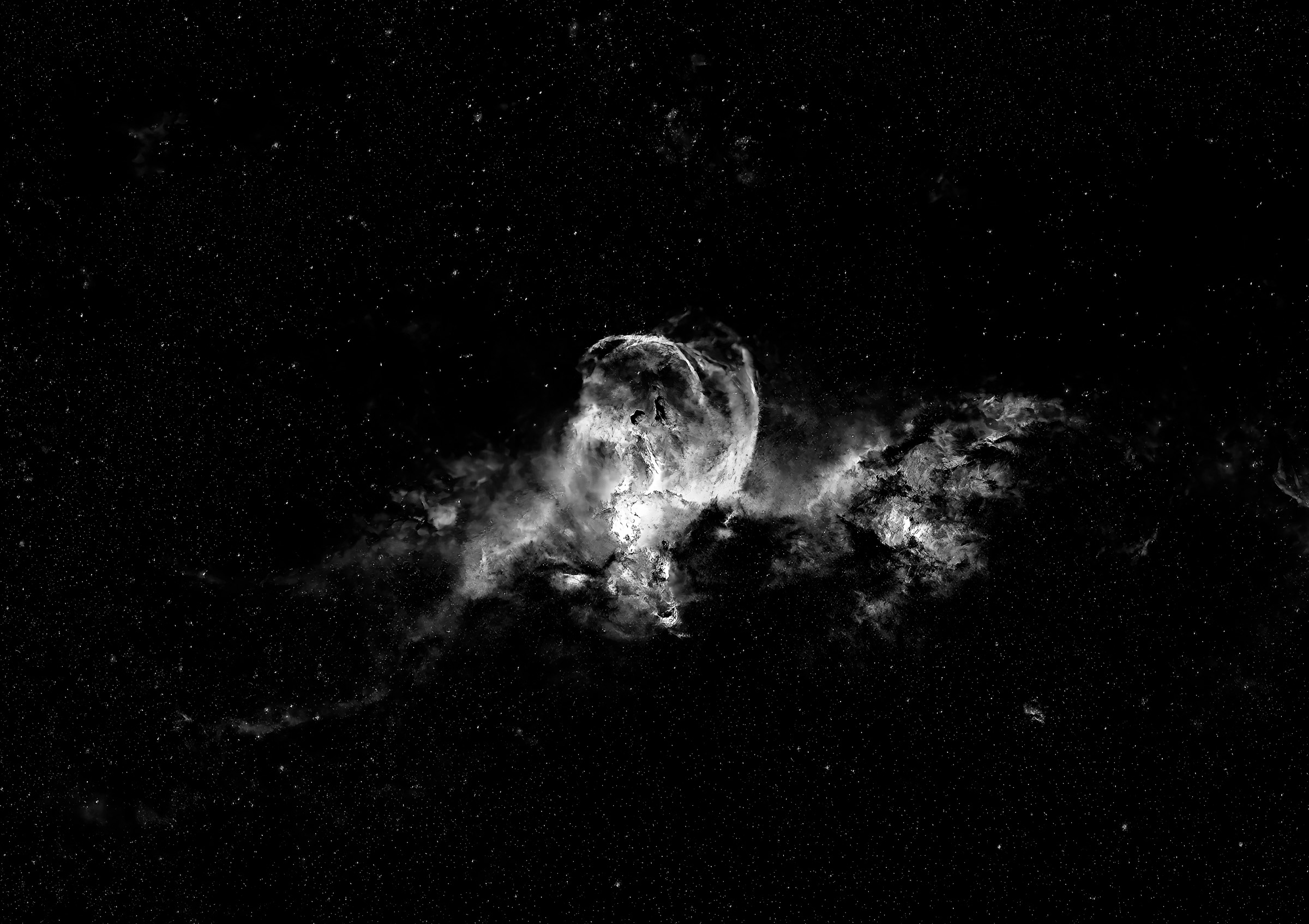
The Cosmic Torch | The structural wide-field view anchoring the classic pareidolian shapes within the expansive RCW 57 complex.
To ensure this collection remains an authentic, uninfluenced dialogue between your unique neural wiring and the stars, all pre-named pareidolia nebulae have been excluded.
2. Exclusion of the “Companions of the Cosmos” Portfolio
Furthermore, this gallery intentionally excludes the specific faunal silhouettes featured in our recent tribute piece, Companions of the Cosmos: An Homage to a Friend. While the cosmos is full of familiar forms, the specific data sets and rotations representing our cosmic cats and hounds—including the unique four-paw presentation of the Cat’s Paw Nebula (NGC 6334), the North America Nebula’s “Shaggy Dog” (NGC 7000), the Tadpole Nebula’s “Cosmic Puppy” (IC 410), the Heart Nebula’s “Running Dog” (IC 1805), and the Seagull Nebula’s hound profile (IC 2177)—belong strictly to that dedicated dedication astro thought.
The Open Invitation
What remains in this collection are raw, high-contrast, multi-hemispherical vistas of gas lanes, dust silhouettes, and stellar nurseries that have not been defined by popular culture or recent portfolios. As you browse, remember that because of individual genetic and neural variations, the shapes that emerge are entirely yours to discover.

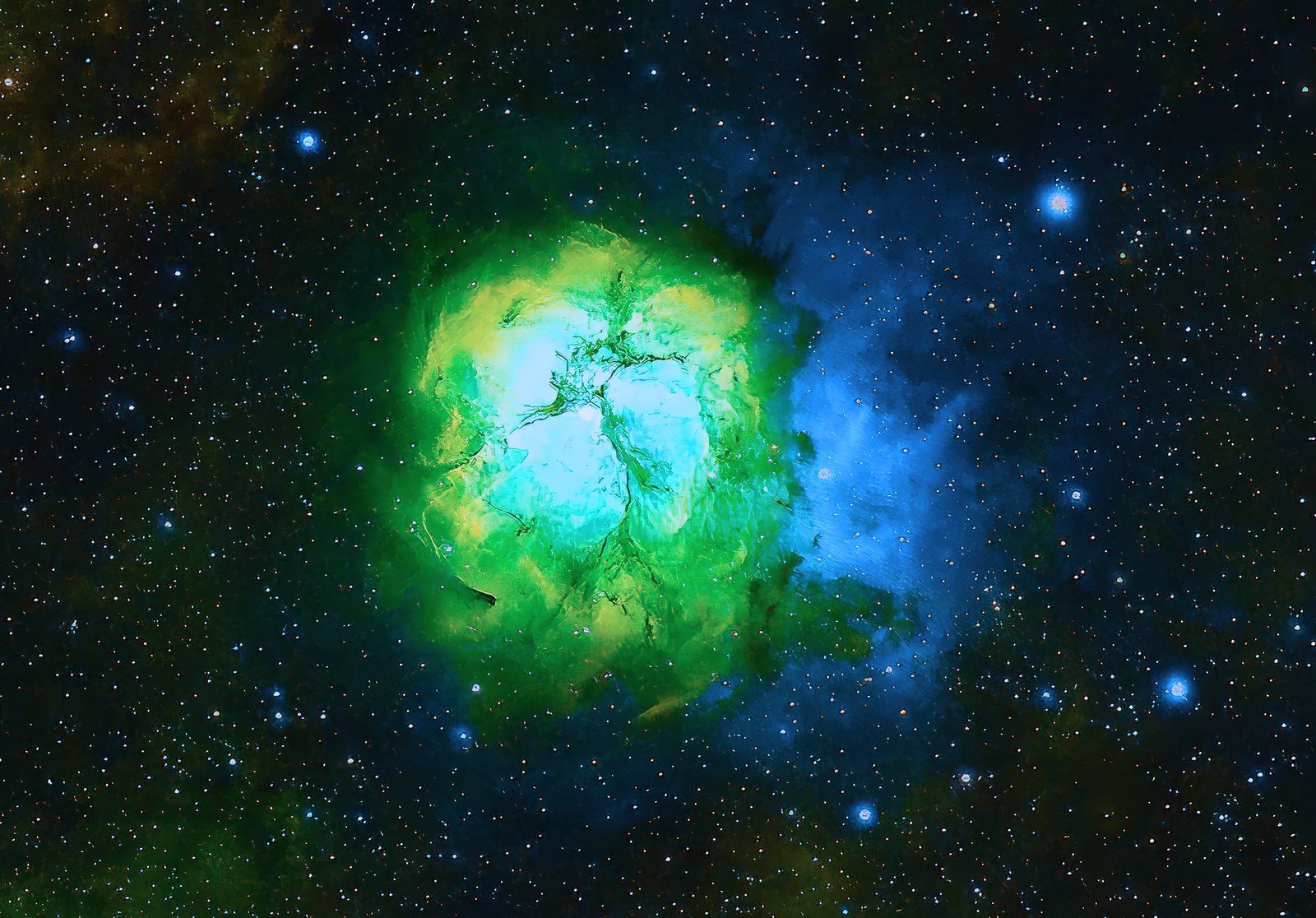
The Hungry Cosmos | This dynamic narrowband rendering of the Trifid Nebula (M20) isolates dense interstellar gas lanes. While the glowing green core dominates the frame, looking to the right reveals a distinct blue profile appearing to ingest a small dark cloud, or "bean."
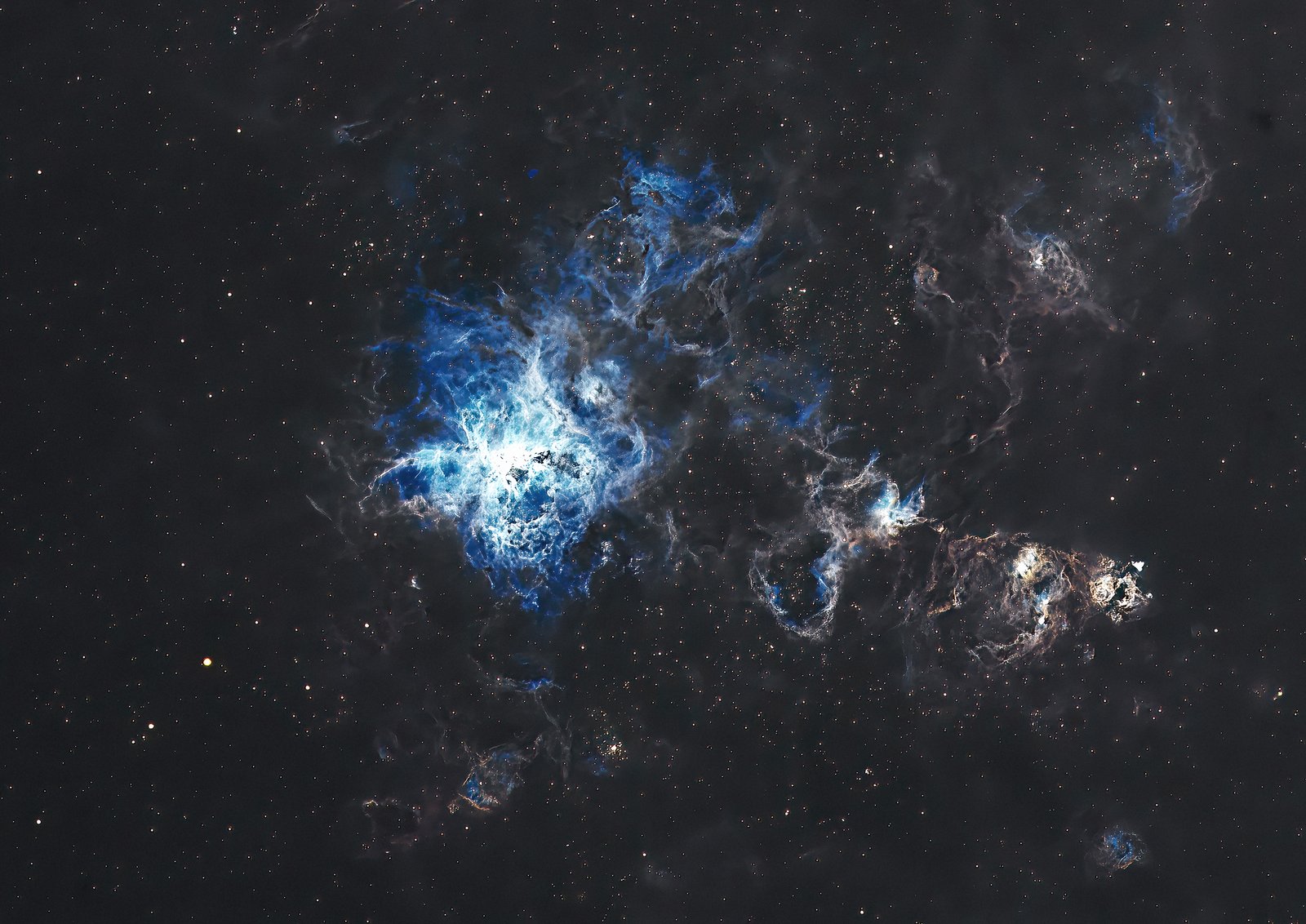
The Celestial Vixen | Nestled in the Large Magellanic Cloud, this wide-field view of the chaotic Tarantula Nebula spans hundreds of light-years. Drifting into the smoky gas layers just to the top right of the intense central cluster, a clever observer can spot the sharp, triangular profile of a fox's face peering through the dark lanes.
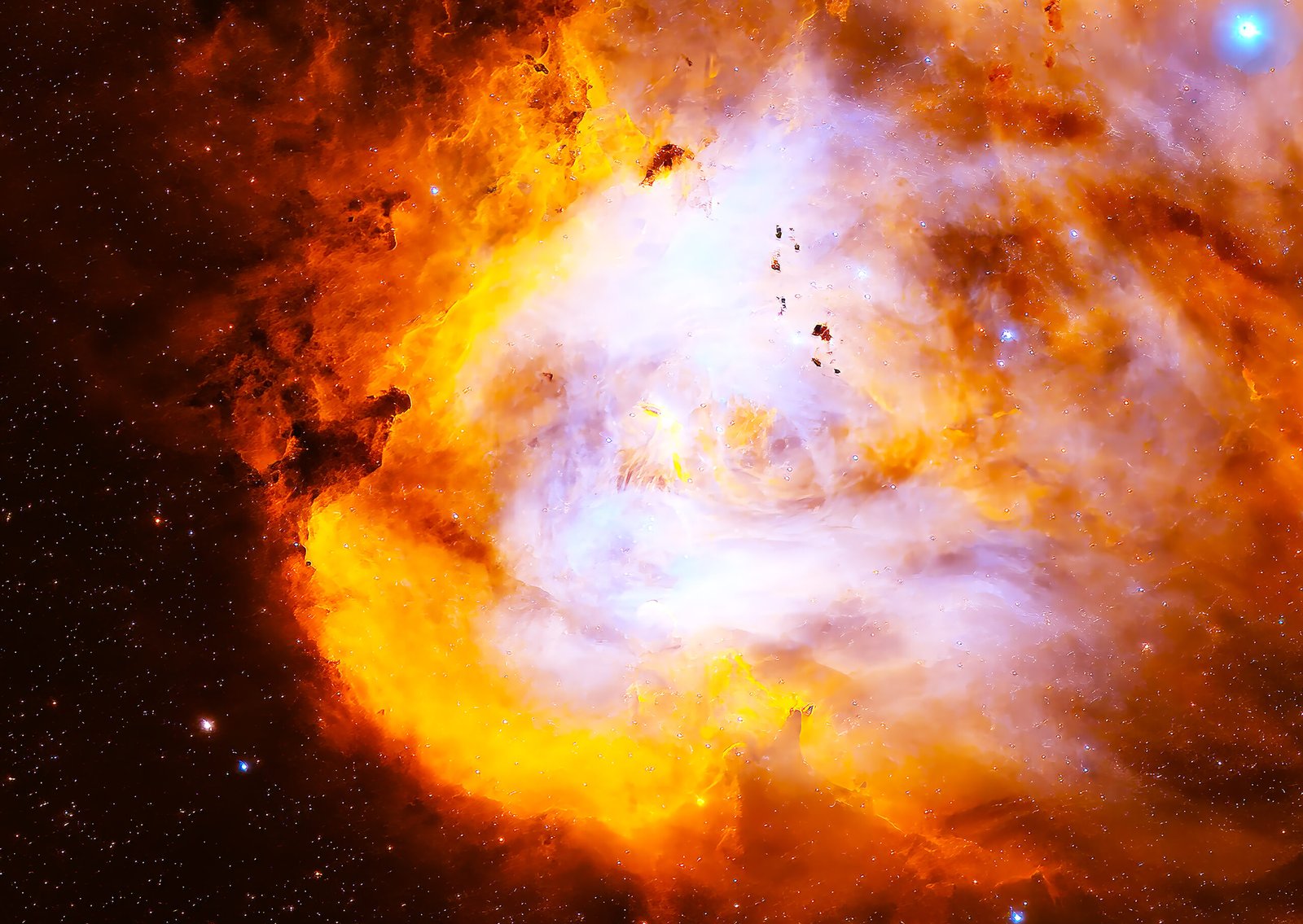
Spacewalker | Intense radiation from massive stars sculpts the glowing, ionized hydrogen walls of IC 2944. Along the sharp, high-contrast ridge on the left-hand edge of the frame, the dark Bok globules and bright gases seamlessly form the silhouette of an astronaut scaling a cosmic precipice.
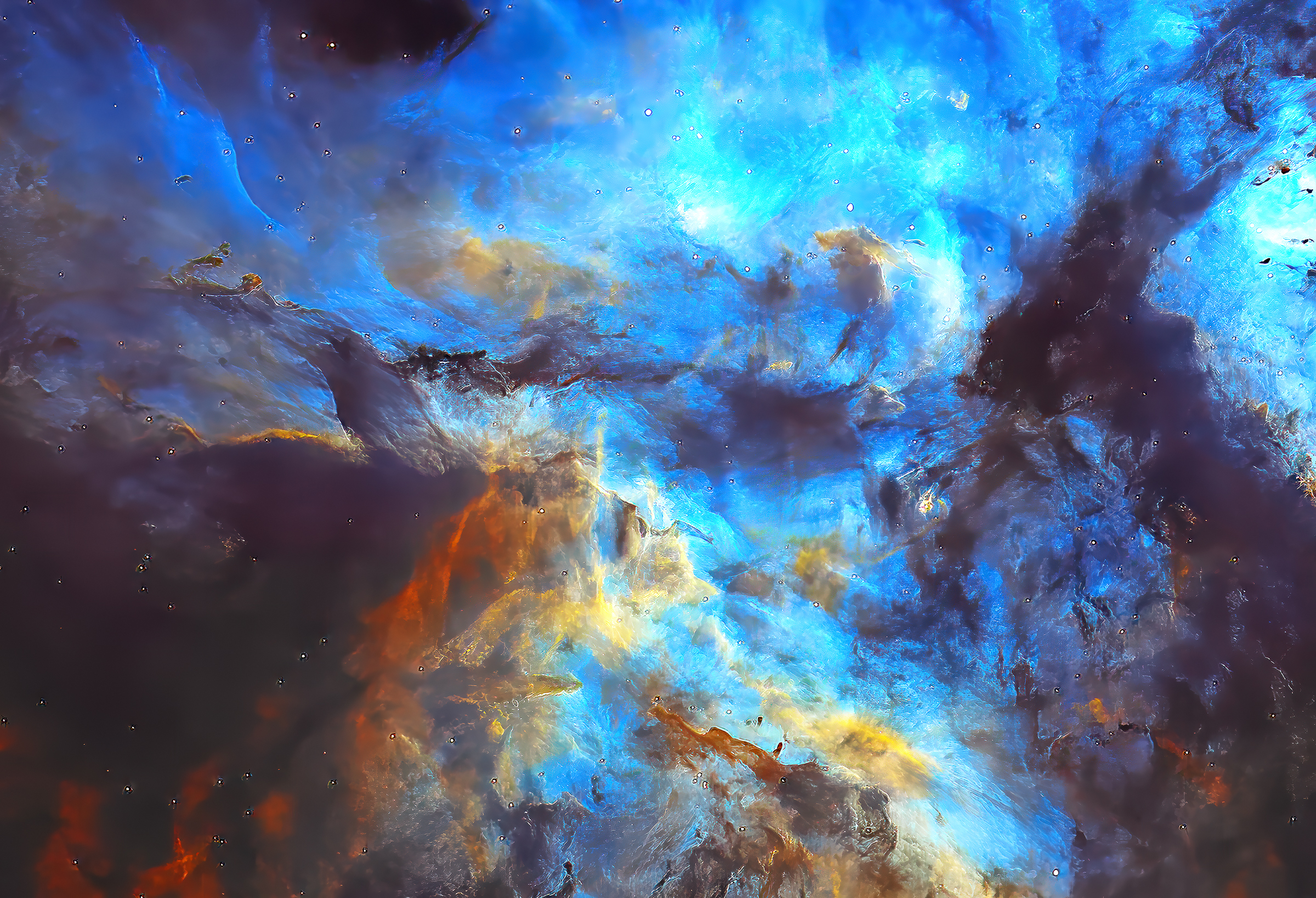
Avian Sentinel | This tight perspective of the Great Carina Nebula highlights complex shockwaves of gas and dust. In the upper right quadrant of the central glowing emission field, a striking, upright bird silhouette stands at attention, perfectly shaped by the surrounding cold molecular clouds.
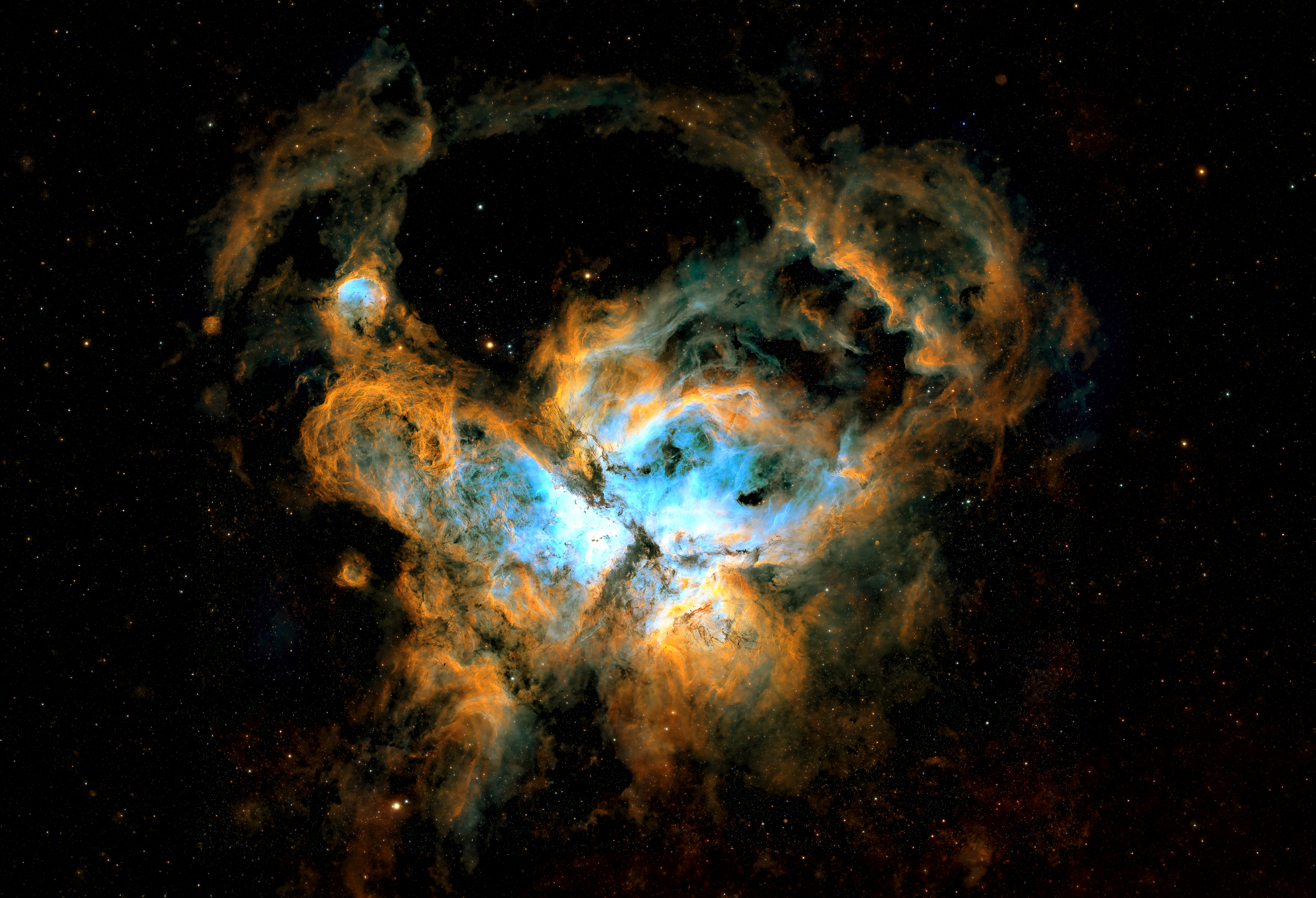
Stellar Play | By shifting framing metrics, the immense loops of gas within Carina tell a completely unexpected visual story. The curving dark lanes and bright arcs near the upper rim assemble into a playful cat intently biting down on the mechanical barrel of a cosmic cannon.
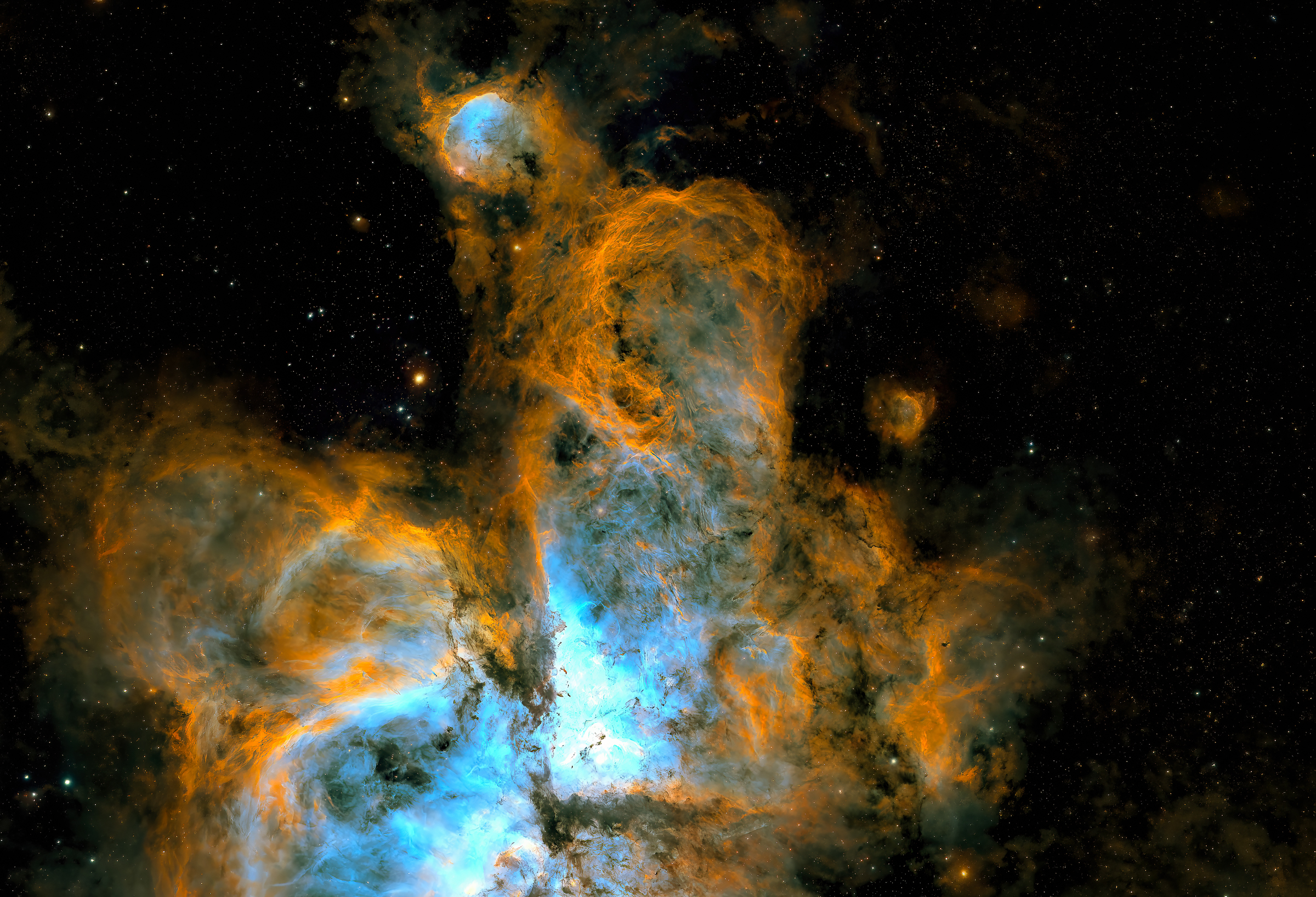
The Monolith | Rotating the massive pillars of the Carina Nebula vertically reconfigures our spatial interpretation. The sweeping, elongated columns of cold gas and dark dust transform into an elegant, standing statue draped in long, flowing hair.
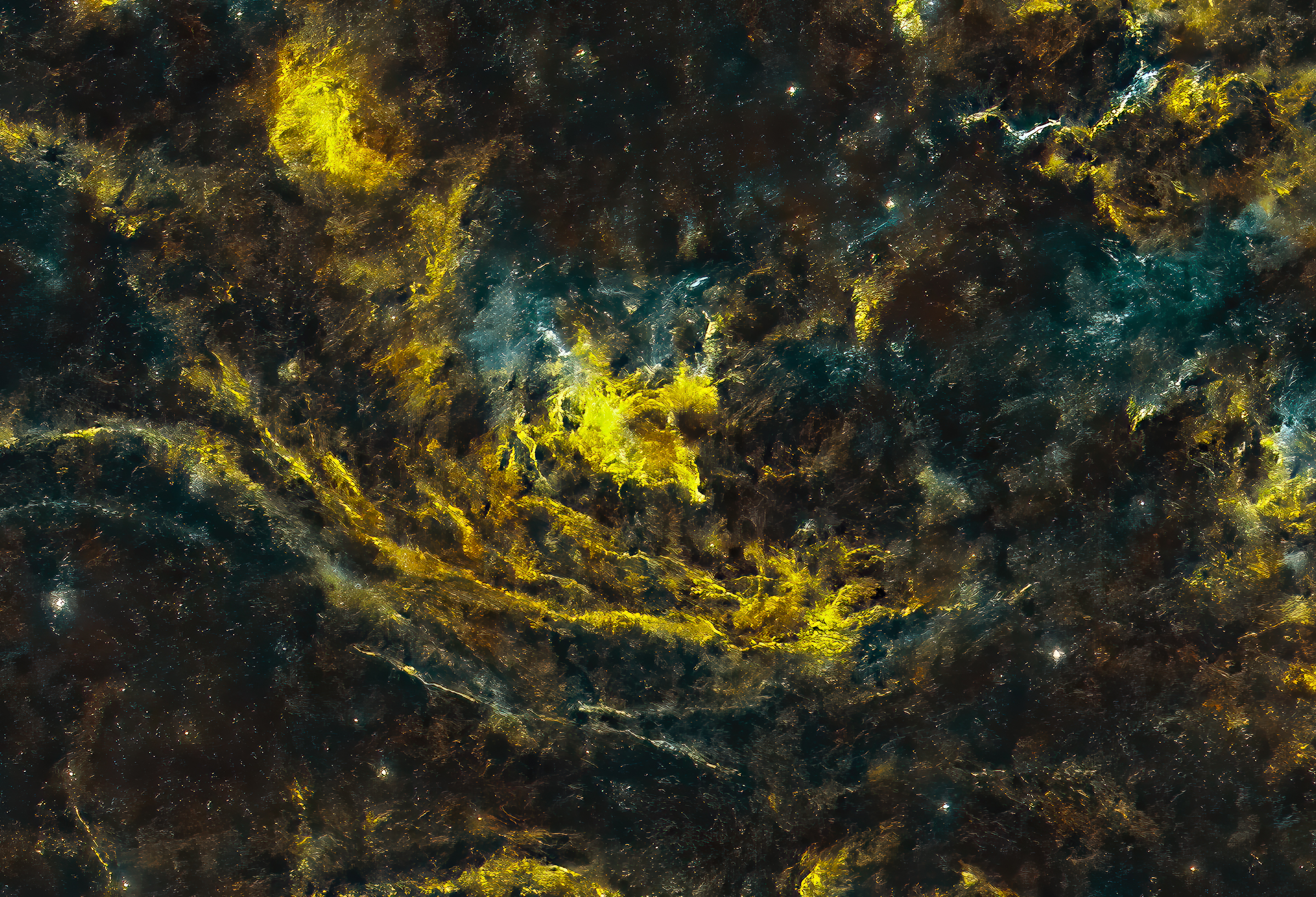
Clandestine | This high-detail, textured mosaic captures a dense field of interstellar dust and supernova remnants. Right in the center of the chaotic golden texturing, a subtle arrangement of shadows and highlights outlines the narrow, watchful face of a fox.
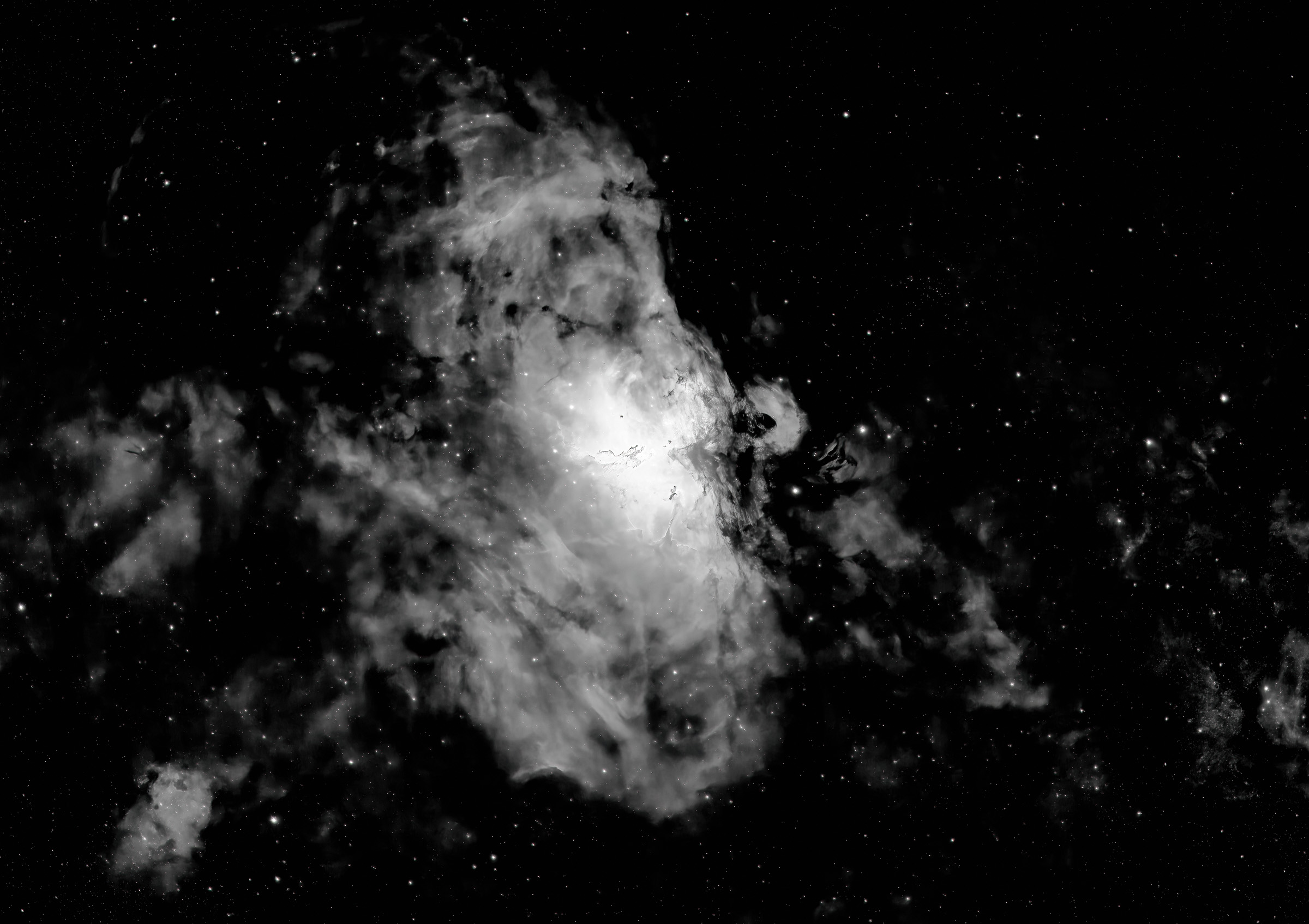
Pantheon | This high-contrast monochrome rendering captures the core of the Eagle Nebula (M16). The immense, towering columns of gas and star-forming structures merge to create the profile of a Greek god gazing stoically off toward the right side of the frame.
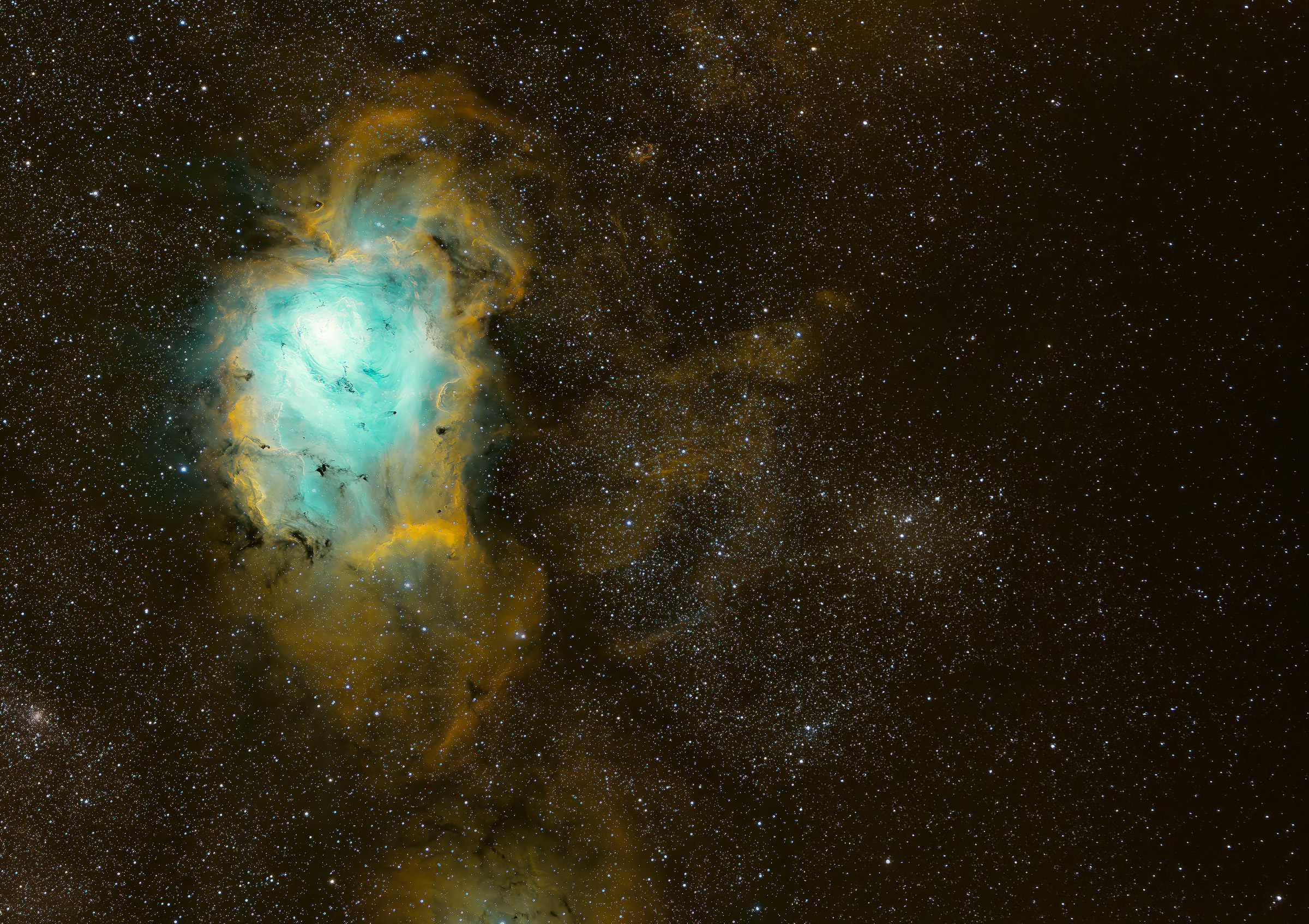
The Equine Lagoon | While the traditional Horsehead Nebula resides in Orion, this close crop of the Lagoon Nebula (M8) challenges catalog names. The dense, golden molecular cloud wrapping around the glowing teal core perfectly mimics the majestic arch and muzzle of a horse's head.
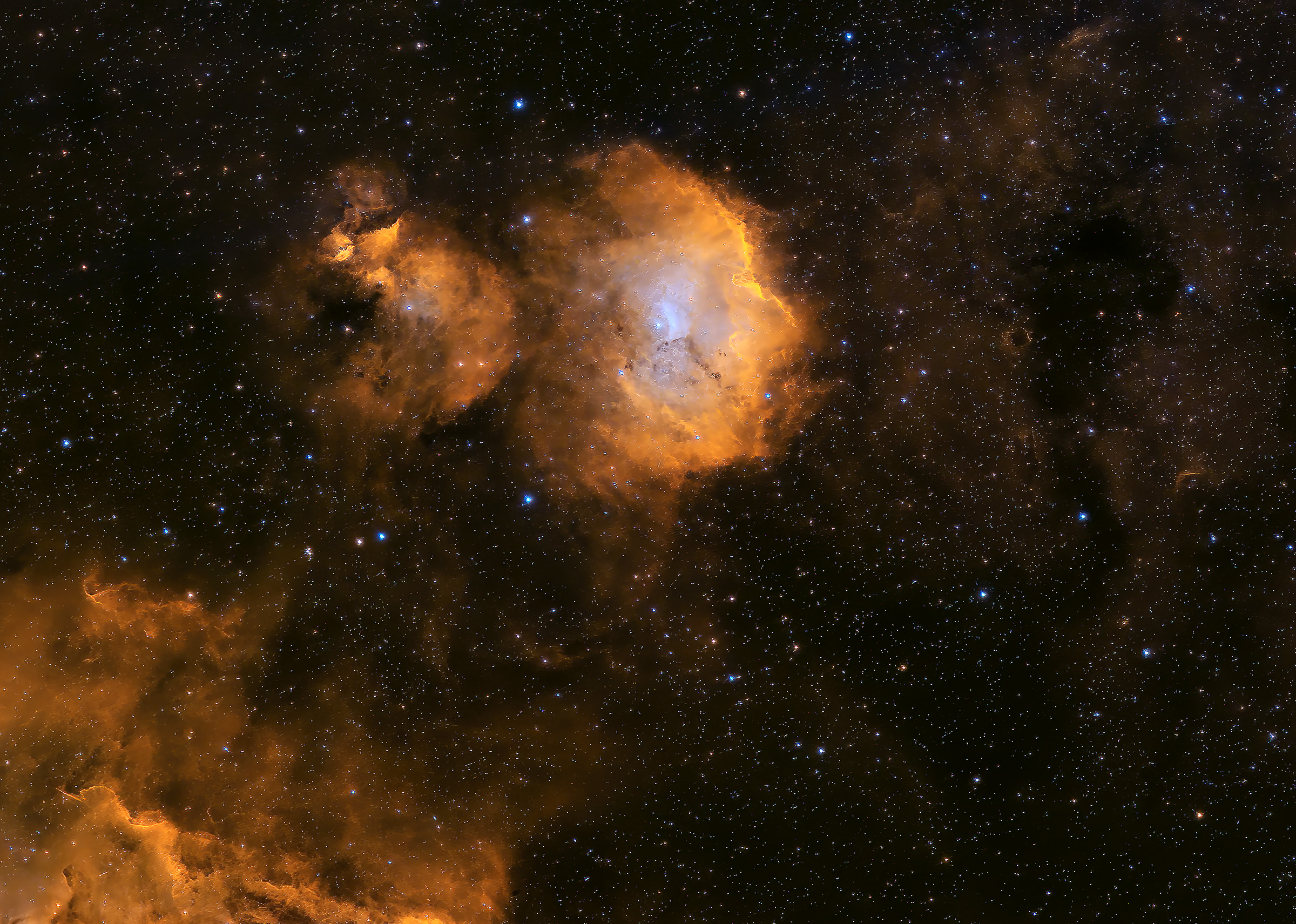
The Watcher | Focusing on the massive emission structures of IC 2944 reveals a complex interplay of light and shadow. The main silhouette near the center curves into a distinct, sharp head profile looking intently off toward the right horizon.
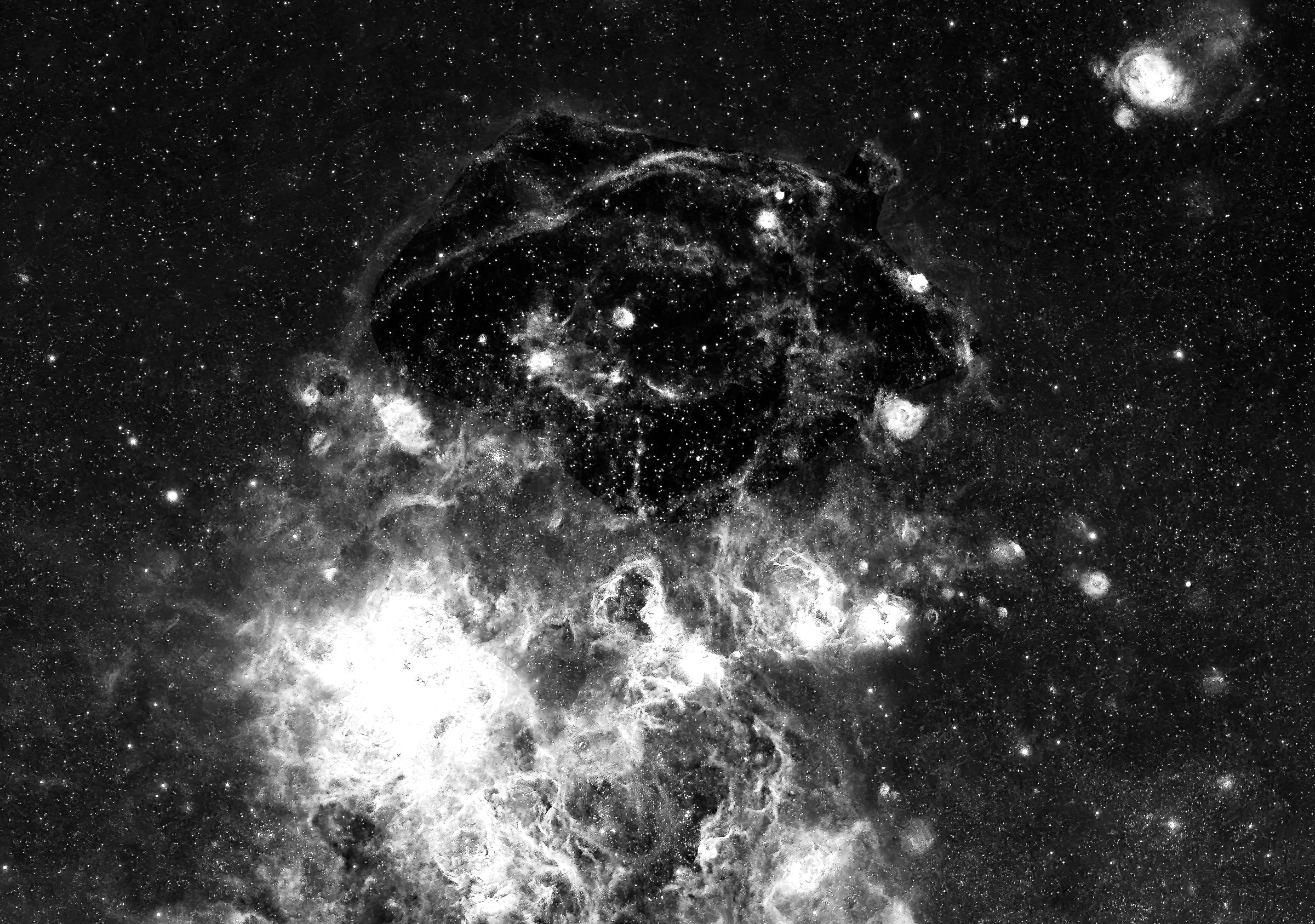
The Visitor | Deep exposures of the Tarantula Nebula highlight the dark, opaque filaments of interstellar dust weaving through ionized gas. Hovering directly above the intense stellar nursery, a shadowy, elongated anomaly creates the striking impression of a dark alien floating in the void.
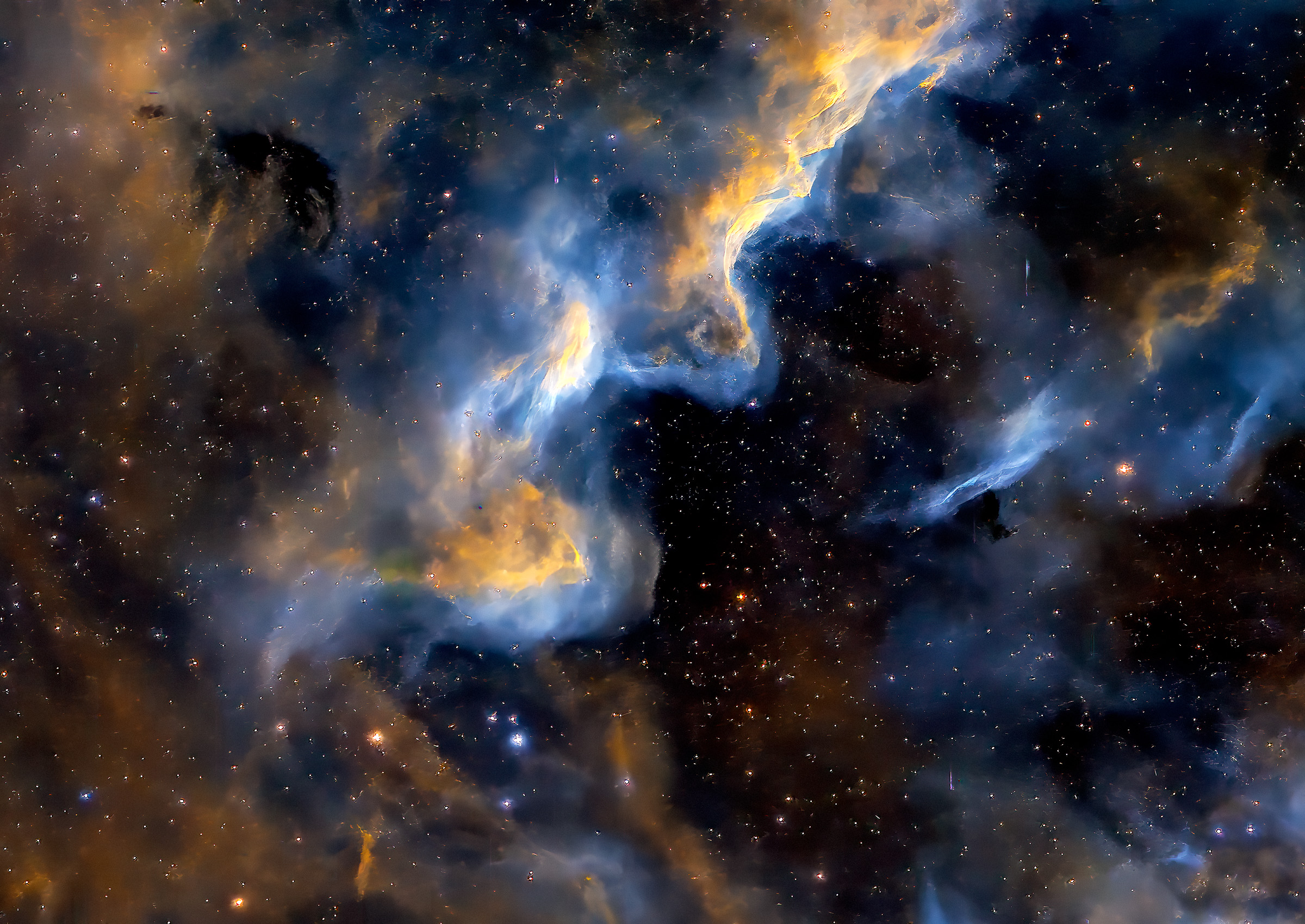
Dual Perspectives | The expansive gas lanes of the Carina Nebula act as an ultimate test of visual processing. Depending on how individual neural pathways filter the dust structures, observers will either see a grand, ethereal "God" figure looking downward, or the elegant head of a deer peering down into the depths.
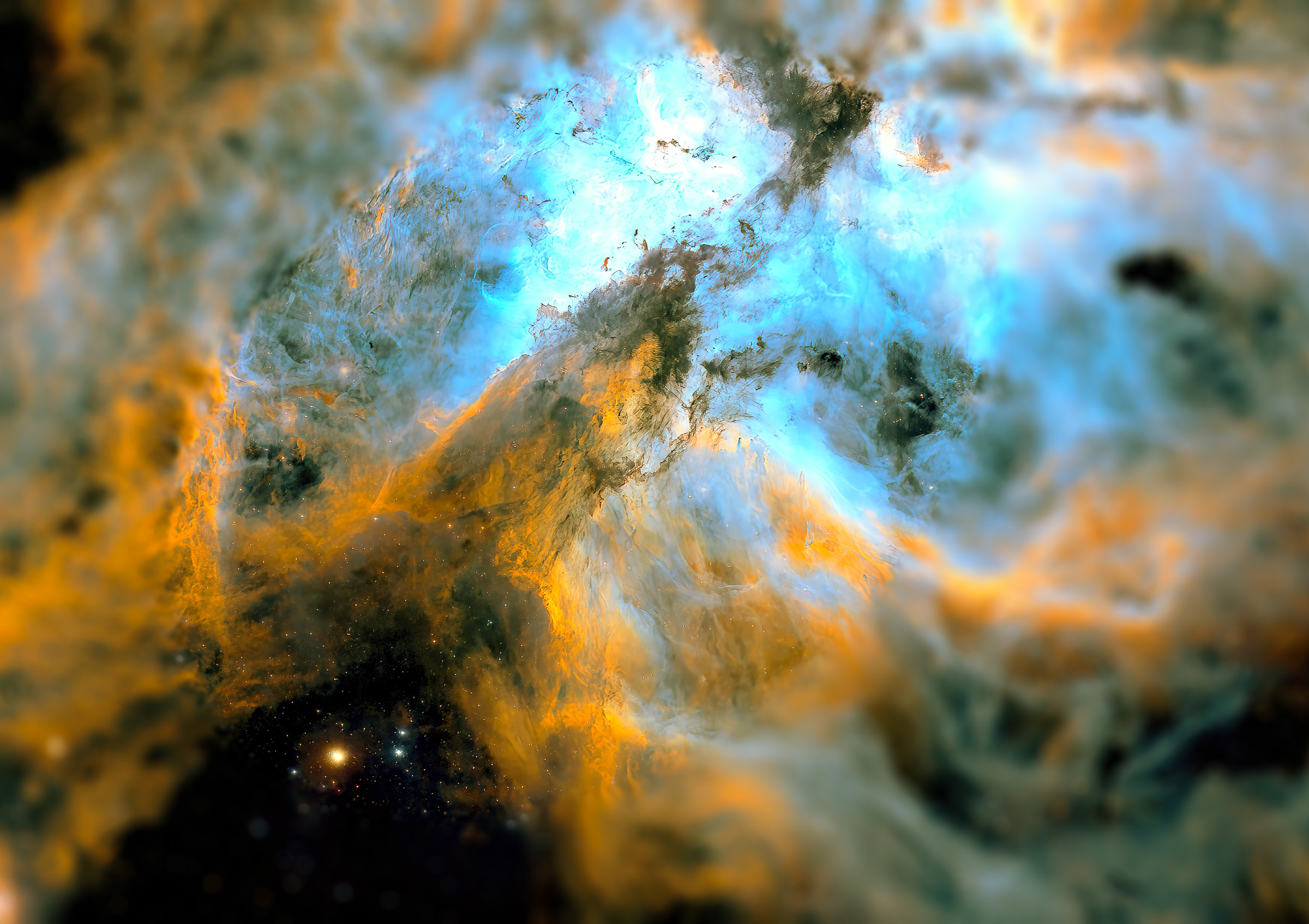
Genesis | By intentionally softening and expanding the focal plane of the Carina emission data, the structural sharpness of the dust lanes falls away. What remains is a soft, explosive burst of raw energy and light, beautifully mimicking a moment of cosmic ejaculation.
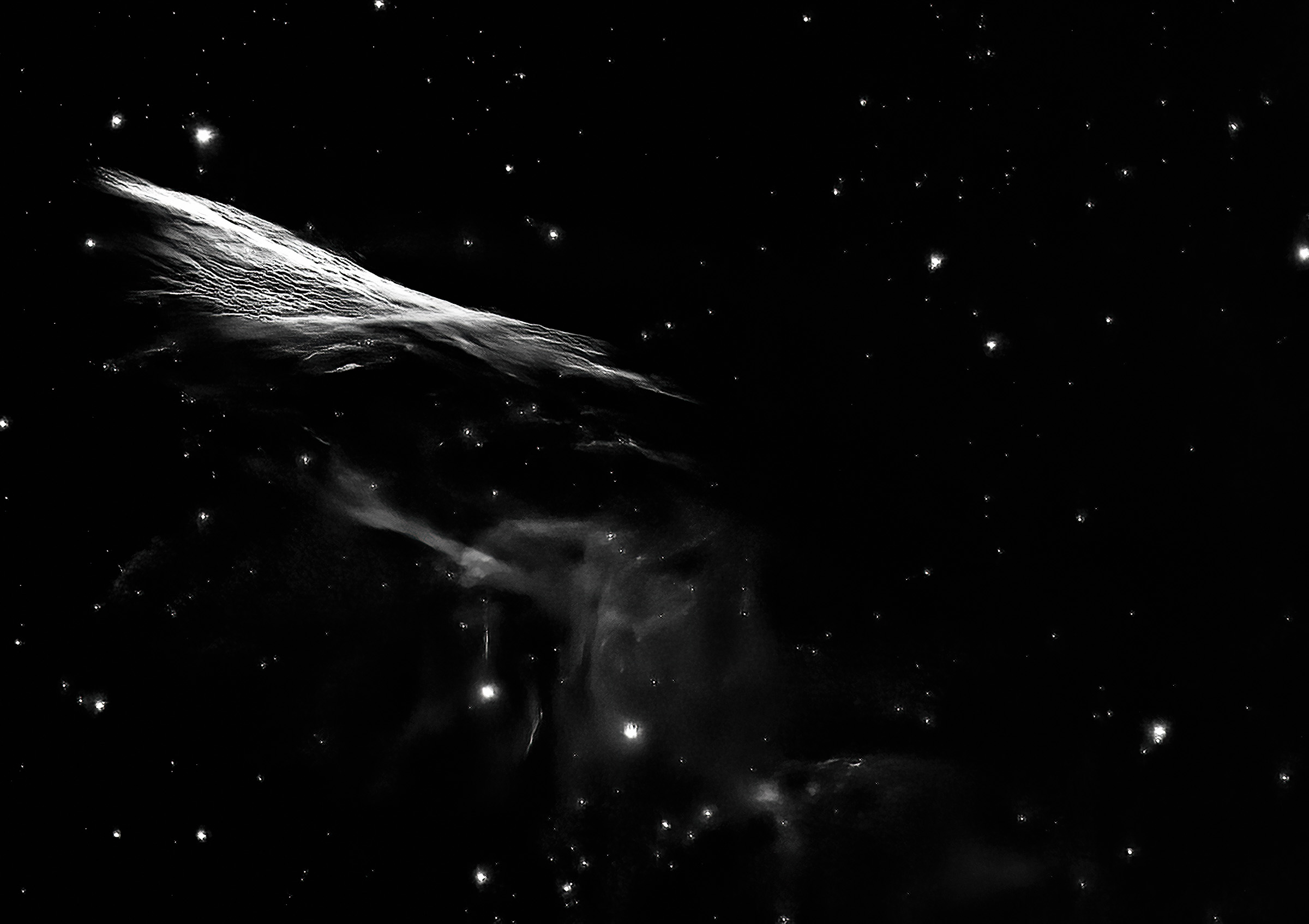
Boldly Go | The Pencil Nebula (NGC 2736) is a linear shockwave from a historic supernova explosion. The slender, hyper-velocity filament of glowing gas looks precisely like a legendary *Star Trek* vessel—resembling the Voyager or the Enterprise—streaking at warp speeds across the interstellar medium.
If you see something different (or nothing at all), please complete this form and send it off to me. I will paste responses below when I have received them.