
Loyal Companions.....
As I write this, I will soon be leaving the breathtaking landscape and southern skies of Argentina for my wife’s new posting near the Equator: I am in a reflective mood. Moving across hemispheres is a massive transition, but it forces you to look back at the roots of the journey.
None of this—not even this website, astroanderson.com—would exist without the steady, unwavering encouragement of my good friend here in Argentina, Michael Kahn.
Michael is a man defined by his deep love for the loyal companions of our world: cats and dogs. It feels only fitting, then, that the universe itself mirrors his passion. The shapes we capture in deep space are often reflections of what we value most on Earth. For Michael, I wanted to map out the cosmic cats and hounds that guard the night sky, serving as celestial monuments to the loyalty and friendship he has shown me.
The Feline Skies: Walking Across the Stars
While the canine constellation structures are vast, the feline universe holds a very special, intricate place in my portfolio, thanks to a bit of creative digital manipulation.
The Cat’s Paw Nebula (NGC 6334)
Located in the southern constellation of Scorpius, this massive stellar nursery is famous for its glowing red bubbles of gas that look like a celestial footprint. For this tribute to Michael, I wanted to do something unique. By carefully rotating, framing, and mirroring my captured data of this region, I manipulated the image to expand the narrative. Instead of just a single imprint, the final photograph reveals four cosmic paws moving in sequence, as if an invisible stellar cat is gracefully walking its way across the deep fabric of the cosmos. It is a reminder of the quiet, elegant ways that cats weave themselves into our lives—and how a friend’s gentle push can set our own creative journeys in motion.
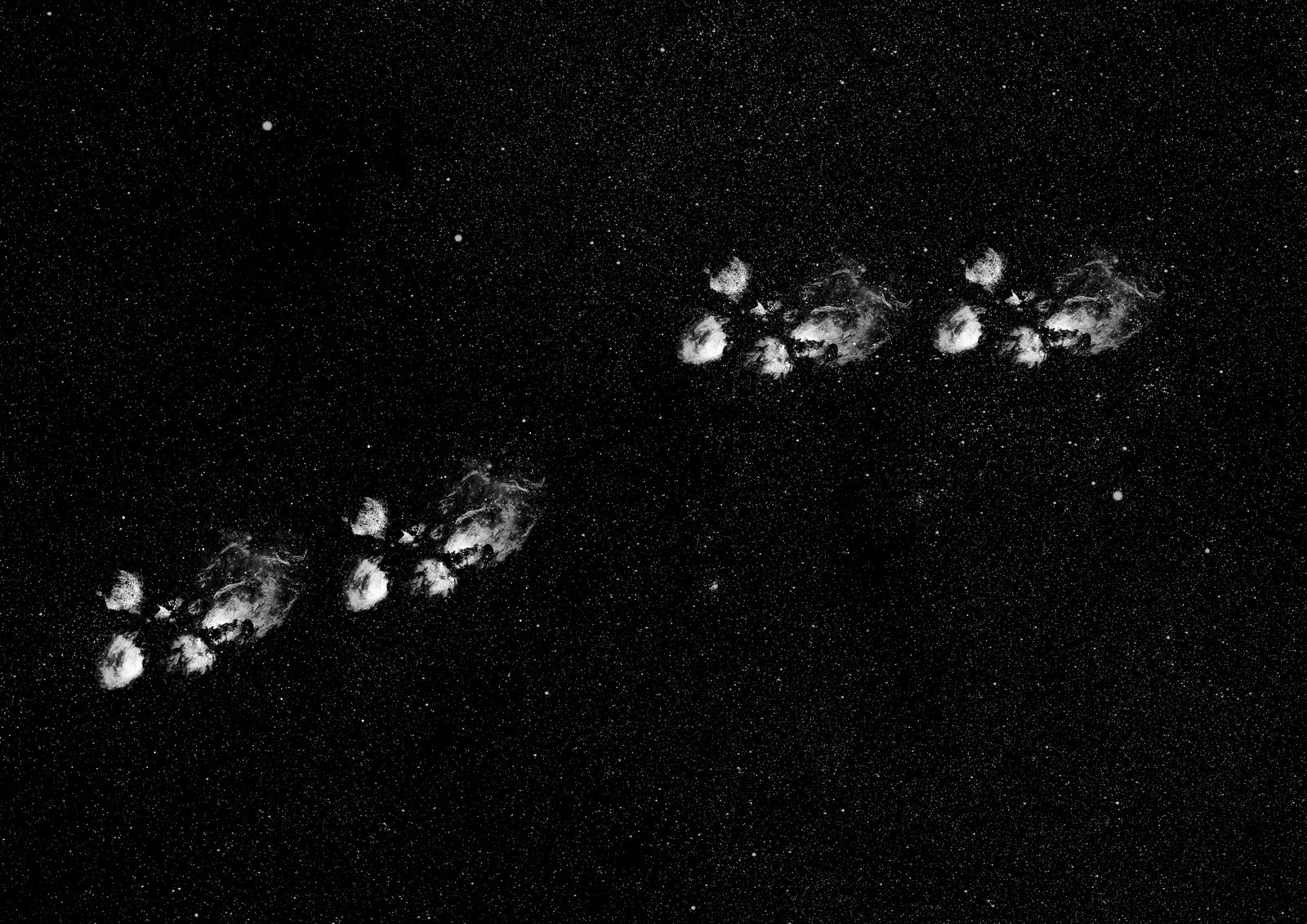
“Four paws carved from starlight, stepping softly through the dark. A cosmic feline walks the southern sky, leaving footprints of fire across the infinite night.”
The Canine Constellations: Monuments to Loyalty
Humanity’s oldest friends are well-represented in the deep cosmos. These five distinct targets span both hemispheres, mapping out a trail of loyalty, protection, and fierce resilience.
The Keyhole Nebula (NGC 3324 in Carina)
Nestled deep within the glowing heart of the massive Carina Nebula—the absolute crowning jewel of the southern night sky—sits the Keyhole. Depending on how you crop and frame this high-contrast structure, the dark, cold dust lanes silhouetted against the vibrant background gas sculpt the noble head of a guardian hound watching over the southern sky. It represents steady, silent devotion.
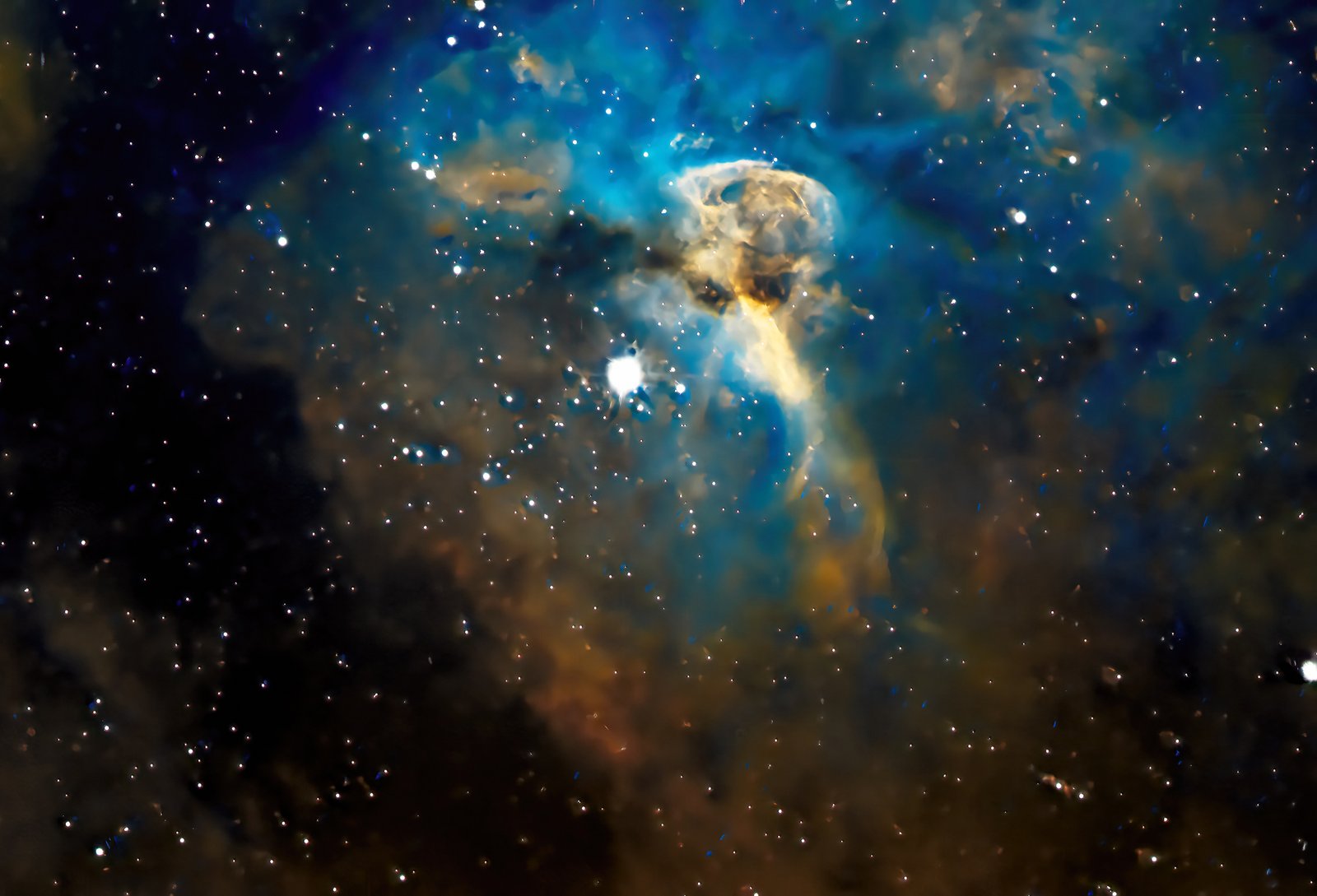
“A noble guardian sculpted from cold dust, watching over the deep southern fire. It stands as a monument to silent, unwavering devotion that keeps us anchored through changing skies.”
The North America Nebula (NGC 7000)
Moving into the northern sky, the famous “Cygnus Wall”—the intensely active star-birthing ridge that forms the “Mexico” region of the nebula—holds a spectacular secret. When you zoom into the turbulent, high-contrast gas of the coastline, the jagged dust cutouts map out what has been affectionately call the “Big Shaggy Dog.” It is a beautifully textured, chaotic profile of a fluffy hound, born out of intense cosmic creation.
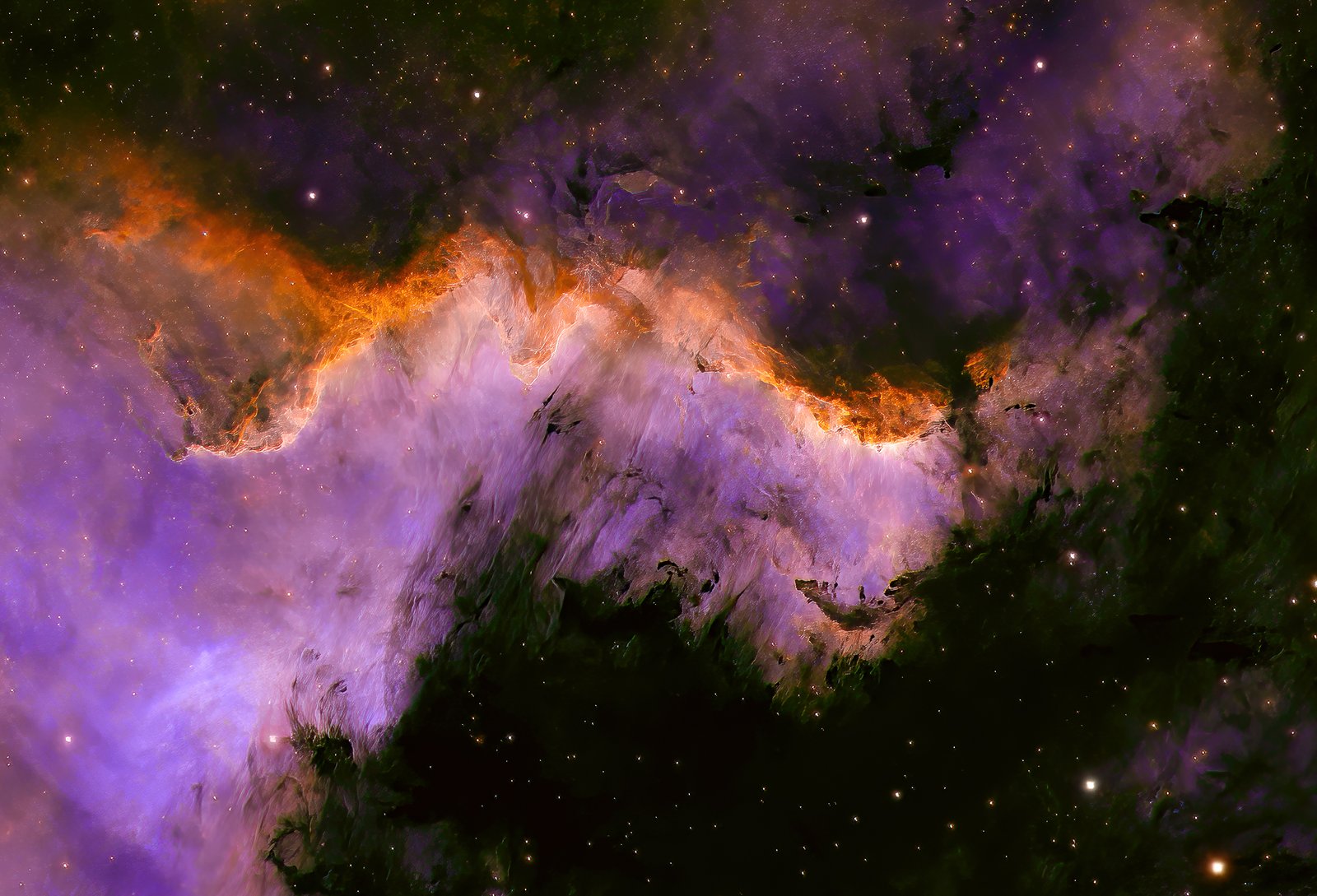
“Out of the most turbulent star-birthing ridge in the cosmos, a shaggy silhouette emerges. It reminds us that chaotic, high-contrast environments are precisely where the most beautiful creations take form.”
The Tadpole Nebula (IC 410)
In the constellation Auriga, intense stellar winds from a central open cluster are actively blasting and eroding the surrounding cosmic dust. Yet, the dense pockets of gas hold their ground. In the wider emission field, these resilient structures form the profile of a young, wide-eyed “Cosmic Puppy“ looking upward into the deep void, with glowing tadpole structures lighting its eyes.
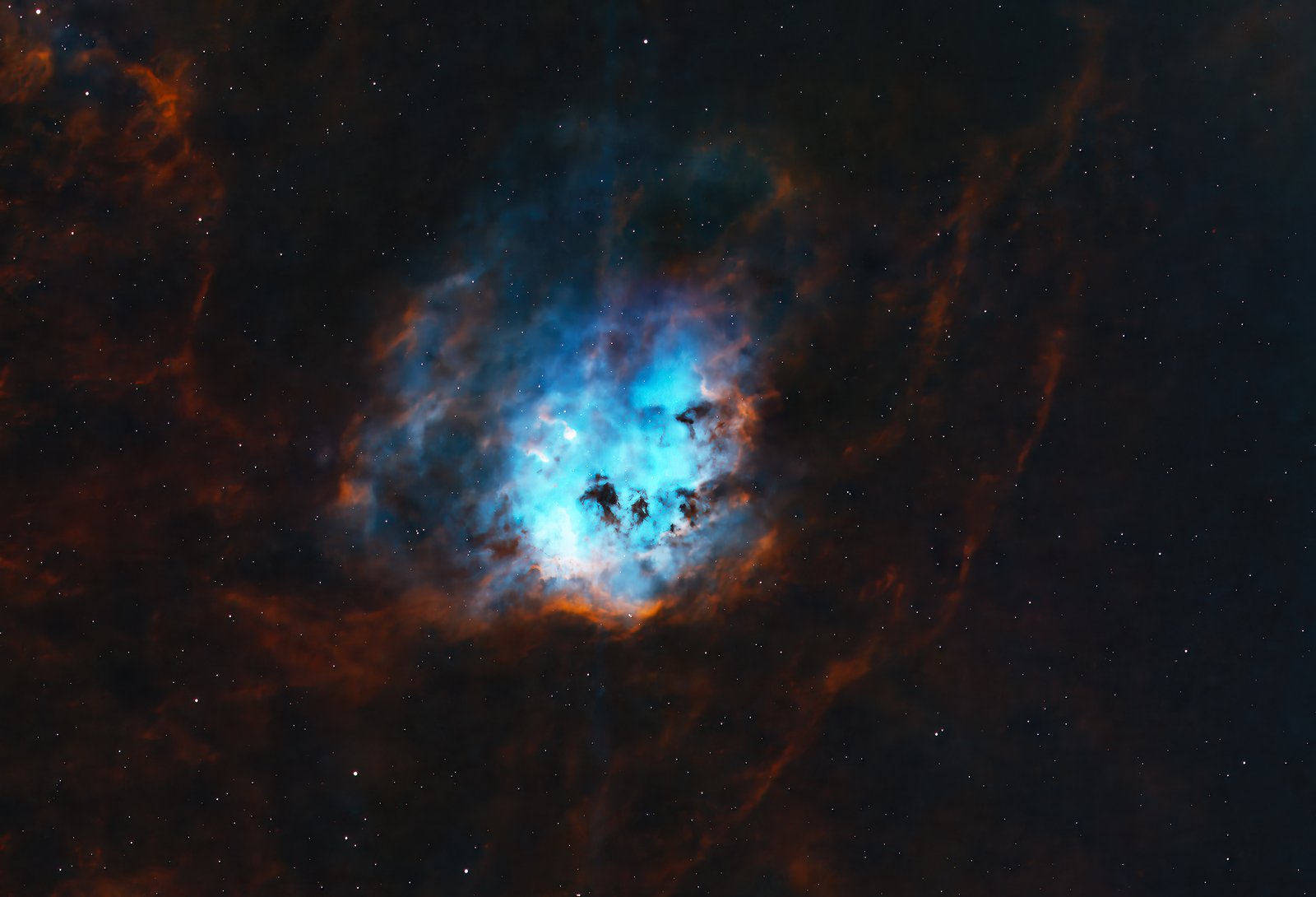
“A wide-eyed puppy forged in a crucible of cosmic wind. Though the radiation seeks to erode the surrounding dust, this resilient spark holds its ground across the void.”
The Heart Nebula (IC 1805)
While famous for looking like a massive Valentine’s heart, rotating this northern masterpiece 90 degrees clockwise completely transforms the narrative. Suddenly, the narrow tip of the heart becomes extended front legs, the rounded lobes form a powerful torso, and the detached lobe of the Fish Head Nebula (NGC 896) becomes the snout of a “Running Dog“ caught mid-sprint across the stars.
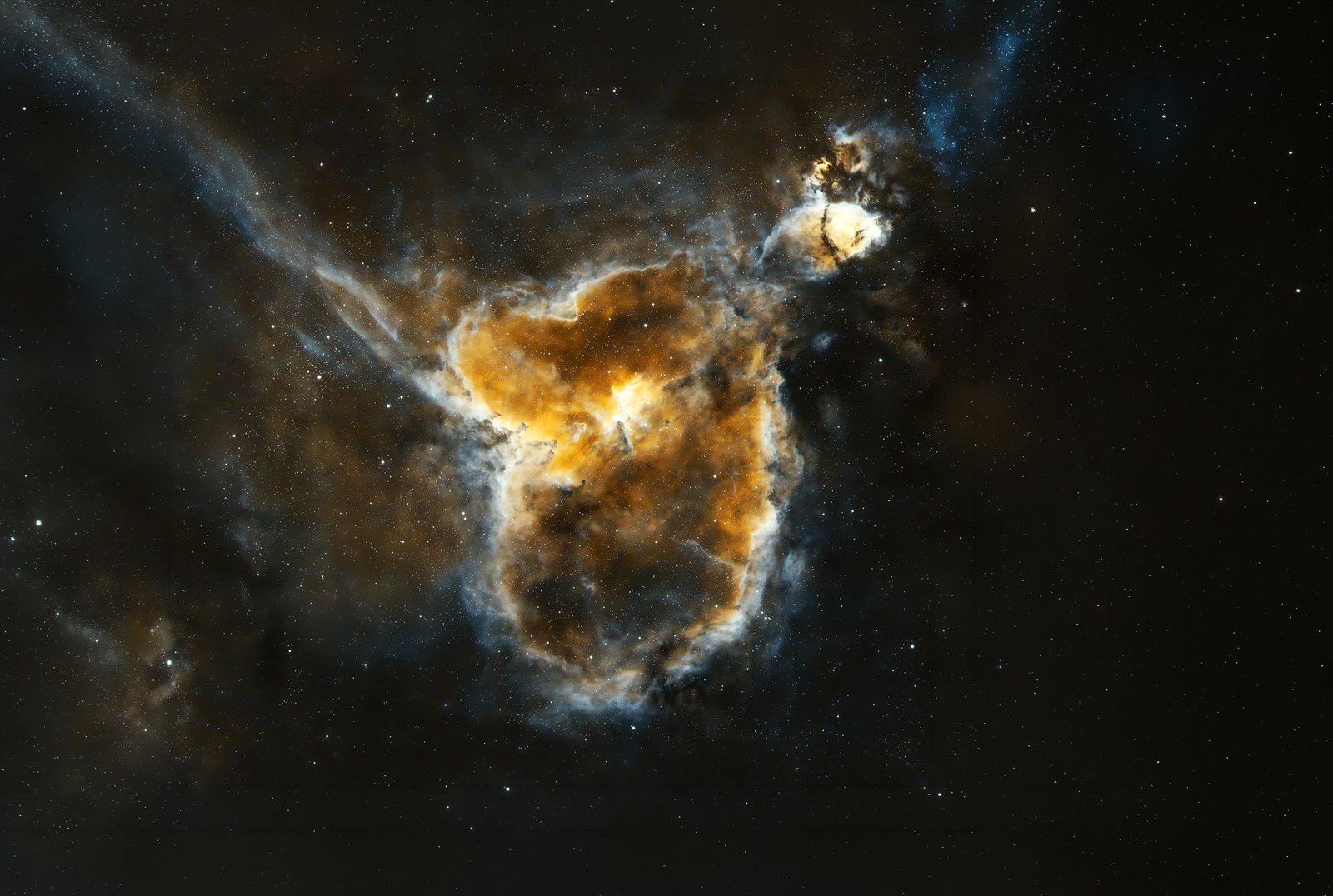
“A sudden shift in perspective turns an emblem of love into a hound mid-stride. A reminder that when we change how we look at things, the universe breaks into a joyful, fearless sprint.”
The Seagull Nebula (IC 2177)
Straddling the borders of Monoceros and Canis Major, this sprawling complex looks like a bird in flight. However, if you ignore the sweeping wings and crop tightly onto the “head” of the seagull, the dense, dark dust lanes running through the illuminated gas completely re-shape the frame. It forms the perfect, peaceful profile of a floppy-eared hound looking off to the side.
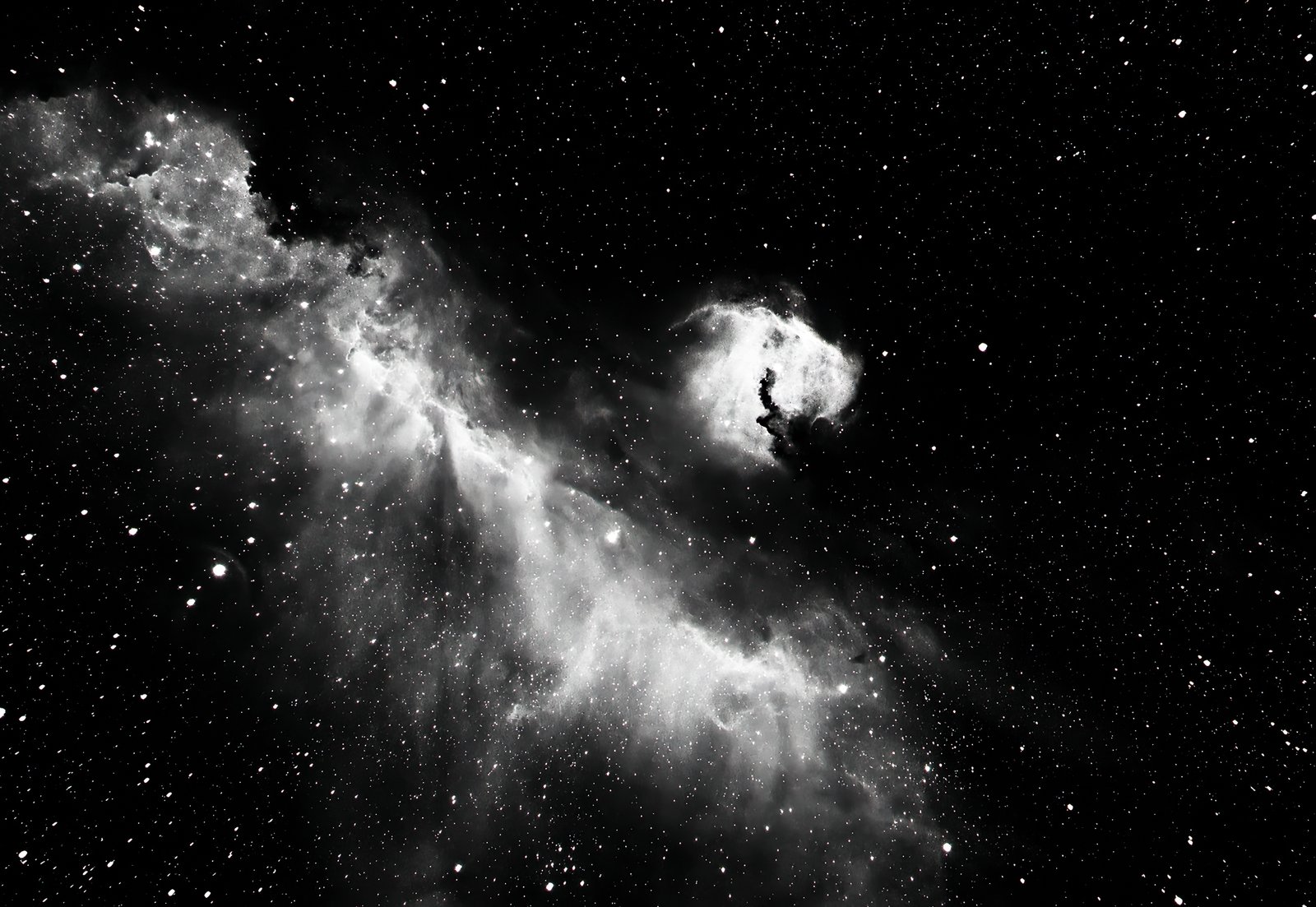
“Hidden within the grand wings of a cosmic bird lies the peaceful profile of a floppy-eared friend. Even in the vast expansions of space, the shapes of comfort and companionship are waiting to be found.”
The Brightest Light: Sirius and the Dog Star
To bring this homage to a close, we have to look at the anchor of the winter sky: Sirius, the famous “Dog Star” residing in the constellation Canis Major. It is the brightest star in our night sky.
Sirius does not need deep exposure times or complex narrowband filters to be seen; its brilliant blue-white light pierces through the atmosphere with effortless clarity. For centuries, travellers have used Sirius as a primary navigation point to find their way home through the dark.
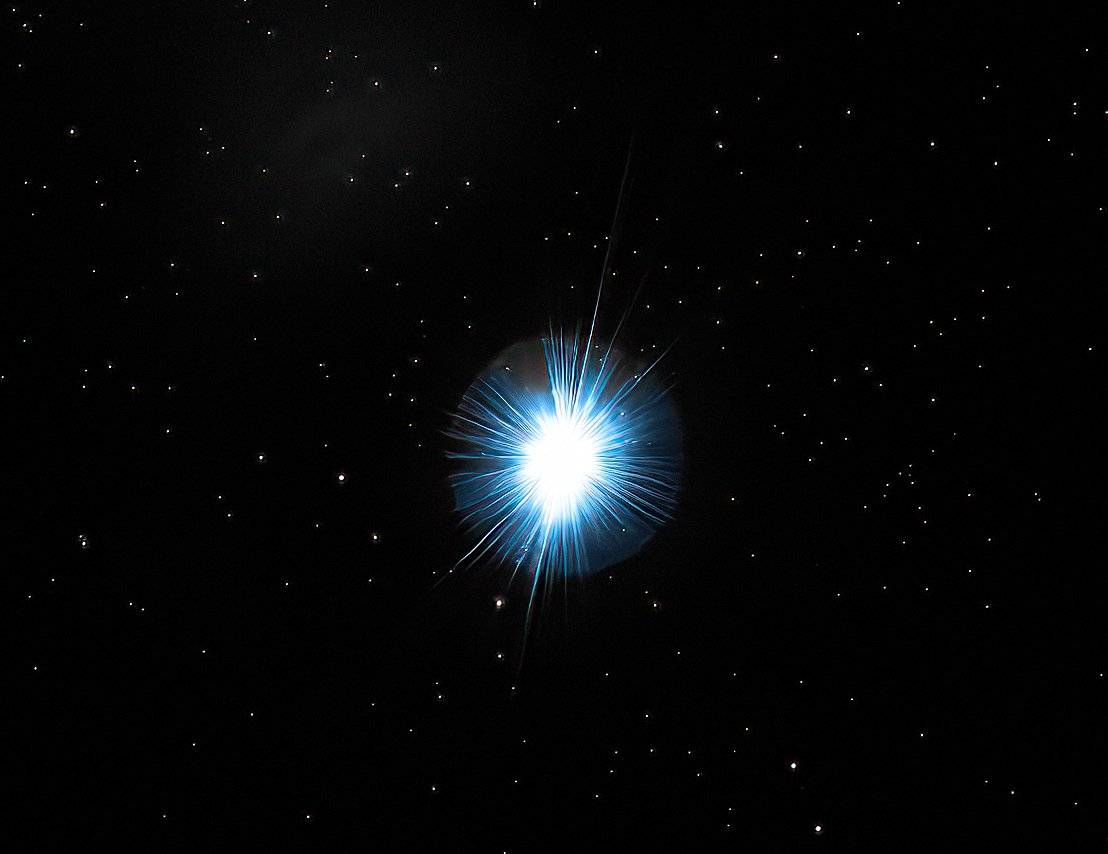
For me, Sirius represents Michael’s role in the creation of astroanderson.com. When I was hesitant to share my work, his loud, bright encouragement acted exactly like the Dog Star—a brilliant, clear beacon that cut through doubts and guided me toward launching this platform.
Conclusion: Packing the Lenses
As I prepare to set up my tripod just north of the equator, I leave the southern hemisphere with a full heart. I am leaving behind a vista of spectacular targets, but I am taking the lessons of friendship with me. The universe doesn’t exist in isolation; stars rely on gravity, nebulae rely on recycling, and astrophotographers rely on the faith of good friends.
Thank you, Michael. This collection is for you.