
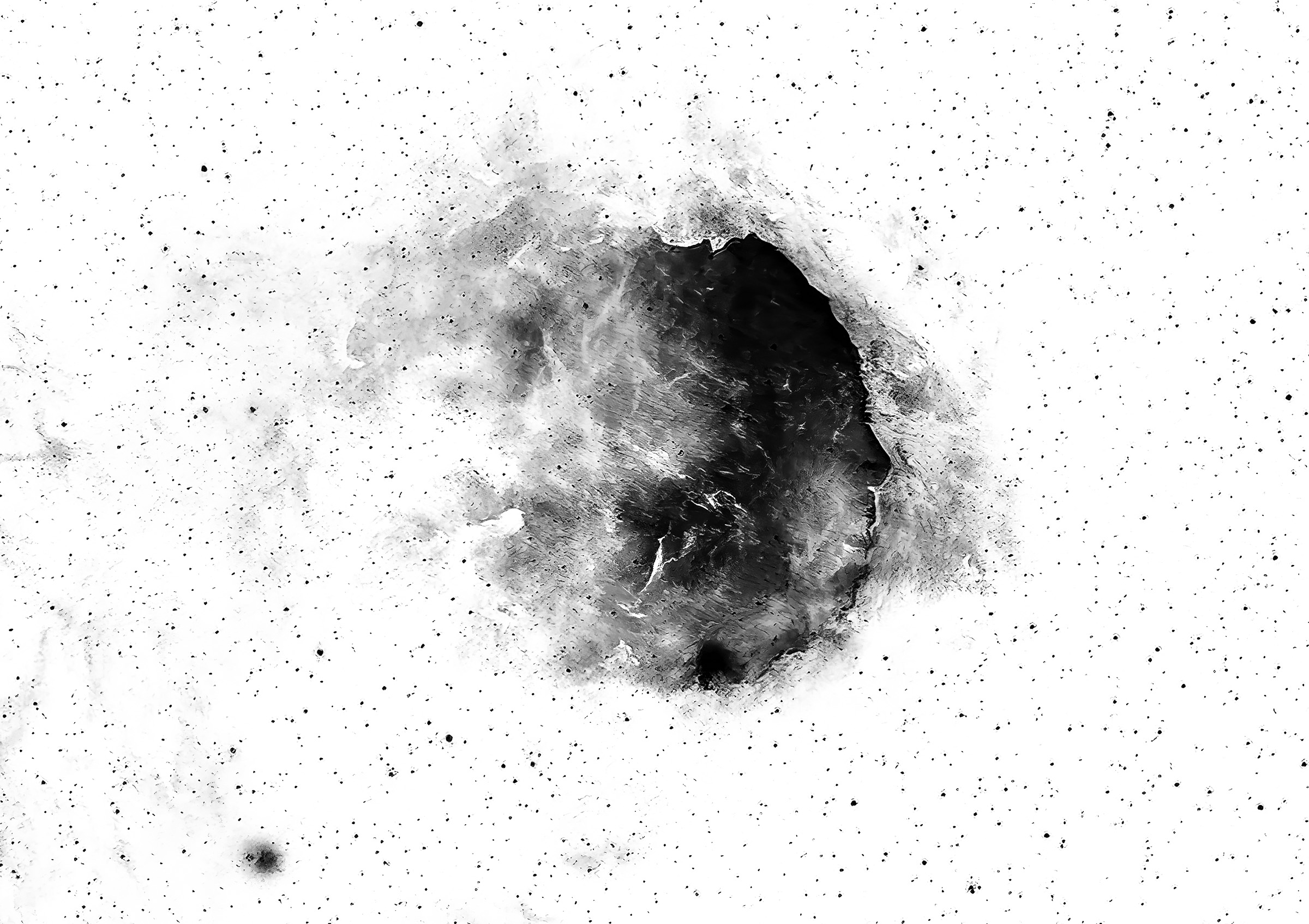
The Shadowed Silhouette | An inverted monochrome presentation isolating the deep molecular profile of the Gabriela Mistral Nebula (NGC 3324).
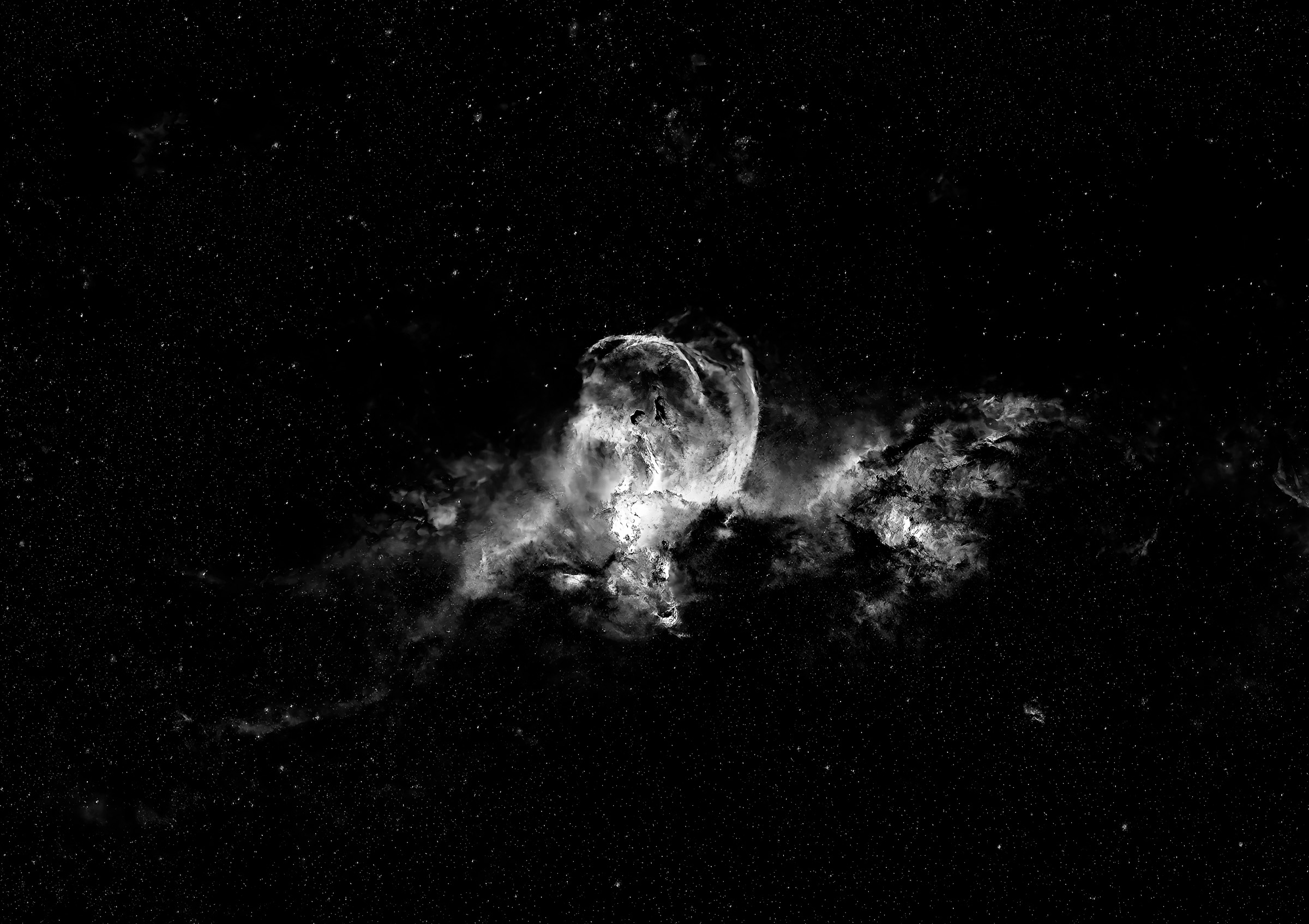
The Cosmic Torch | The structural wide-field view anchoring the classic pareidolian shapes within the expansive RCW 57 complex.
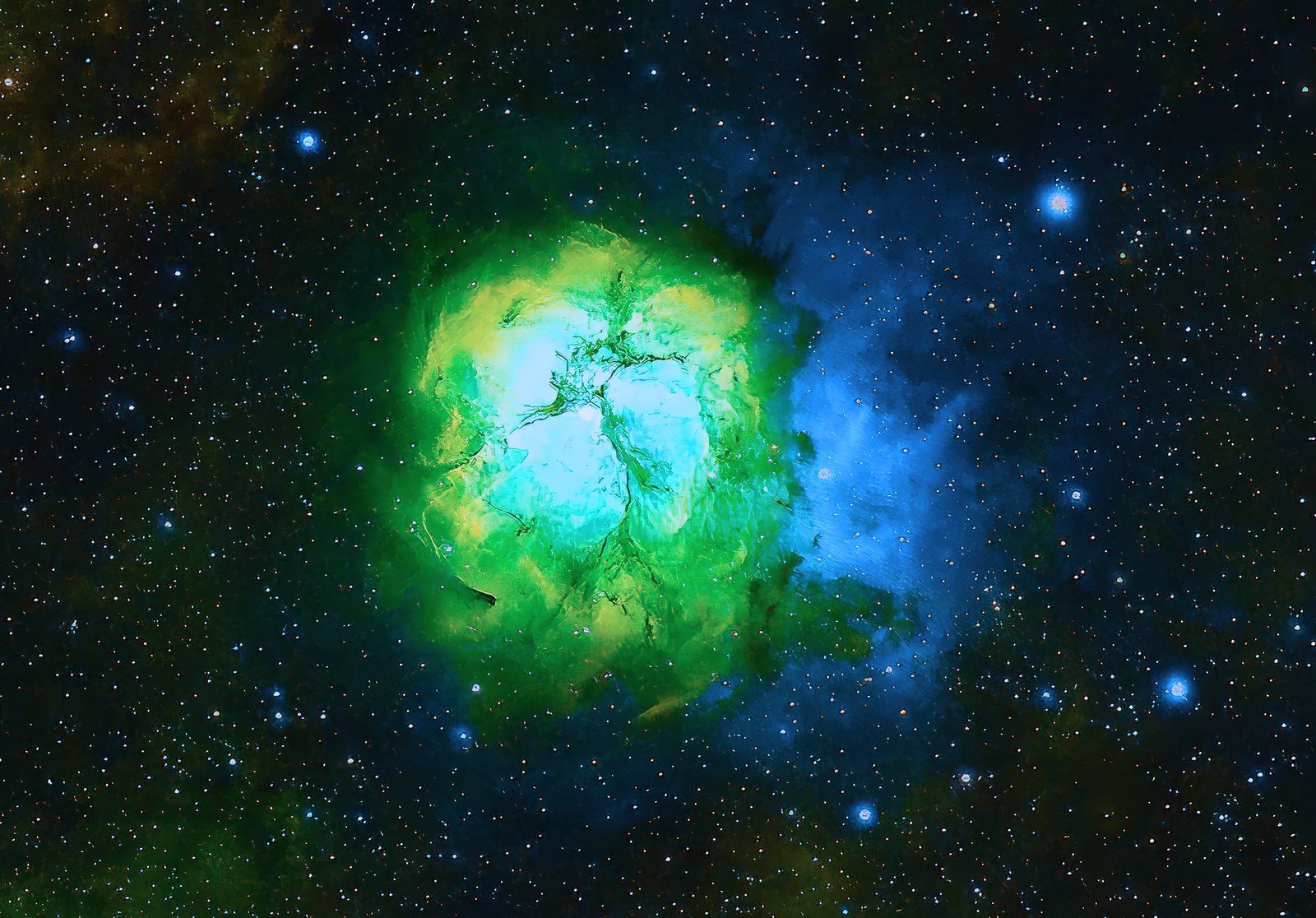
The Hungry Cosmos | This dynamic narrowband rendering of the Trifid Nebula (M20) isolates dense interstellar gas lanes. While the glowing green core dominates the frame, looking to the right reveals a distinct blue profile appearing to ingest a small dark cloud, or "bean."
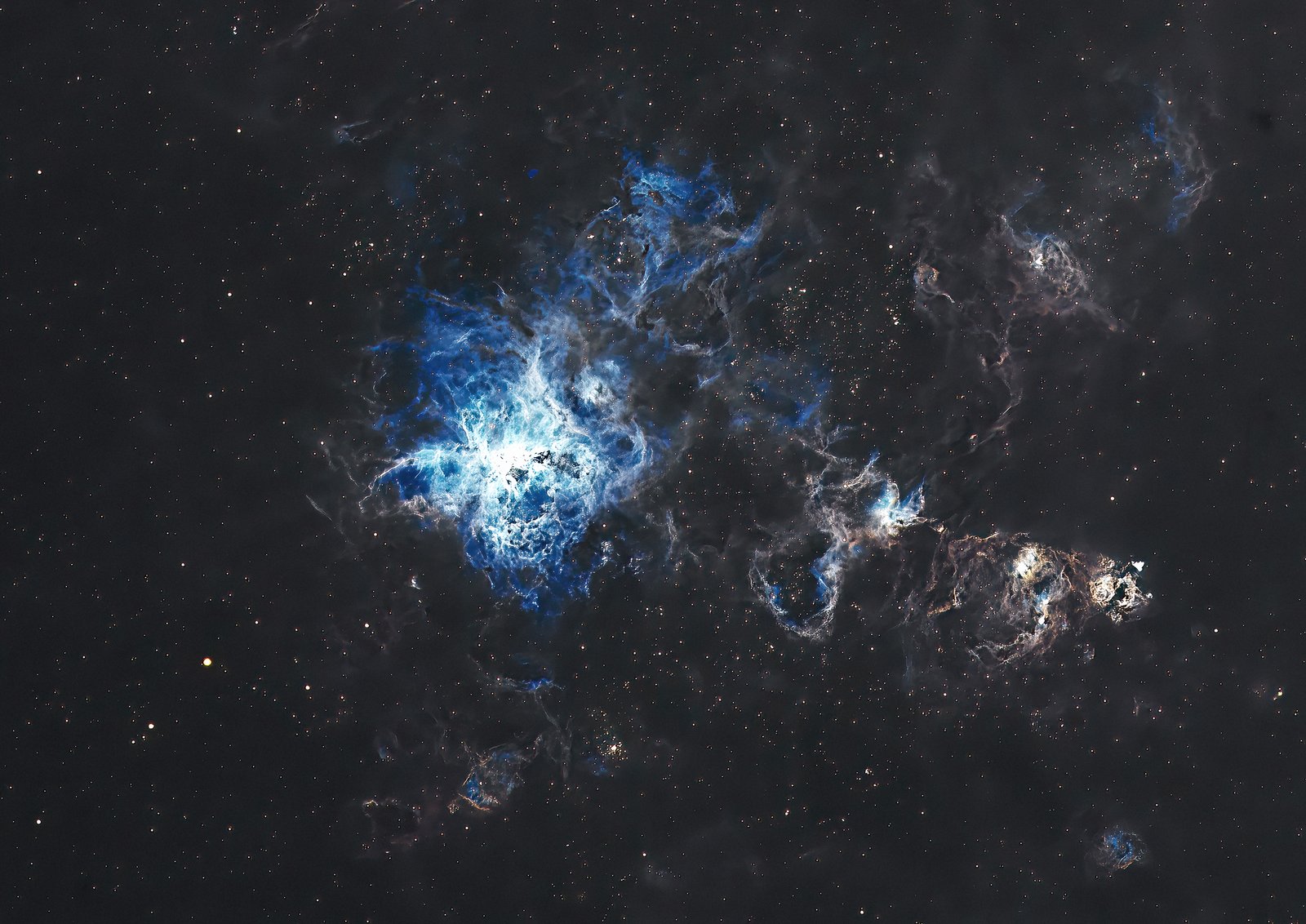
The Celestial Vixen | Nestled in the Large Magellanic Cloud, this wide-field view of the chaotic Tarantula Nebula spans hundreds of light-years. Drifting into the smoky gas layers just to the top right of the intense central cluster, a clever observer can spot the sharp, triangular profile of a fox's face peering through the dark lanes.
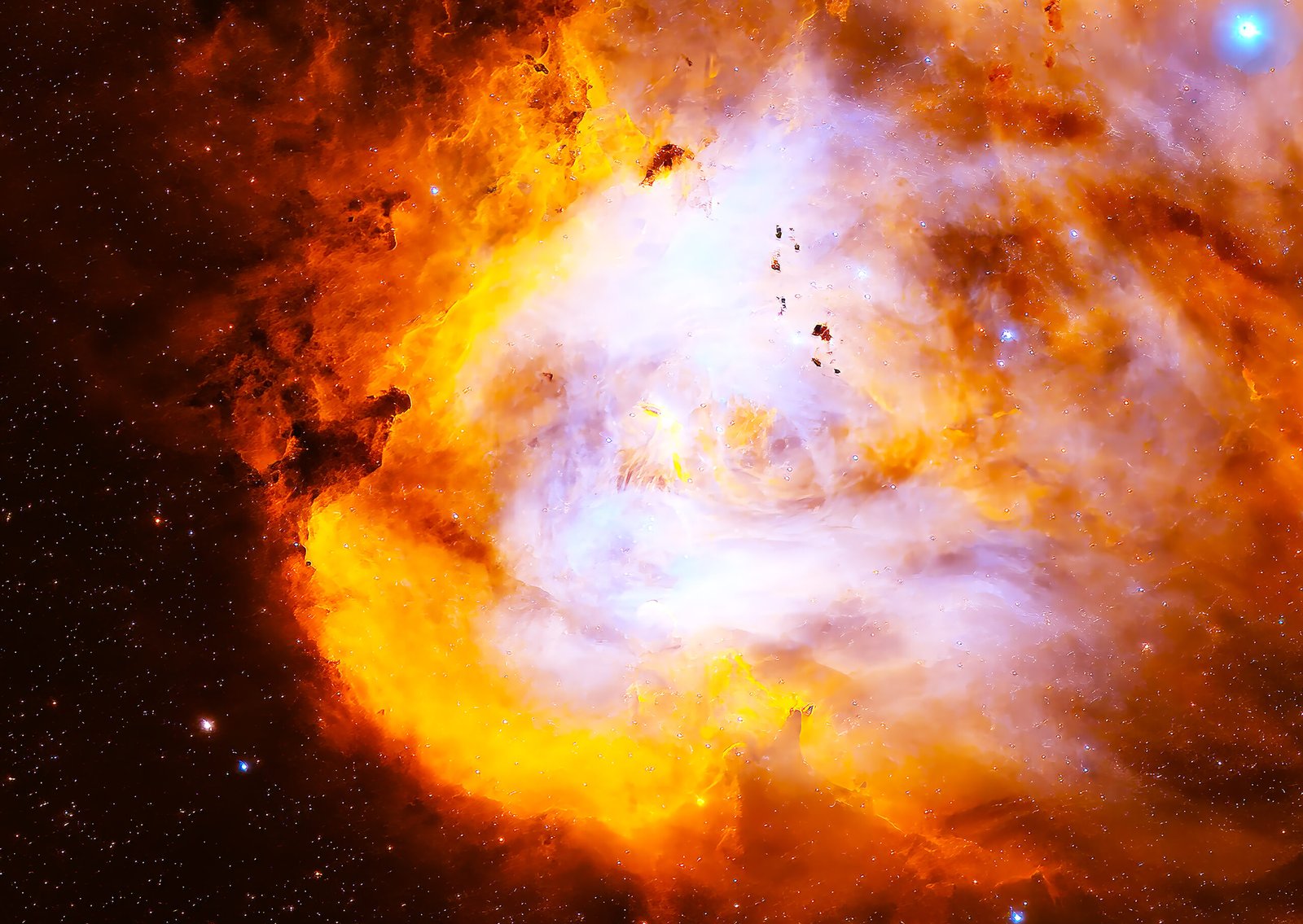
Spacewalker | Intense radiation from massive stars sculpts the glowing, ionized hydrogen walls of IC 2944. Along the sharp, high-contrast ridge on the left-hand edge of the frame, the dark Bok globules and bright gases seamlessly form the silhouette of an astronaut scaling a cosmic precipice.
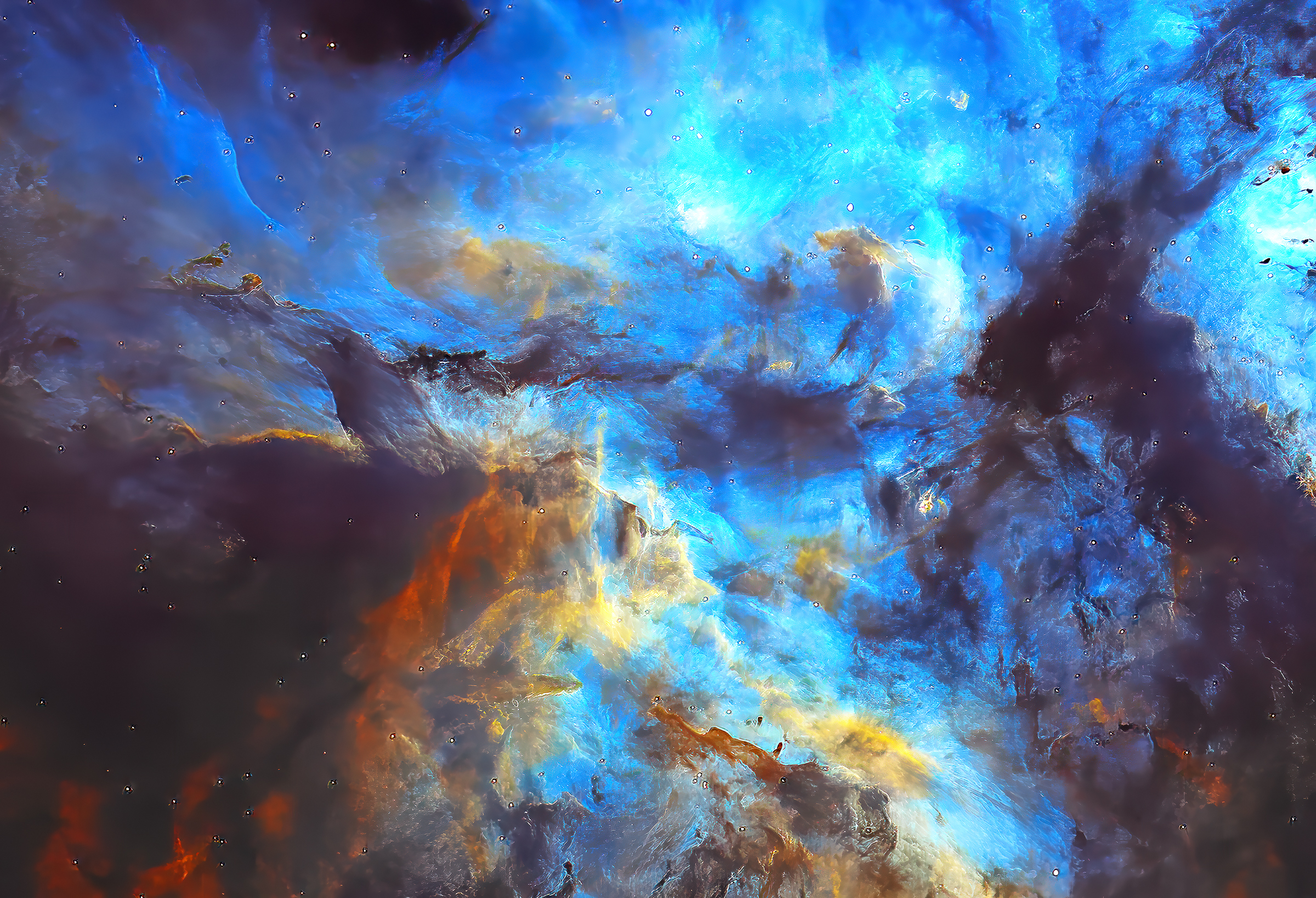
Avian Sentinel | This tight perspective of the Great Carina Nebula highlights complex shockwaves of gas and dust. In the upper right quadrant of the central glowing emission field, a striking, upright bird silhouette stands at attention, perfectly shaped by the surrounding cold molecular clouds.
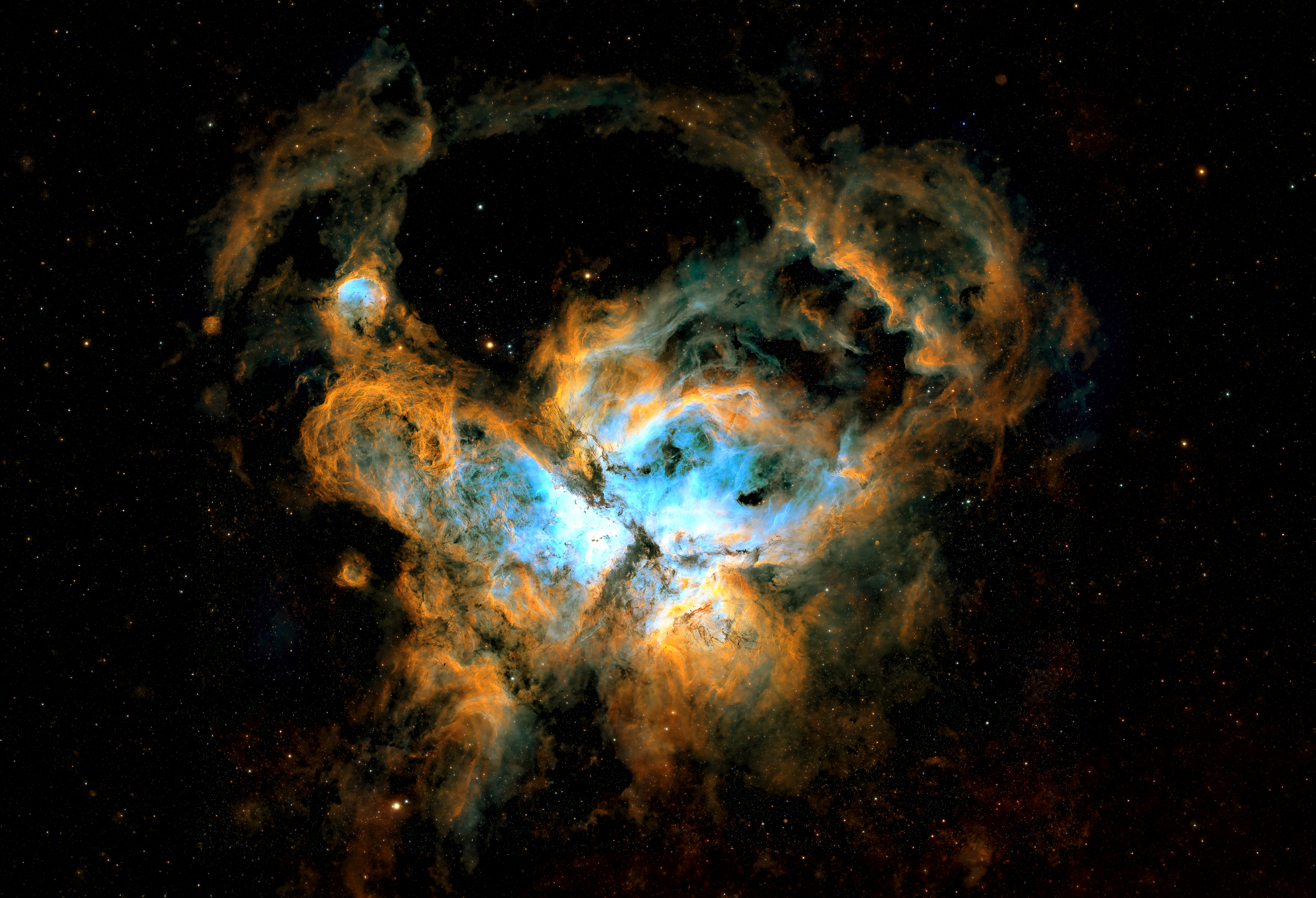
Stellar Play | By shifting framing metrics, the immense loops of gas within Carina tell a completely unexpected visual story. The curving dark lanes and bright arcs near the upper rim assemble into a playful cat intently biting down on the mechanical barrel of a cosmic cannon.
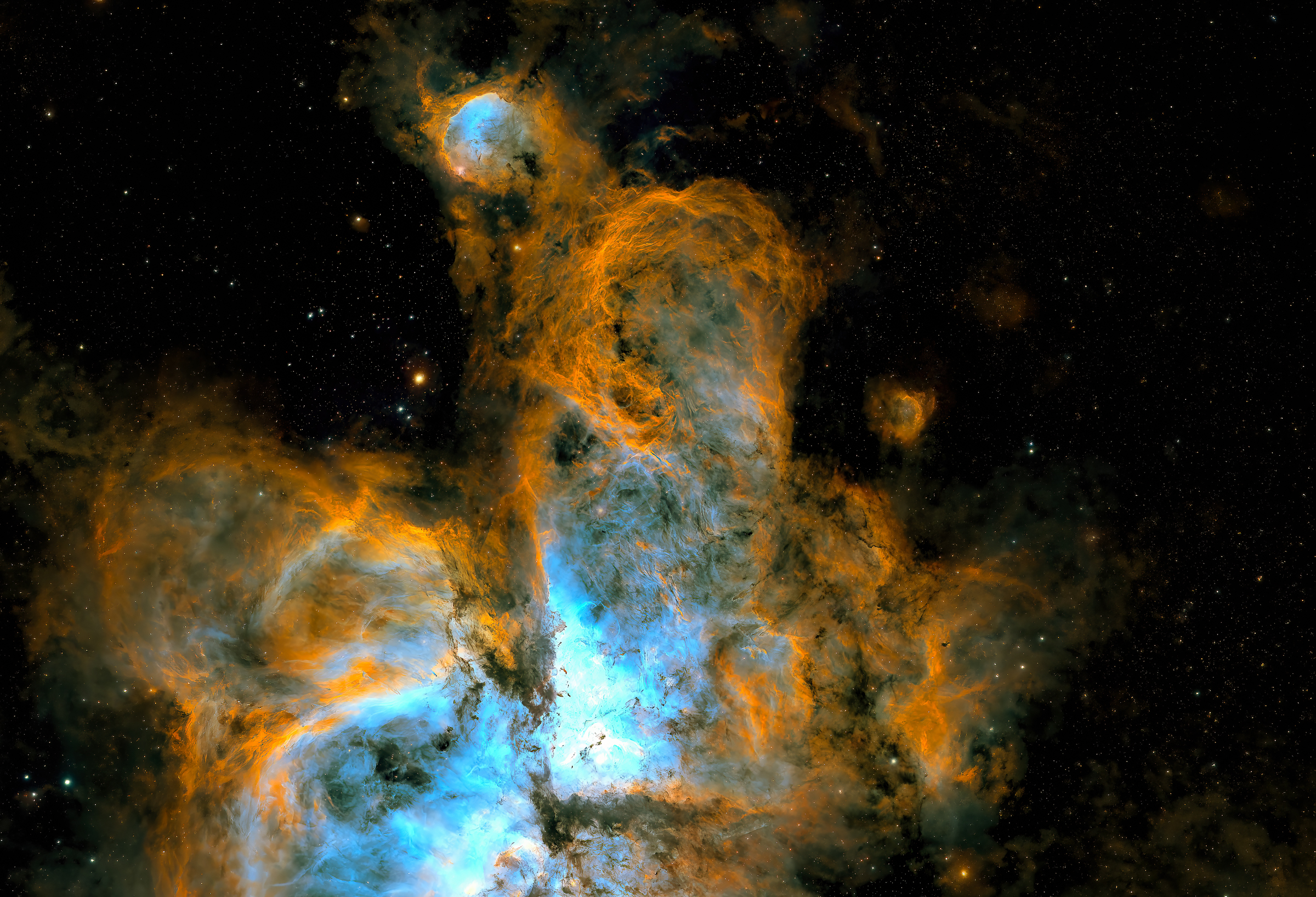
The Monolith | Rotating the massive pillars of the Carina Nebula vertically reconfigures our spatial interpretation. The sweeping, elongated columns of cold gas and dark dust transform into an elegant, standing statue draped in long, flowing hair.
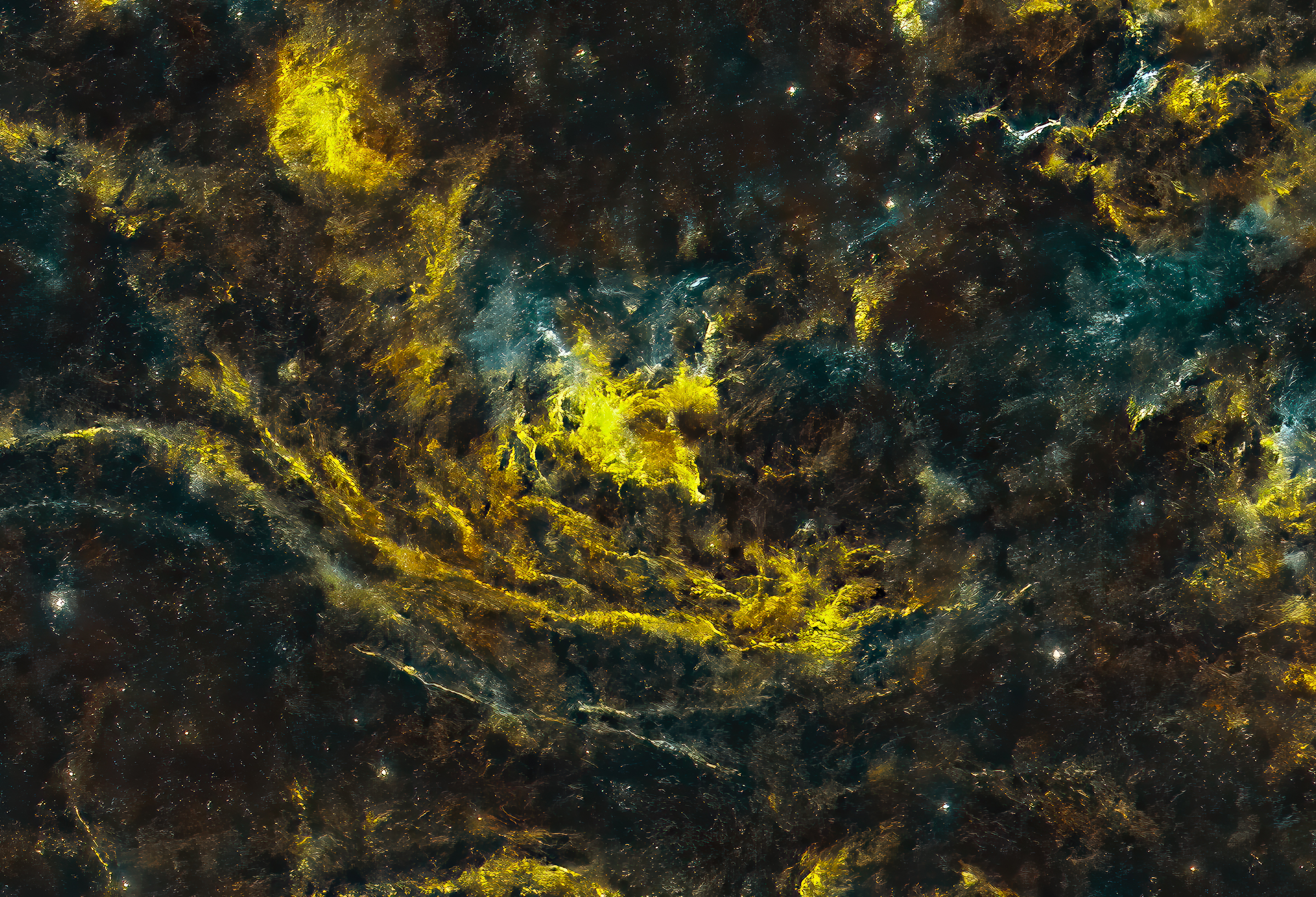
Clandestine | This high-detail, textured mosaic captures a dense field of interstellar dust and supernova remnants. Right in the center of the chaotic golden texturing, a subtle arrangement of shadows and highlights outlines the narrow, watchful face of a fox.
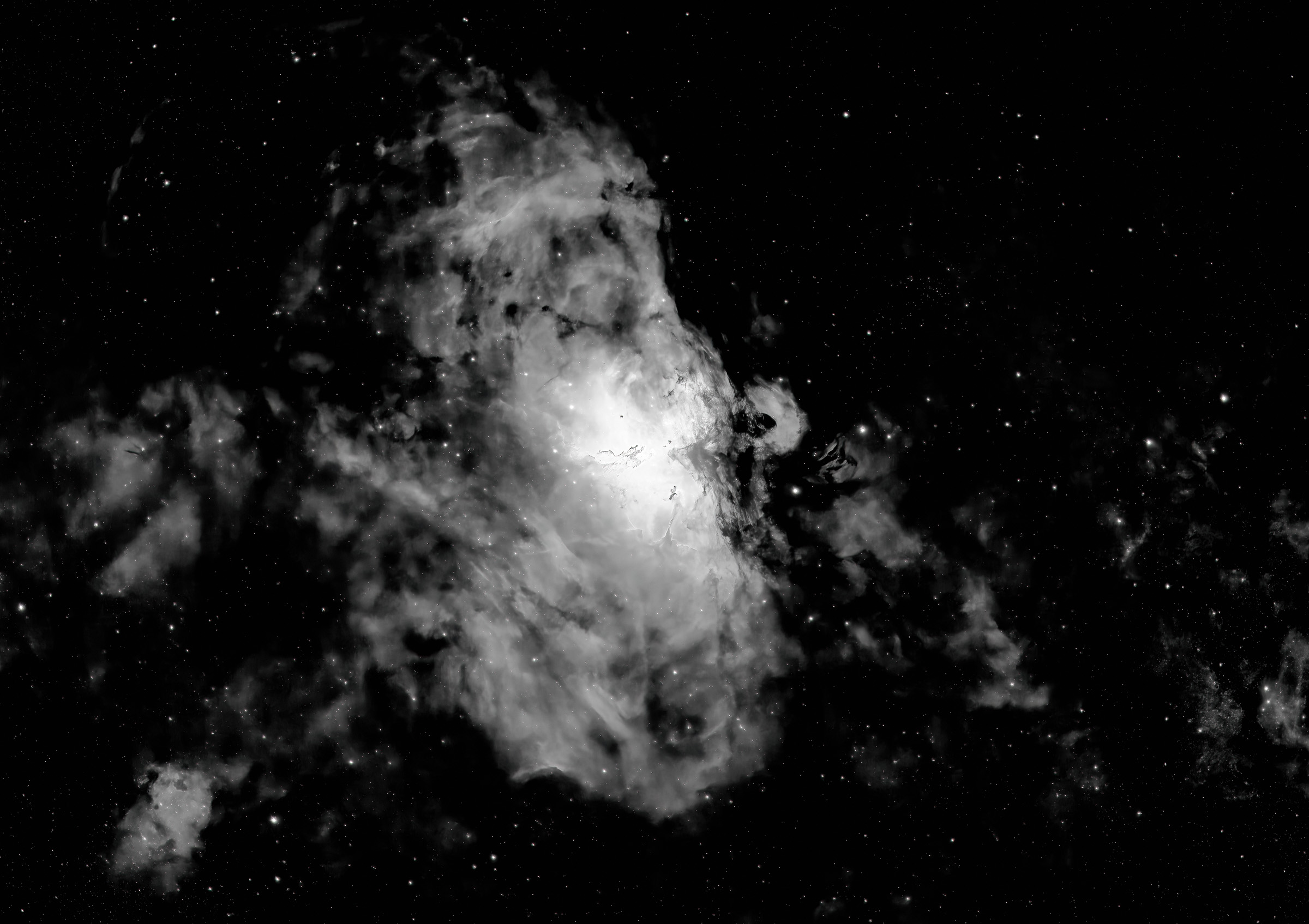
Pantheon | This high-contrast monochrome rendering captures the core of the Eagle Nebula (M16). The immense, towering columns of gas and star-forming structures merge to create the profile of a Greek god gazing stoically off toward the right side of the frame.
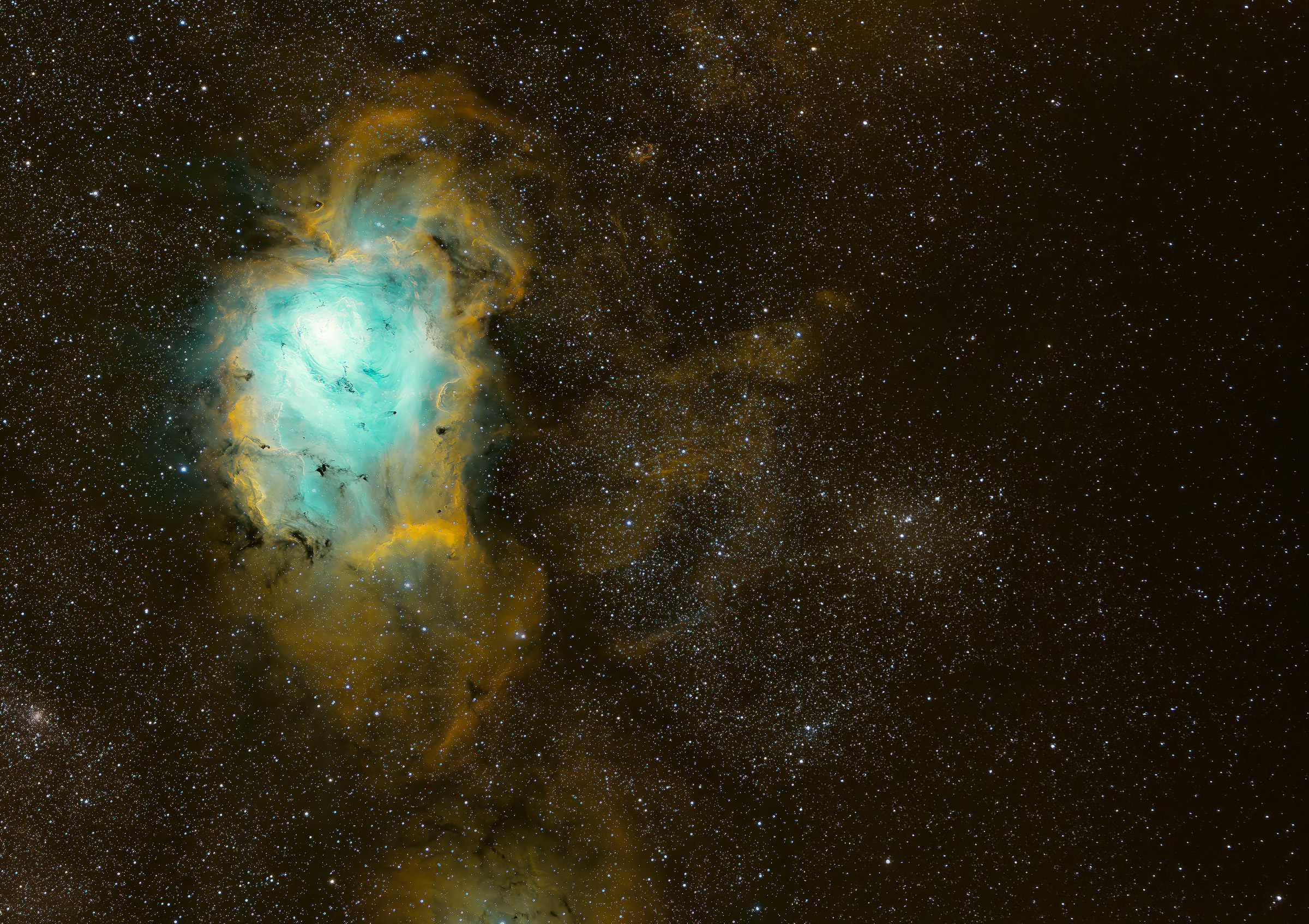
The Equine Lagoon | While the traditional Horsehead Nebula resides in Orion, this close crop of the Lagoon Nebula (M8) challenges catalog names. The dense, golden molecular cloud wrapping around the glowing teal core perfectly mimics the majestic arch and muzzle of a horse's head.
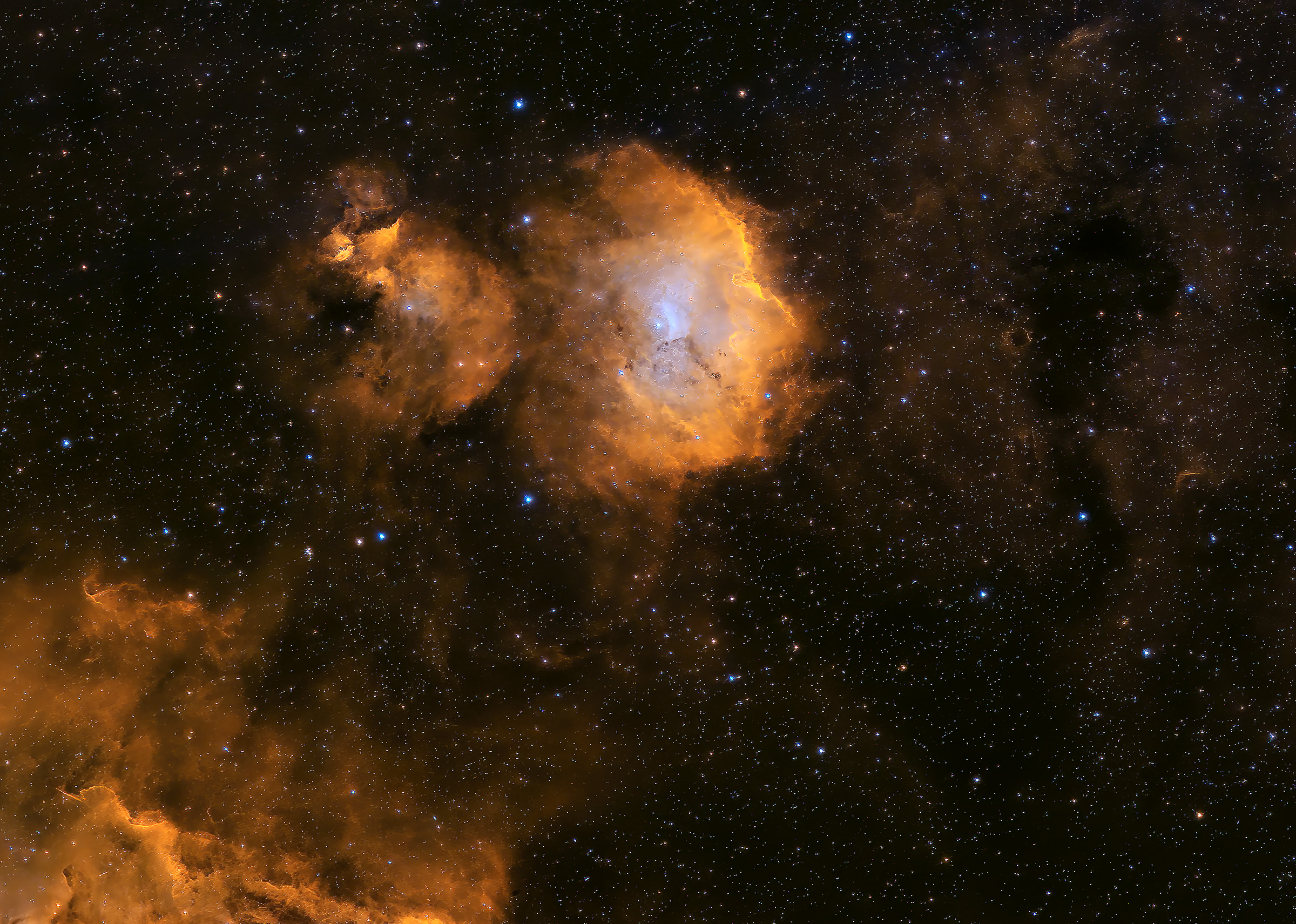
The Watcher | Focusing on the massive emission structures of IC 2944 reveals a complex interplay of light and shadow. The main silhouette near the center curves into a distinct, sharp head profile looking intently off toward the right horizon.
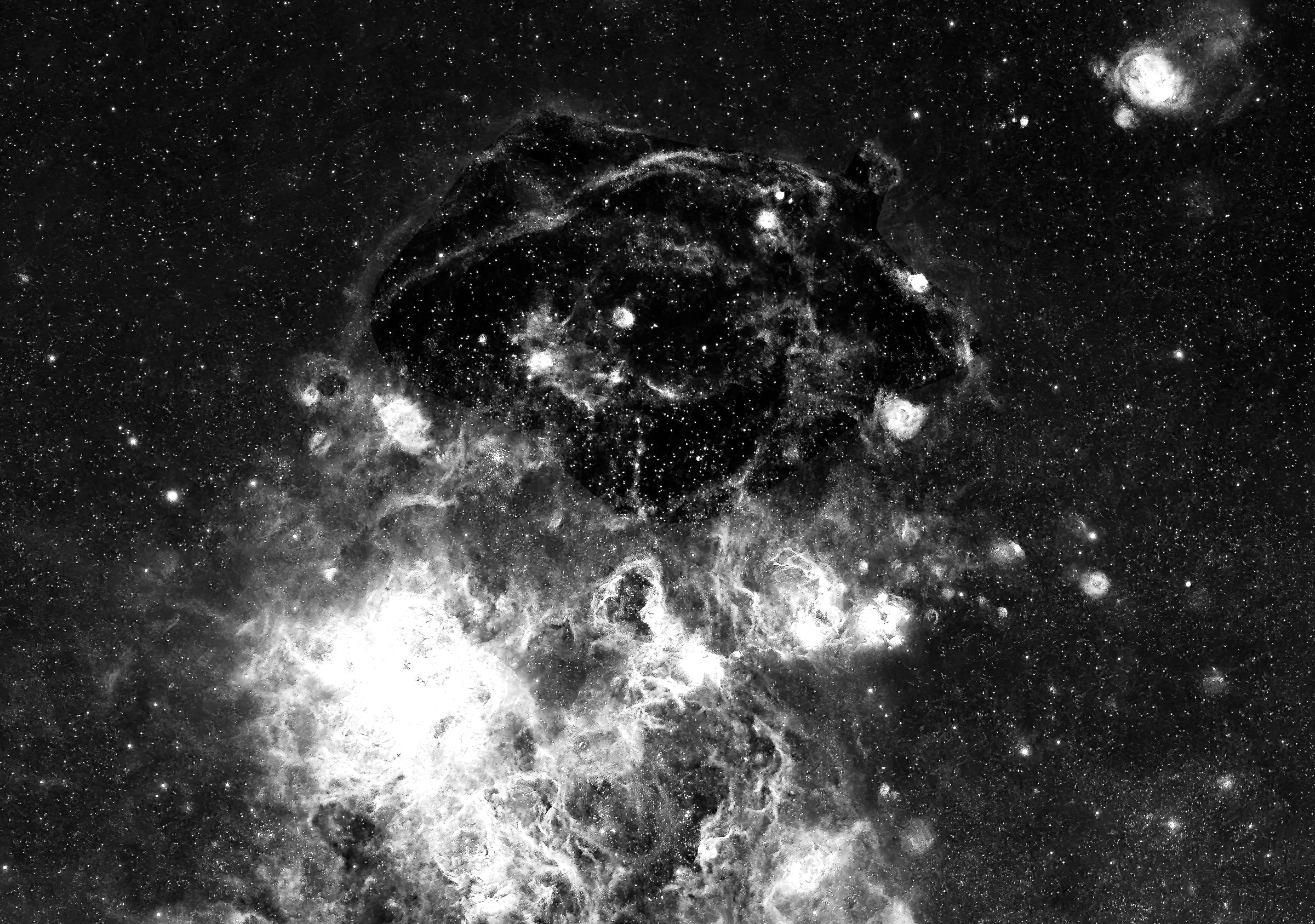
The Visitor | Deep exposures of the Tarantula Nebula highlight the dark, opaque filaments of interstellar dust weaving through ionized gas. Hovering directly above the intense stellar nursery, a shadowy, elongated anomaly creates the striking impression of a dark alien floating in the void.
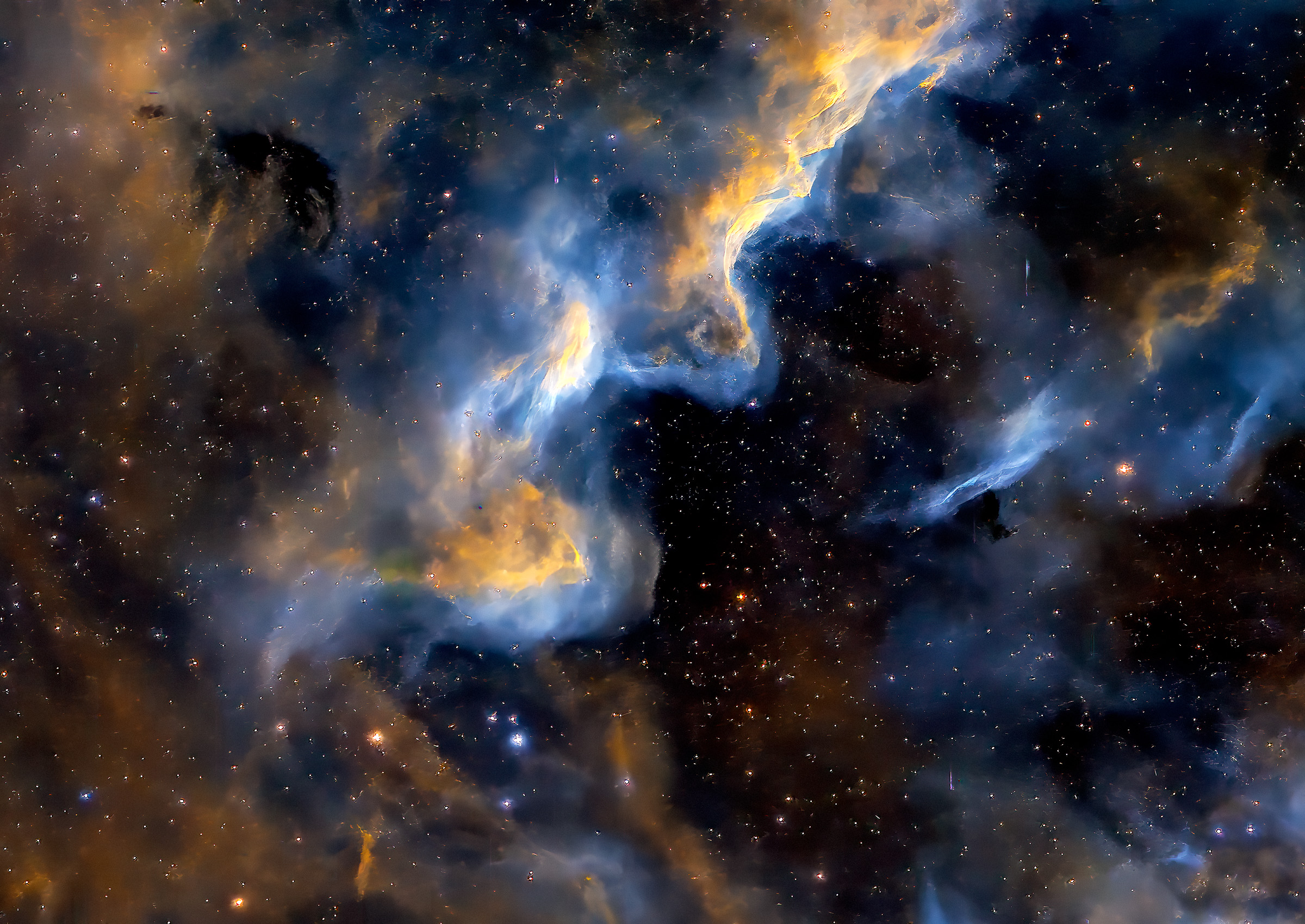
Dual Perspectives | The expansive gas lanes of the Carina Nebula act as an ultimate test of visual processing. Depending on how individual neural pathways filter the dust structures, observers will either see a grand, ethereal "God" figure looking downward, or the elegant head of a deer peering down into the depths.
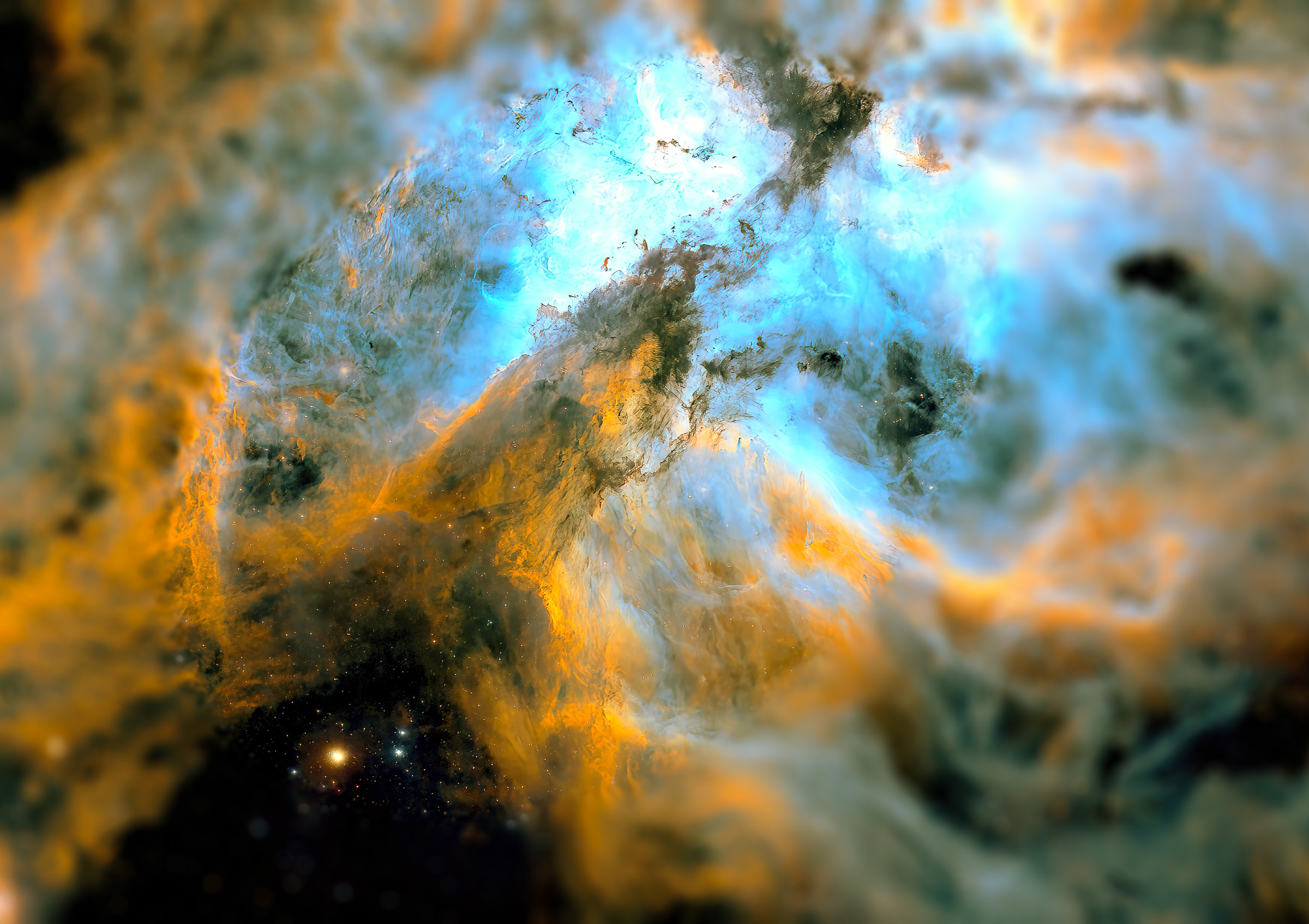
Genesis | By intentionally softening and expanding the focal plane of the Carina emission data, the structural sharpness of the dust lanes falls away. What remains is a soft, explosive burst of raw energy and light, beautifully mimicking a moment of cosmic ejaculation.
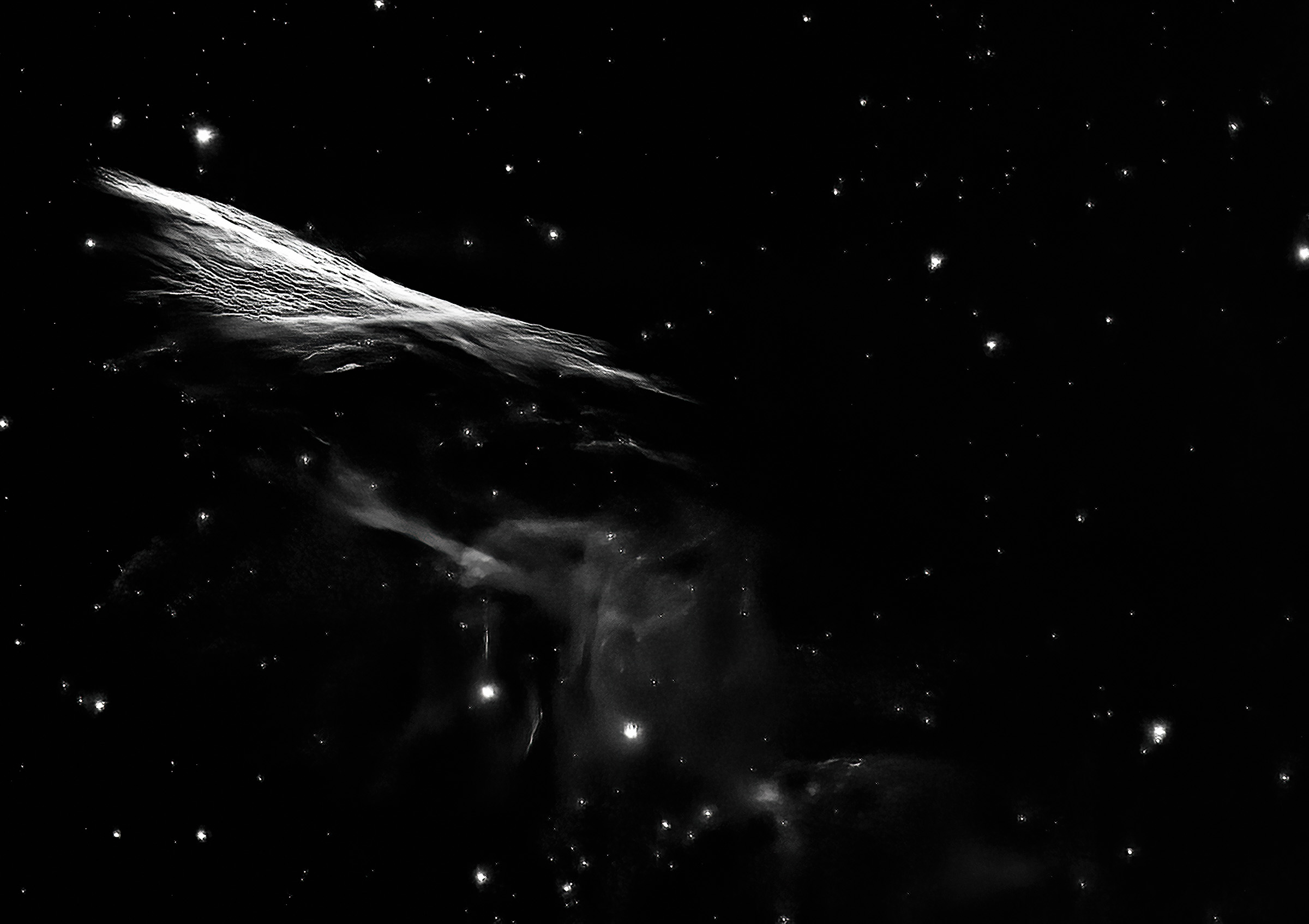
Boldly Go | The Pencil Nebula (NGC 2736) is a linear shockwave from a historic supernova explosion. The slender, hyper-velocity filament of glowing gas looks precisely like a legendary *Star Trek* vessel—resembling the Voyager or the Enterprise—streaking at warp speeds across the interstellar medium.