
Towards a Post-Merger Cosmic System: Confederation Model
On astroanderson.com, photons are collected that, from our perspective, have travelled millions of light-years across space; from the photon’s own frame of reference, when it hits the camera sensor, the journey is instantaneous—a phenomenon explored in The Photonic Handshake. Beyond the wonders of deep space, this website is built on a foundational philosophy: the moral, social, and political architectures of humanity frequently mirror the immutable laws governing the stars: from one perspective, we are stardust attempting to understand itself. When our earthly systems fracture, contemplation of the universe can help us consider our own deep crises.
This intersection of science and human story defines my own retirement: having spent a career in academia and public health medicine, one of my current sanctuaries is a personal library of over two thousand volumes, split evenly between non-fiction and fiction. It is a space where different disciplines converse. The undisputed apex of my non-fiction collection has been Albert Einstein’s Relativity: The Special and the General Theory. Einstein revolutionized physics by replacing Isaac Newton’s absolute cosmos with a fluid, four-dimensional space-time fabric, proving that gravity is warped space-time and that time itself is relative: for the photon hitting the camera sensor, the total spacetime interval along its path is exactly zero; ancient history and the present moment collide in a single flash of energy.
Recently, I have read historian Omer Bartov’s “Israel: What Went Wrong?”, placing it in importance alongside Einstein: Reading Bartov’s diagnosis of how an idealistic, liberatory movement degenerated into an exclusivist state ideology, I found myself weeping. Yet, as an academic accustomed to seeking systemic patterns, my mind turned from Bartov’s pages to the mechanics of my own astrophotographs. Human societies, bound by the material vulnerabilities of the universe, frequently mirror the structural lifecycles, gravitational dependencies, and catastrophic systemic failures observed in the deep cosmos.
1. The Degeneration of Energy: From Liberation to Entropic Collapse
In the Southern Hemisphere gallery is the Orion Nebula (M42), a stellar nursery, a chaotic interstellar cloud where gas and dust collapse under gravity to ignite thermonuclear fusion in newborn stars. It represents the raw, emancipatory energy of a systemic beginning.
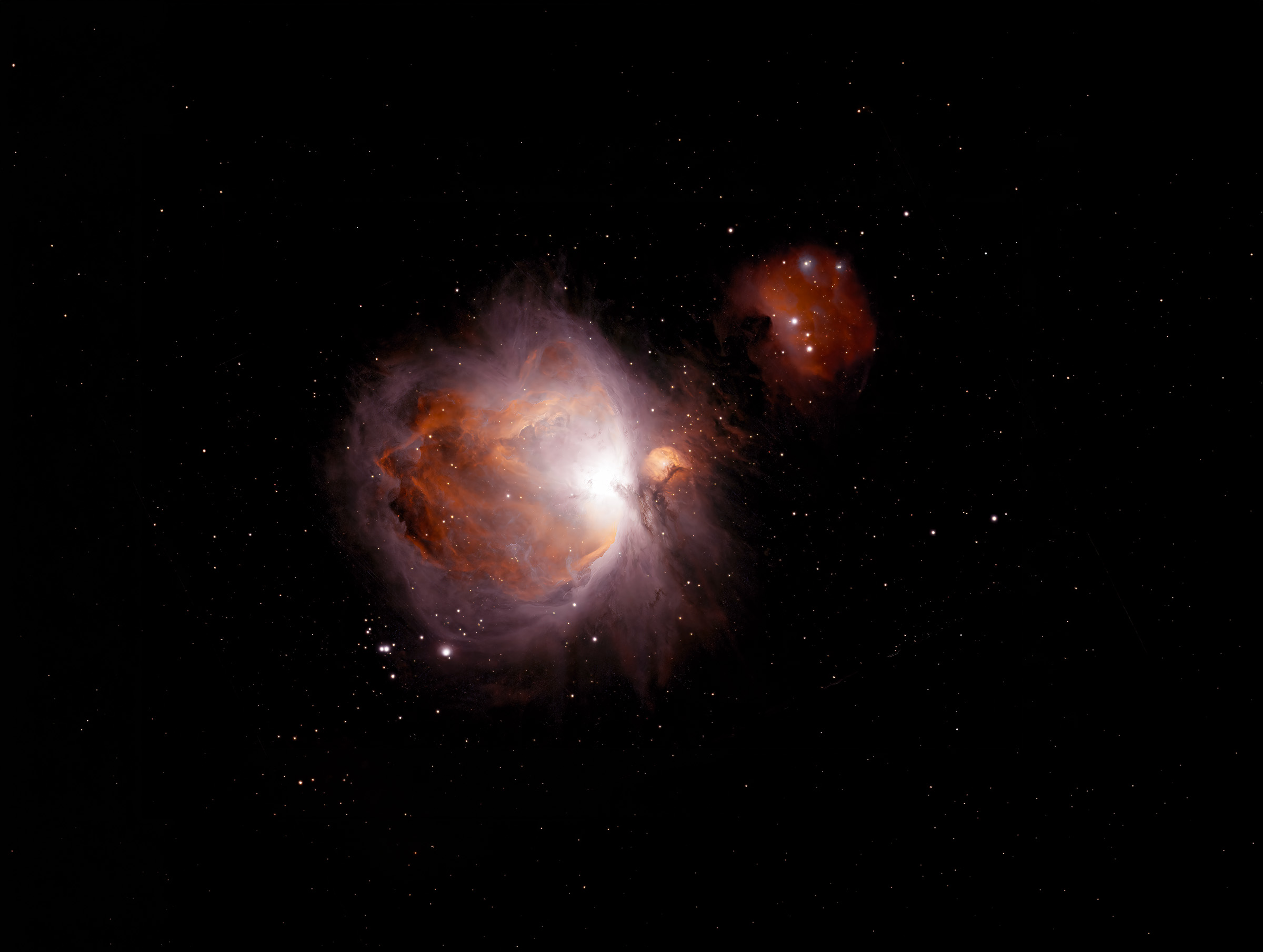
The Orion Nebula (M42). A cosmic cradle where interstellar gas collapses under its own gravity to birth brilliant new stars. It serves as a visual metaphor for foundational movements—systems characterized by raw, liberatory energy that must eventually find a sustainable structural equilibrium or face premature degradation.
Bartov demonstrates that Zionism initially possessed a comparable revolutionary, liberatory energy, emerging as a response to centuries of European antisemitism. He conceptualizes early Zionism as a “Jewish rebellion against fate and oppression, religious resignation and prejudice.” However, just as stars inevitably exhaust their nuclear fuel and expand into destructive red giants, Bartov charts the state’s ideological degradation.
According to Bartov, by failing to enact a formal constitution in 1948 that guaranteed universal civic equality, the state’s foundational idealism gradually ossified into an ethnonationalist framework:
“One of the things that went deeply wrong is that Israel never had a constitution, and that Zionism became a state ideology… it kept transforming itself into what it is today, which is an insupportable ideology [of] extremism, of militarism, of racism, and eventually of genocide.”
The thermodynamic lesson of the cosmos is clear: initial creative energy is not self-sustaining. Absent a robust, equitable framework to distribute political mass, structural entropy will ultimately prevail.
2. The Illusion of Isolation: Bound by Gravitational Fate
When photographing the Andromeda Galaxy (M31) in the Northern Hemisphere, the observer is presented with what appears to be a majestic, sovereign “island universe,” completely isolated within the vacuum of space.
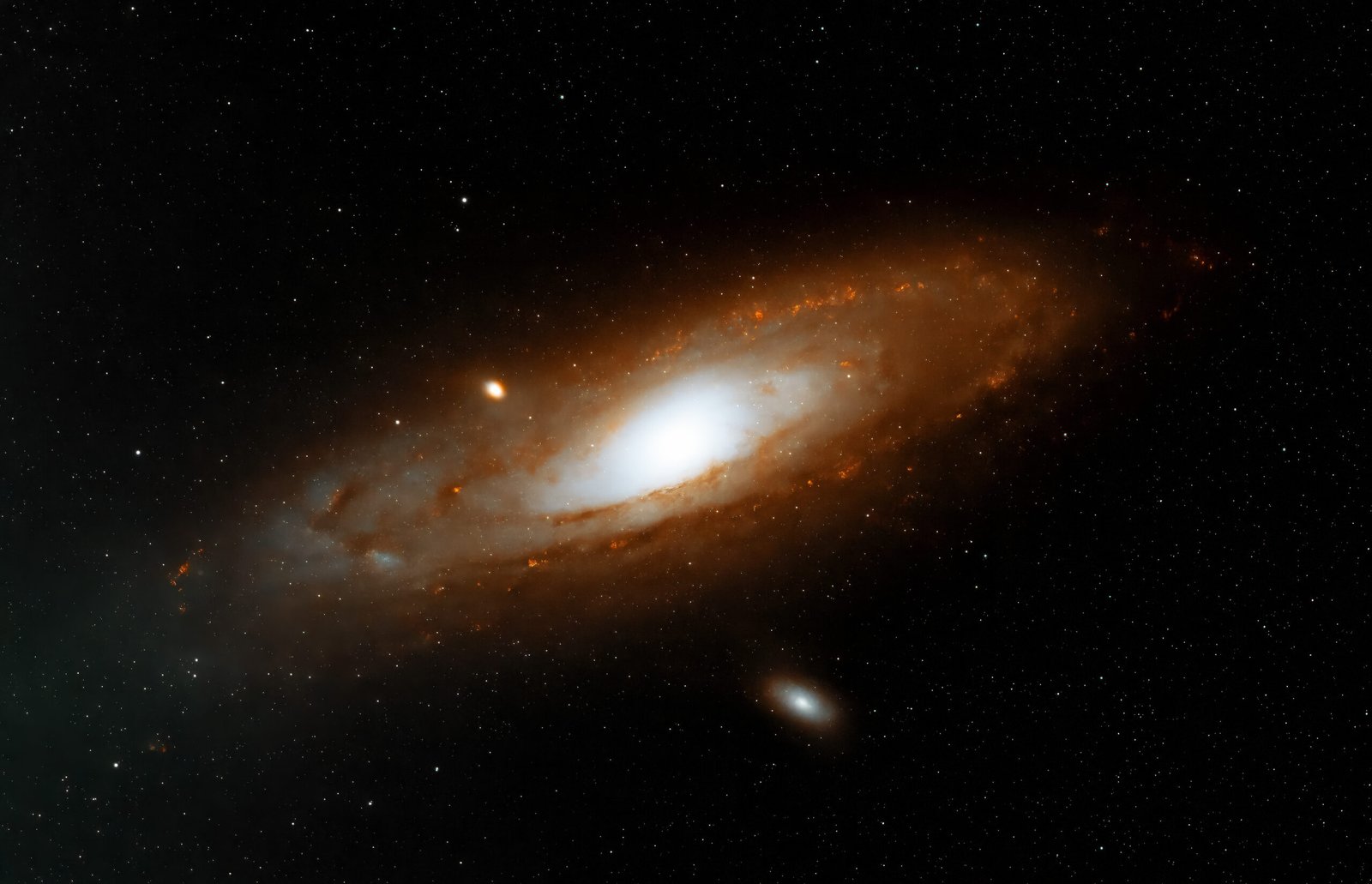
The Andromeda Galaxy (M31). A majestic “island universe” that appears entirely self-contained and isolated in the deep cold of space. In reality, it is locked in an inescapable gravitational embrace with our own Milky Way, reminding us that isolation is an illusion and that distinct systems are ultimately bound to a shared fate.
Bartov’s critique centres on a parallel political illusion: the assumption that a state can maintain an insular, liberal democracy internally while permanently subjugating millions of people under occupation externally. Decades of ignoring this interconnectedness led to a normalization of oppression, establishing what Bartov identifies as a fatal “mix of indifference and denial [which] is the consequence of decades of occupation, which led to dehumanization.”
Like two approaching galaxies, the fates of these two peoples are bound by an unyielding geopolitical gravity; absolute internal security cannot be engineered through the external destruction of the other.
3. Cosmic Scalability: Macrostructures and Global Fractures
While Bartov’s diagnosis focuses specifically on the existential trajectory of Israel, his underlying thesis exposes a universal pathology of the nation-state – what my namesake, Benedict Anderson (no relation), termed ‘imagined communities’. The degeneration from a liberatory beginning into an exclusionary framework, the dangerous fiction of isolation, and the inevitably traumatic intersection of conflicting peoples are patterns replicated across numerous global flashpoints.
To visualize this macro-level truth, we must look beyond individual galaxies and expand our perspective to the structural totality of the universe itself, such as the comprehensive mapping of cosmic structures compiled by the Dark Energy Spectroscopic Instrument (DESI).
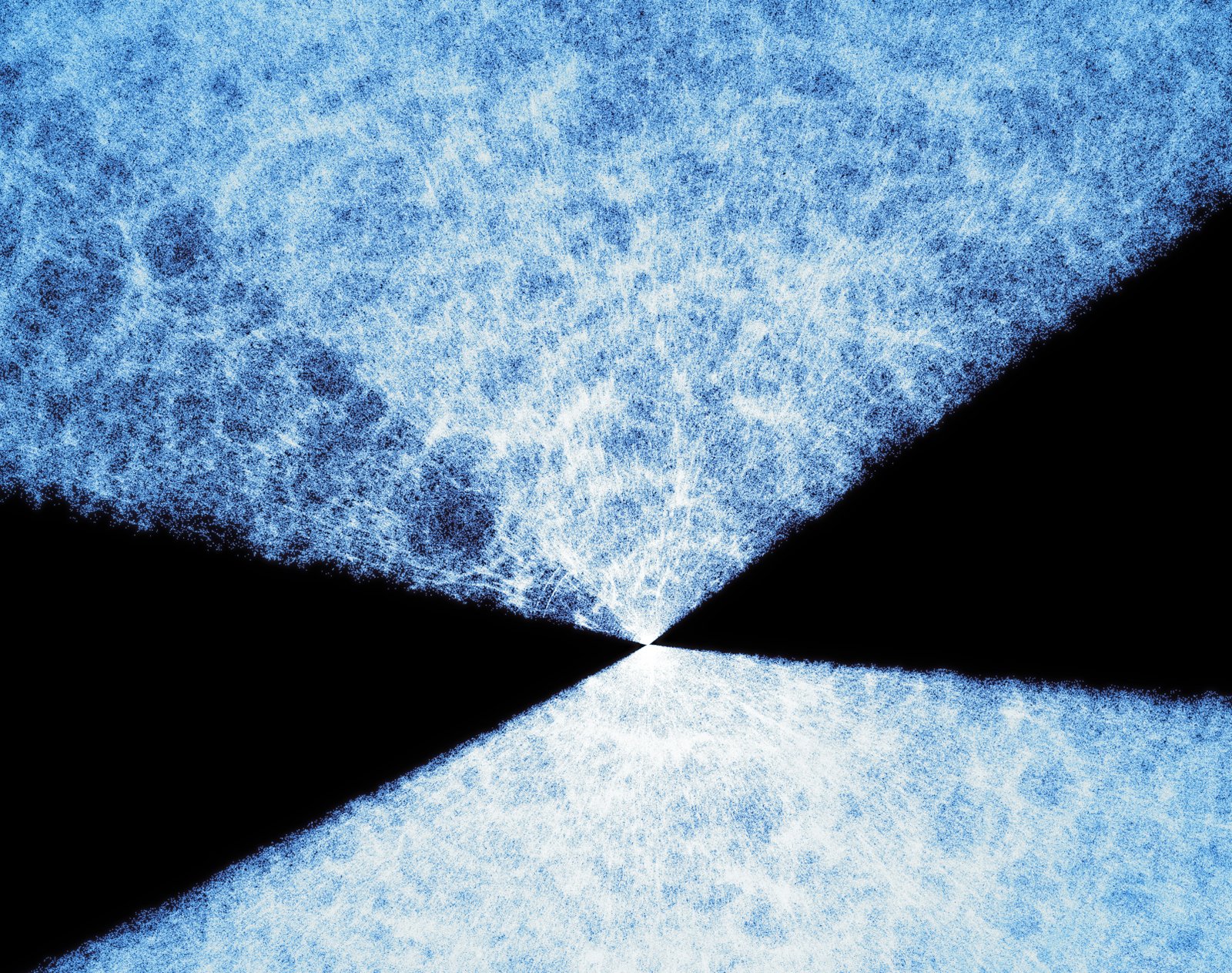
DESI 3D Map of the Universe. A high-resolution map weaving together tens of millions of galaxies and quasars into an interconnected cosmic web. It serves as a visual metaphor for global geopolitics, demonstrating that individual systems do not exist in isolation; a structural failure or violent disruption in a single node cascade outwards, destabilizing the equilibrium of the entire global web.
Human geopolitics behaves precisely like this macro-cosmic web. The crises we witness are never localized anomalies. When a state adopts an insupportable ideology of extremism or militarism, it introduces a severe destabilizing mass into the global network. Bartov’s framework reminds us that the mechanics of occupation, systemic exclusion, and the erosion of universal civic rights are universal hazards. Whether on Earth or in deep space, ignoring the systemic interdependence of our global cluster does not grant immunity from its laws; it merely accelerates a wider, collective equilibrium collapse.
4. The Reconfiguration of Systems: Interacting Dynamics in the Antennae Galaxies
To find a path forward out of this systemic ruin and rebuild from the wreckage of a collapsed equilibrium, we can contemplate the Antennae Galaxies (NGC 4038/4039), portraying the raw anatomy of cosmic trauma: immense tidal tails, stripped stellar matter, and massive shockwaves of interstellar gas.
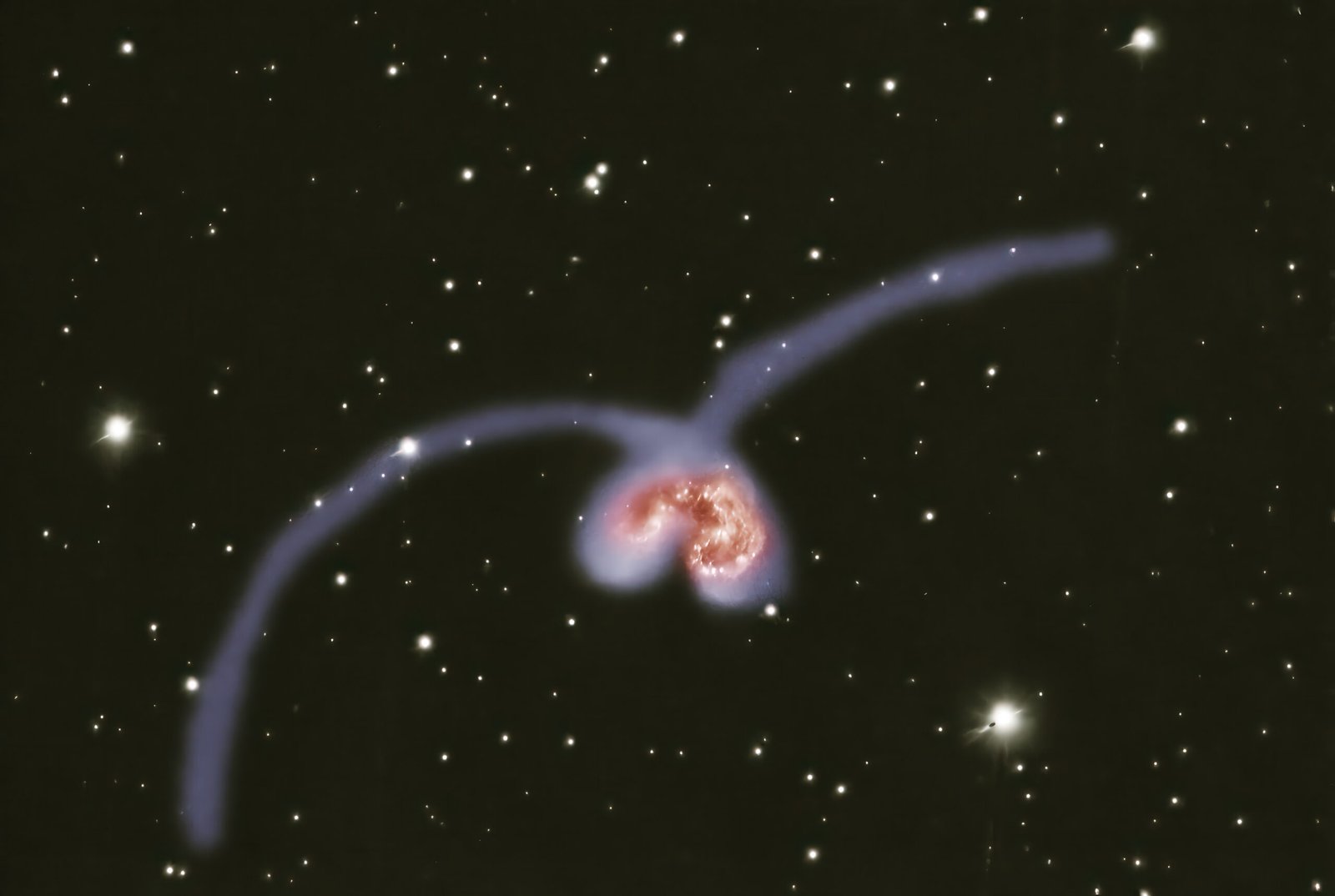
The Antennae Galaxies (NGC 4038/4039). A portrait of profound structural trauma. This deep-sky target captures two distinct galactic systems in the midst of a violent collision, producing chaotic tidal tails of stripped stellar matter. Yet, astrophysics dictates that this chaos is transitional, eventually settling into a unified, balanced elliptical system—reminiscent of the political confederation needed to resolve human crises.
Bartov’s text is a severe indictment, warning that without intervention, Israel is “heading down the path of theocracy and apocalypse following a pillar of fire and smoke.” Yet, his conclusions avoid total fatalism.
His proposed resolution mirrors a post-merger cosmic system: a confederation model. This envisions two independent, sovereign states aligned along the 1967 borders, yet structurally linked through open borders, shared economic infrastructure, and mutual security arrangements. Just as colliding stellar systems must eventually redistribute their mass to achieve orbital stability, survival in the Levant depends on abandoning the violent fiction of separation in favour of a shared, balanced gravitational space. However, achieving this balance is not merely a spatial dilemma for the present generation; it is an urgent debt owed to the next. If the current architectures of power refuse to merge into a sustainable equilibrium, the trauma does not vanish—it expands outward. It transforms an immediate political crisis into a permanent legacy of generational betrayal, offering a grim, localized preview of the broader structural collapses threatening our entire planet.
5. Generational Betrayal and Fading Futures: From Edwardian-set Fiction to Deep Space
To fully grasp the human cost of these structural failures, consider A.S. Byatt’s The Children’s Book. The novel functions as a devastating allegory for generational betrayal, delivering a timeless warning about the cost of prioritizing immediate ideological and economic indulgence over long-term stewardship.
In the novel, an insulated older generation lives in a state of perpetual adolescence—consuming vast resources, playing with utopian ideals, and ignoring the structural instabilities cracking beneath their feet. By refusing to act as responsible caretakers, they leave behind a fractured society, forcing their children to pay the check for a party they never got to enjoy. This profound dynamic directly connects Bartov’s warning to the defining macro-crisis of our modern era: climate change. Whether we look at the entrenched, insupportable frameworks of regional geopolitics or the global consumption of our biosphere, the psychology is identical. Contemporary society routinely prioritizes short-term dominance and economic extraction over collective survival, borrowing heavily against the future to fuel a comfortable, exclusive present. When the “adults in the room” treat both human lives and planetary systems as disposable resources, they leave behind a toxic fallout. Consequently, modern youth find themselves forced to shoulder the twin, catastrophic burdens of endless geopolitical hostility and existential climate anxiety.
This bleak socio-political and environmental reality has a mirror in the northern sky: M27, The Dumbbell Nebula.
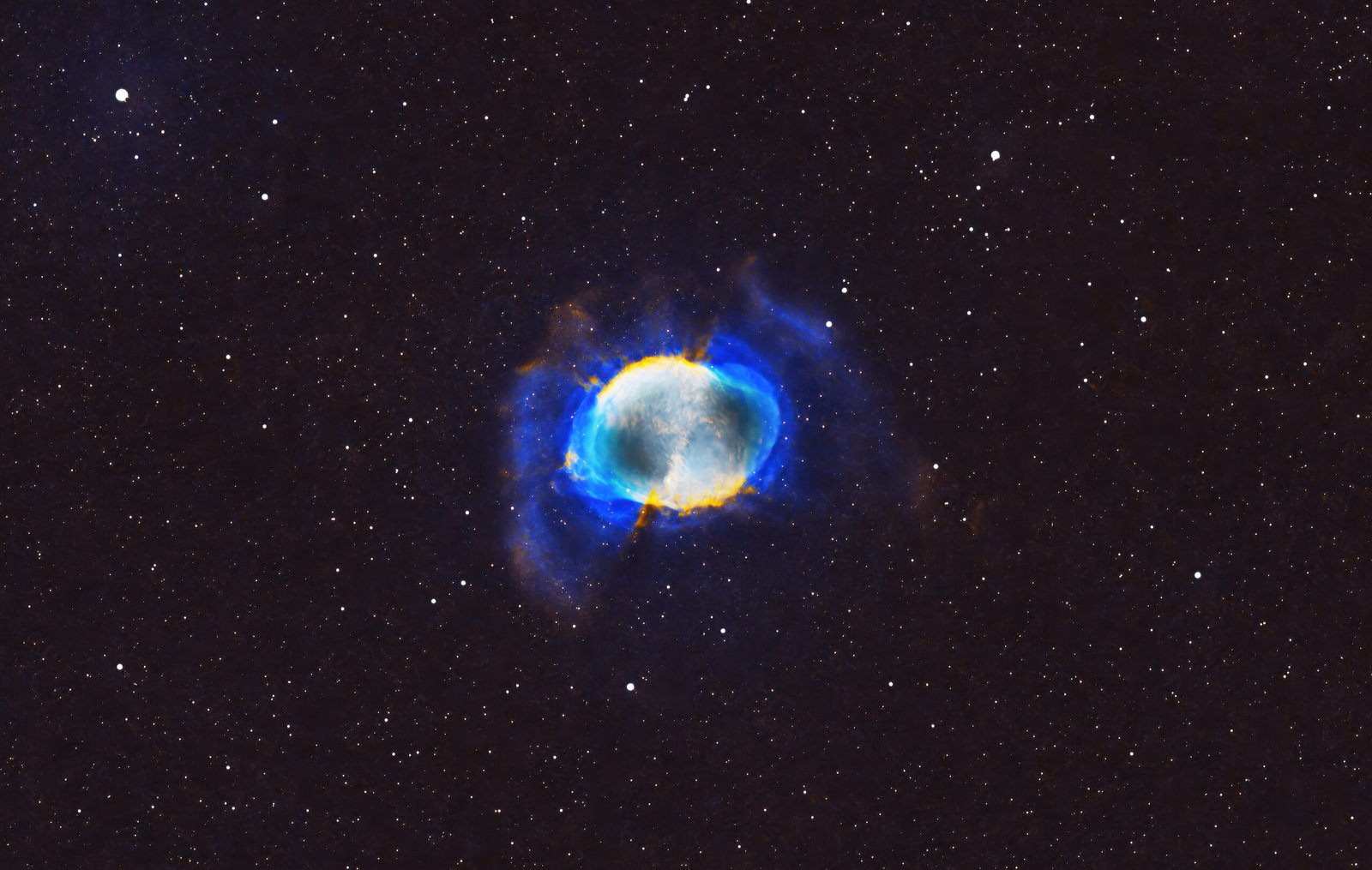
M27: The Dumbbell Nebula. A stunning facade masking cosmic decay, serving as a powerful visual metaphor for the expanding, chaotic fallout of generational betrayal.
The Dumbbell Nebula reflects Byatt’s themes of systemic decay masked by beauty, illustrating the environmental and societal fallout of a failed equilibrium. Visually, M27 is a stunning cosmic jewel, yet its splendour is born entirely from destruction—the outer atmosphere of a dying star violently cast off into space. At its core sits a faint white dwarf that has completely exhausted its nuclear fuel, mirroring an older generation that selfishly consumed its world’s resources to fuel a brilliant present. Today, M27’s gas clouds expand outward at thousands of kilometres per hour, forcing the surrounding space to absorb its chaotic fallout.
It is a striking cosmic reminder that whether in the pages of an Edwardian-set novel, the devastating realities of prolonged geopolitical occupation, or the accelerating collapse of our changing biosphere, the energetic excesses of the present are always paid for by the environment of the future. The children are left to inherit the ruins of a faded star.