
The Free Spirit of the Cosmos for Caroline.....
Astrophotography explores structure, law, and data, whilst revealing the role of individual pathfinding across the timeline of the cosmos. As I capture and process deep sky objects for astroanderson.com across both the Northern and Southern Hemispheres, certain structures remind me of Caroline, my second-born daughter (delivered by me at home), with whom I have never spent enough time.
The name Caroline derives from Germanic roots meaning “free person” or “strong.” In the context of physics and astronomy, freedom is not the absence of order, but rather the capacity of matter and energy to break away from constraints, expanding into new, complex structures. Furthermore, the name Caroline holds a permanent historical record in the field of observational astronomy itself.
This post examines the concepts of autonomy, rigorous analytical precision, and the balance of complex systems across the night sky, mapping them through specific deep sky objects from my galleries and collections.
1. The Heritage of Observation: M110 and the Wizard Nebula
The history of deep sky cataloguing builds on the studies of Caroline Herschel. Working in the late 18th century, she fought past the rigid societal limitations of her era to become a foundational figure in astronomy, discovering numerous comets and mapping clusters and nebulae that remain staple targets for modern imaging.
Two specific objects in my galleries connect to her pathfinding, echoing the world of rigorous academia and structured study:
The Satellite Galaxy M110 (NGC 205): Mapped by Caroline Herschel on August 27, 1783, this elliptical galaxy sits as a prominent companion to the grand Andromeda Galaxy. When capturing wide-field data of Andromeda, M110 stands out as its own distinct, self-contained system. It is a visual testament to Caroline Herschel’s ability to look past the obvious, brilliant structures of the sky to find quieter, independent truths hiding in their shadows. This discipline of uncovering hidden truths mirrors the academic journey, reminiscent of my daughter Caroline’s own dedication through her PhD and her post-doctoral research at Cambridge University.
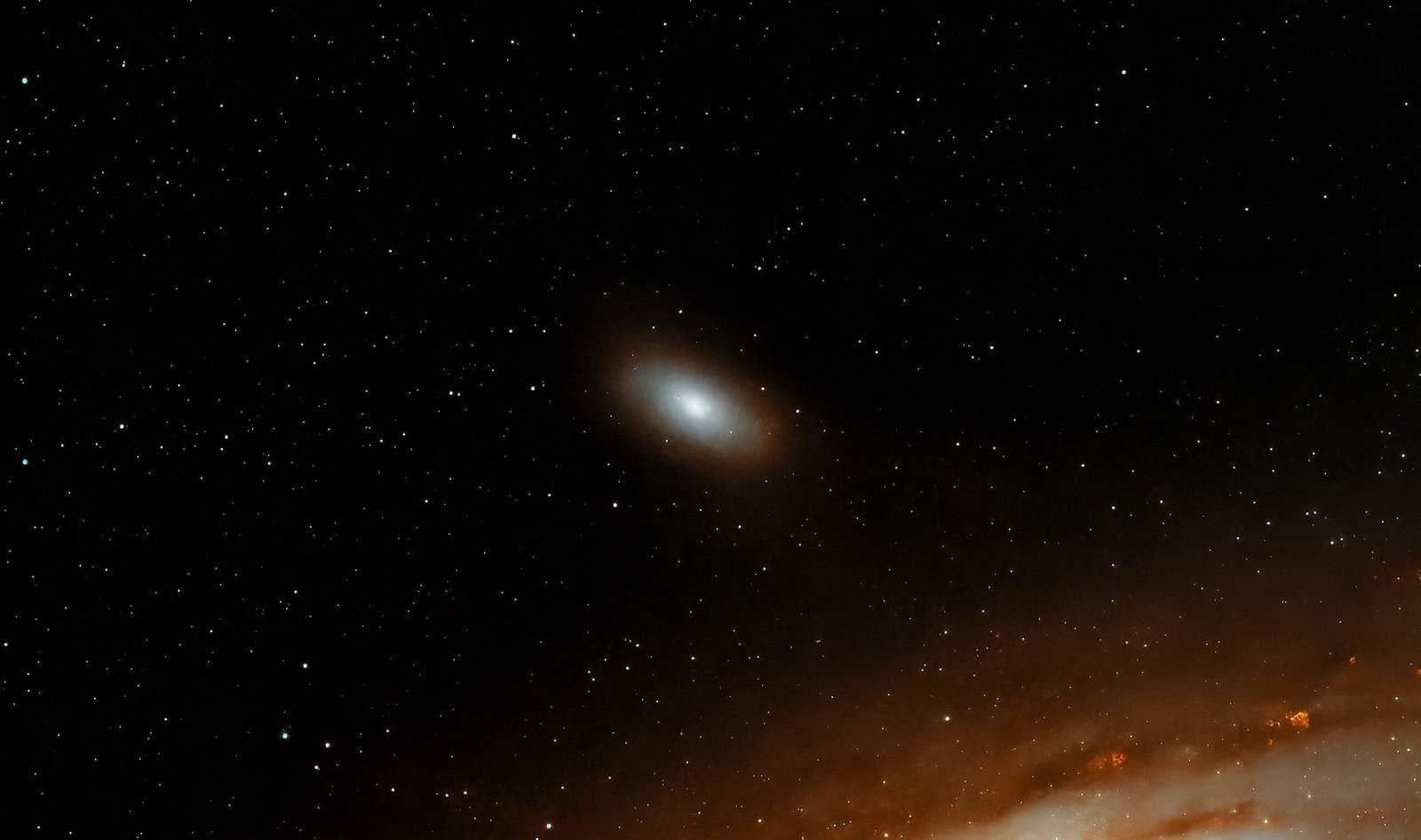
The Satellite Galaxy M110 (NGC 205): Mapped by Caroline Herschel in 1783, this elliptical galaxy exists as a quiet, distinct system in the shadow of Andromeda (bottom right of image). It represents the meticulous academic discipline required to look past obvious, brilliant structures to isolate hidden truths.
The Wizard Nebula and Cluster (NGC 7380): Discovered by Caroline Herschel in 1787, this Northern hemisphere target presents a compelling challenge for imaging. The stars she catalogued are embedded within a vast, complex cloud of glowing gas and dust lanes. The surrounding nebula requires careful exposure and data processing to reveal its intricate shape. This methodical extraction of order from vast celestial noise parallels the precision my daughter Caroline brings to her career, navigating and managing complex pharmacological data systems within her work.
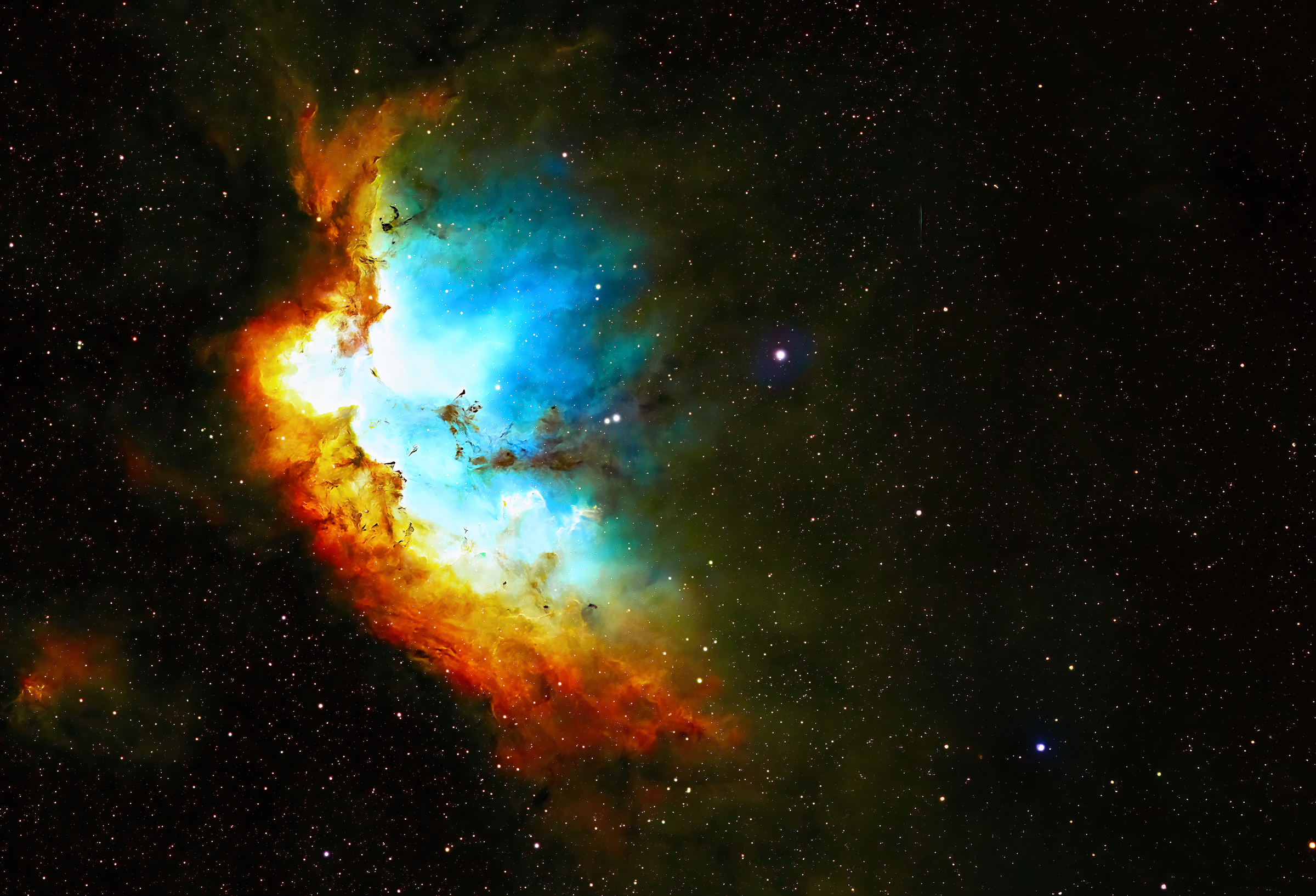
The Wizard Nebula and Cluster (NGC 7380)
A complex target requiring precise narrowband data processing to separate intricate interstellar gas from celestial noise. It reflects the analytical vision and patience needed to navigate and extract order from vast, complex data systems.
2. Autonomy and Biological Metaphor Against Cosmic Forces
On an interstellar scale, nebulae frequently demonstrate the tension between structural constraints and the forces required to break free from them. For someone who is a pharmacist by training but holds a deep love for biology, the cosmos frequently organizes itself into structures that mimic living systems.
The Running Chicken Nebula (IC 2944): located in the Southern sky, this vast stellar nursery is shaped by intense, high-energy radiation from young, massive stars. The dark, dense pockets of dust known as Thackeray’s Globules resist the erosion of these violent stellar winds. It is a study in structural resilience, maintaining its presence against overwhelming external pressures. It comes across as distinctly organic – a cosmic cell wall maintaining its integrity, much like the internal strength required to balance a demanding career while raising a young family of two daughters.
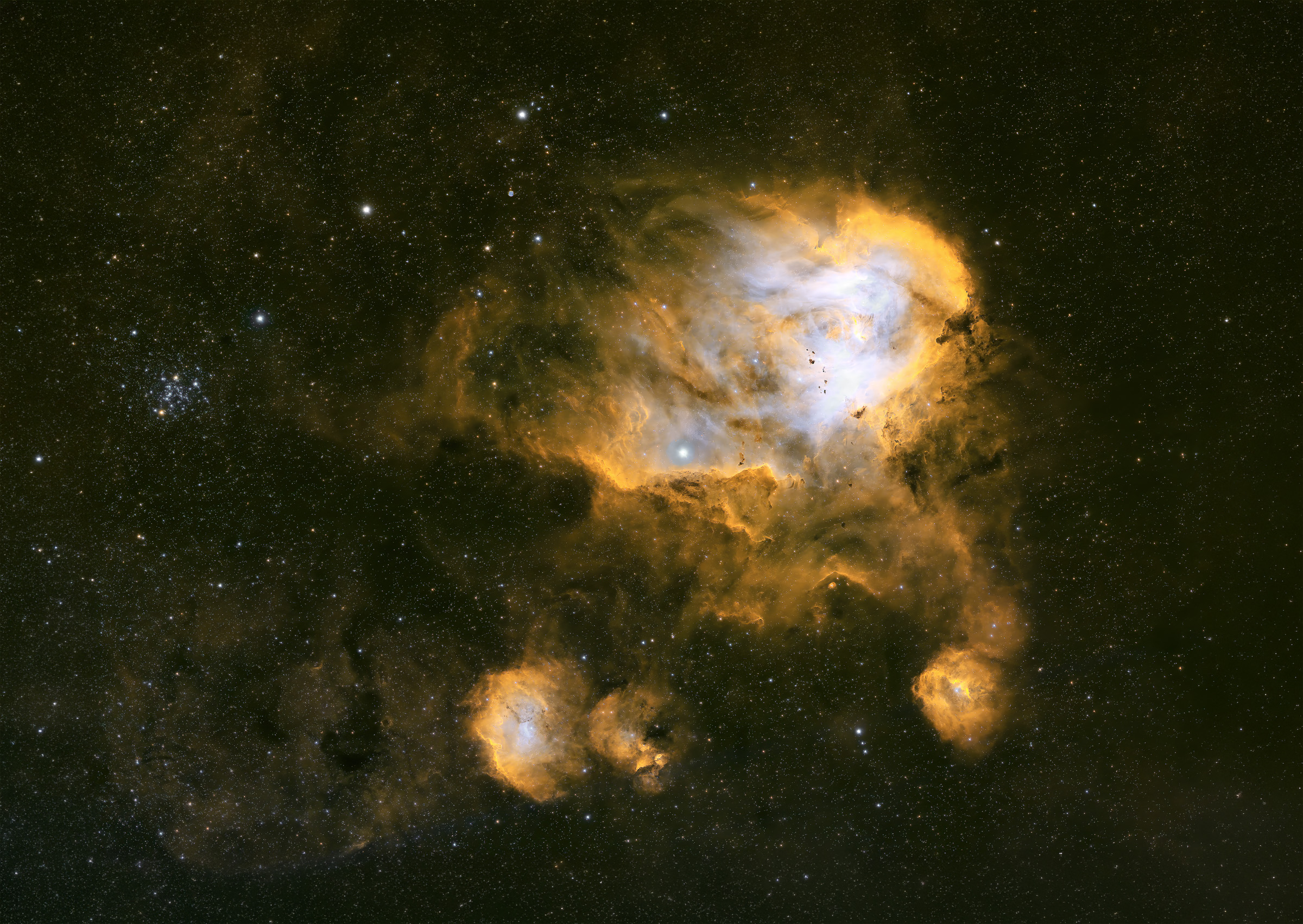
The Running Chicken Nebula (IC 2944) Intense stellar winds erode this vast nursery, yet the dense Thackeray’s Globules maintain their structural integrity under immense external pressure. Its organic form evokes a biological cell wall—a symbol of the internal resilience required to balance a demanding professional life with the care of a young family.
The Veil Nebula (NGC 6960/6992): in the Northern Hemisphere, this vast supernova remnant represents the ultimate expression of a “free spirit.” Once confined within the core of a massive star, the material shattered its gravitational constraints in a cataclysmic explosion. It now expands outward unhindered, creating delicate, glowing filaments of gas across light-years of space that resemble the intricate, microscopic pathways of biological life.
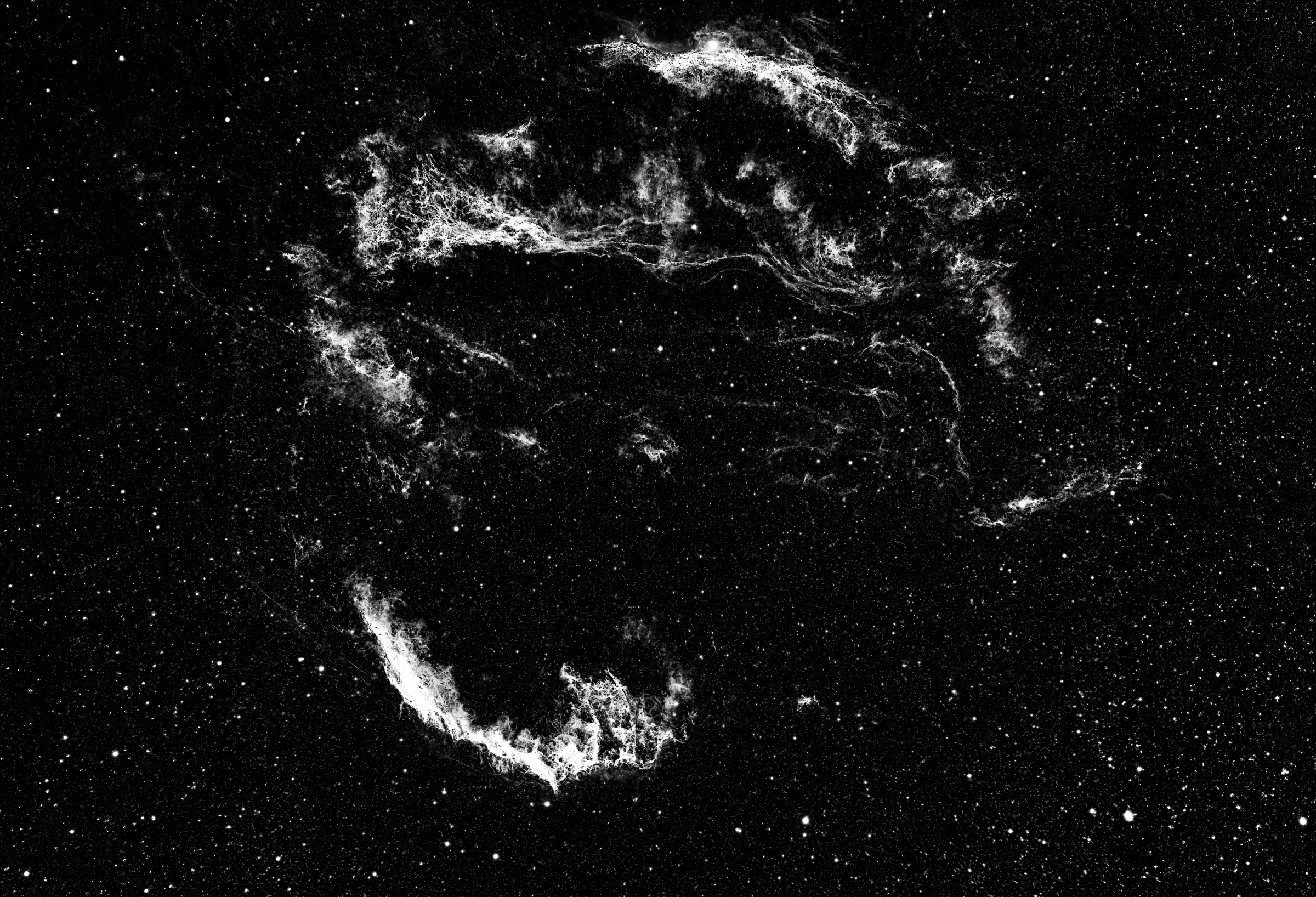
The Veil Nebula (NGC 6960/6992): The expanding filaments of this supernova remnant trace delicate, light-year-spanning structures that look remarkably like the microscopic pathways of biological life. It is the ultimate expression of a free spirit breaking past old boundaries to expand unhindered into new environments.
Both objects present a compelling visual metaphor for adulthood. To be a free person is to possess the resilience to maintain individuality under pressure, much like IC 2944, and the strength to expand beyond old boundaries into new environments, much like the Veil.
3. The Dynamics of Harmony, Order, and Fairness
True independence does not require total isolation; rather, it dictates how an entity interacts with the systems around it. The geometry of the universe shows that free-moving structures can exist in perfect equilibrium, demanding a mutual respect between interacting forces where every element holds its rightful place.
The Whirlpool Galaxy (M51): this classic Northern spiral demonstrates a dynamic gravitational interaction with its smaller companion galaxy, NGC 5195. Despite the intense tidal forces pulling at its spiral arms, M51 maintains its majestic, independent structure while showing complete gravitational respect to the companion system. It is a powerful example of an entity interacting deeply and fairly with the world around it, honouring the presence of others without losing its own core identity. It evokes the fundamental principle of fairness and the inherent need for universal respect and balance in our own world.
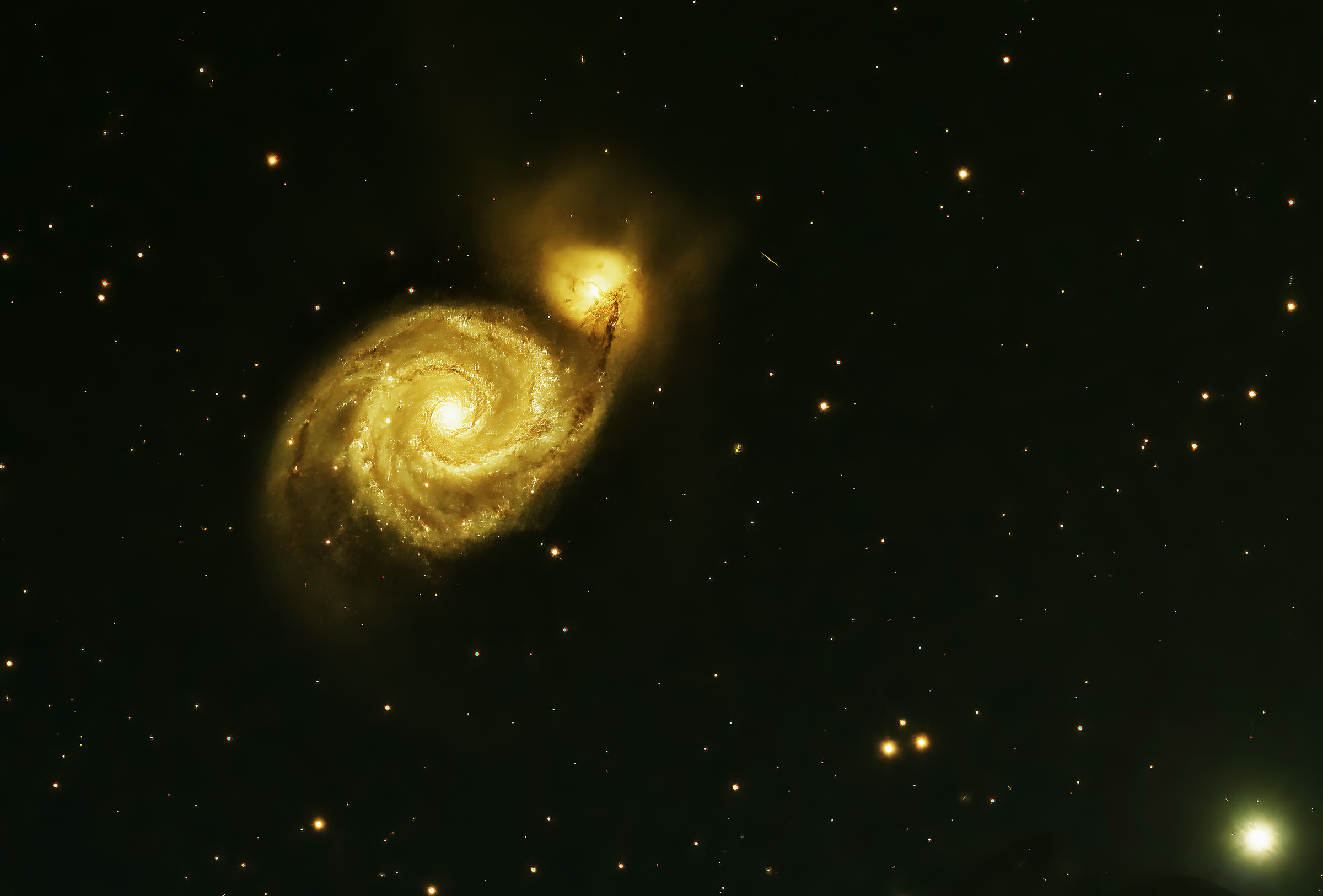
The Whirlpool Galaxy (M51): A majestic grand-design spiral interacting dynamically with its companion, NGC 5195. Despite immense tidal forces, it maintains its structural autonomy while showing complete gravitational respect to the system beside it—a powerful cosmic representation of equilibrium, fairness, and mutual respect.
And, finally fro Caroline, the Tarantula Nebula (NGC 2070): located in the Southern Hemisphere within the Large Magellanic Cloud, this exceptionally luminous starburst region is one of the most complex, data-rich structures in the night sky. Much like the Caspian Sea on Earth, a vast, self-contained inland body of water that operates as an independent ecosystem separate from the global oceans, the Tarantula Nebula exists as an isolated powerhouse of creation, governed by its own intense internal dynamics.

The Isolated Equilibrium of the Caspian Sea
Resting on a shoreline of worn stones and dark sand, a young Caroline sits at the edge of the Caspian Sea—the largest inland body of water on Earth. Lacking an outlet to the global ocean system, this massive basin operates as a completely unique, self-contained geographical and biological ecosystem. Its vast waters are governed entirely by their own internal dynamics, delicate chemical balance, and strict natural boundaries. It stands as a profound terrestrial example of a highly intricate, independent system functioning in perfect equilibrium with its environment, perfectly mirroring the complex, self-contained cosmic starbursts we capture drifting across the deep sky.
The Nebula’s web-like filaments of gas stretch over hundreds of light-years, driven by immense stellar activity yet bound together in a perfectly balanced network. It serves as an ultimate cosmic representation of a highly complex system functioning seamlessly within its own defined borders – a metaphor for a brilliant mind organizing immense data, while remaining completely woven into the responsibilities and deep layout of family life.
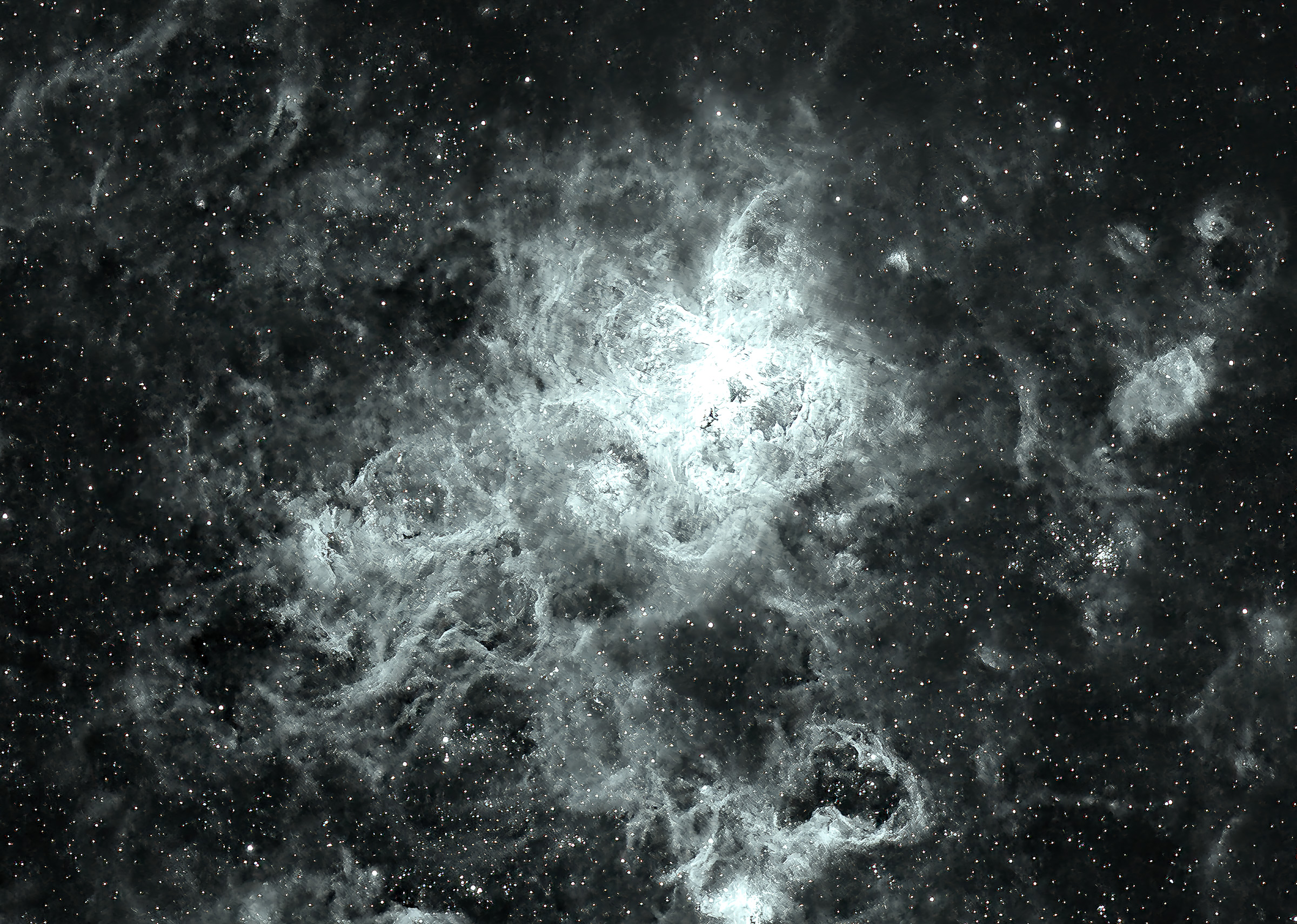
The Tarantula Nebula (NGC 2070): The most luminous and data-rich starburst region in our local cosmic neighbourhood. Operating as a self-contained powerhouse of intricate complexity—much like the isolated ecosystem of the Caspian Sea—its web of energy functions seamlessly, mirroring a brilliant mind organizing immense data while remaining deeply woven into the fabric of family.
The Broad Perspective
To view the night sky from either hemisphere is to realize that the universe honours both the strength to endure and the freedom to expand within structured laws. This photographic tribute is a quiet, philosophical acknowledgement of Caroline’s own path, celebrating her intellect, her immersion in the data of life, and her unwavering belief in respect and fairness as she continues to chart her own trajectory across the world.
The data sets for these objects are available for viewing in the Northern and Southern Hemisphere gallery collections.