
Islands of Light for Isla.....
Astrophotography is fundamentally an exercise in perspective. Hours of imaging under the night sky across both the Northern and Southern Hemispheres forces one to reflect on the grand scale of the universe and consider our place within it. As I capture and process these deep sky objects for astroanderson.com, I often think of Isla, my first-born daughter (delivered by me at home), with whom I have never spent enough time.
The name Isla carries roots tied to the landscape, translating from Scottish origins to mean “island.” In astronomy, the concept of an island is a recurring structural theme. When we look deep into the interstellar medium, we are essentially mapping isolated structures of matter defined against a vast, empty void. To survive and thrive in that isolation requires immense internal strength.
This post serves as an exploration of those cosmic islands, connecting Isla’s name, bravery, and journey to the broader geometry of the night sky.
1. The Historical “Island Universes”
In the early days of cosmology, long before we understood the true scale of the universe, astronomers referred to distant spiral structures as “island universes.” They viewed them as isolated, self-contained systems of matter drifting in an otherwise empty cosmic ocean.
The Andromeda Galaxy (M31) in the Northern Hemisphere is perhaps the definitive example of this concept. It exists as its own massive, independent entity, generating immense energy from within.
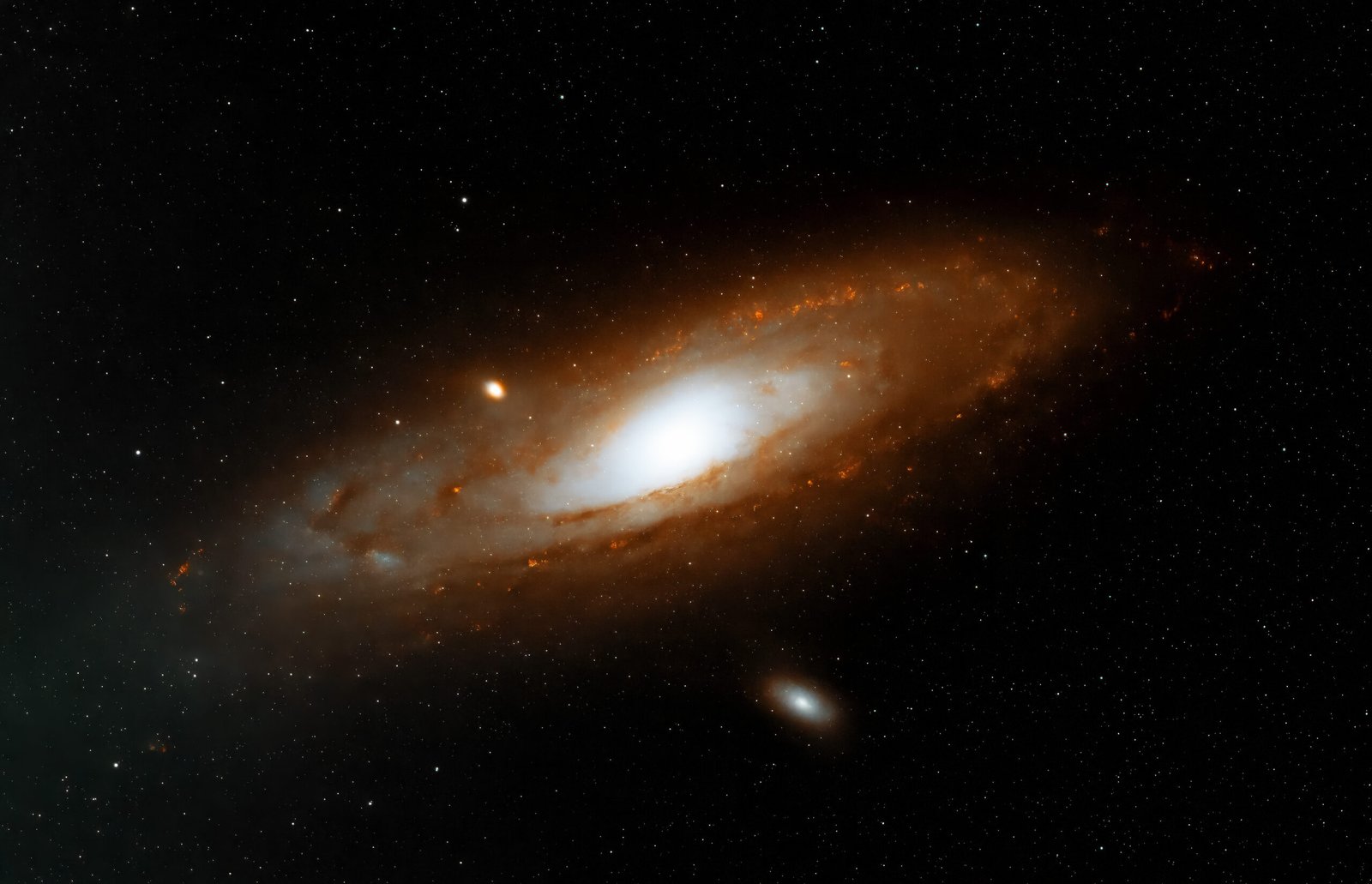
The Andromeda Galaxy (M31): captured at 2.5 million light-years away, this grand spiral operates as a massive, self-contained system of starlight and energy. It serves as a visual reminder of the independent strength required to build an autonomous ecosystem in a vast world.
Similarly, when looking to the Southern Hemisphere, the Large and Small Magellanic Clouds (LMC & SMC) operate as distinct satellite islands caught in the gravitational pull of our own Milky Way.
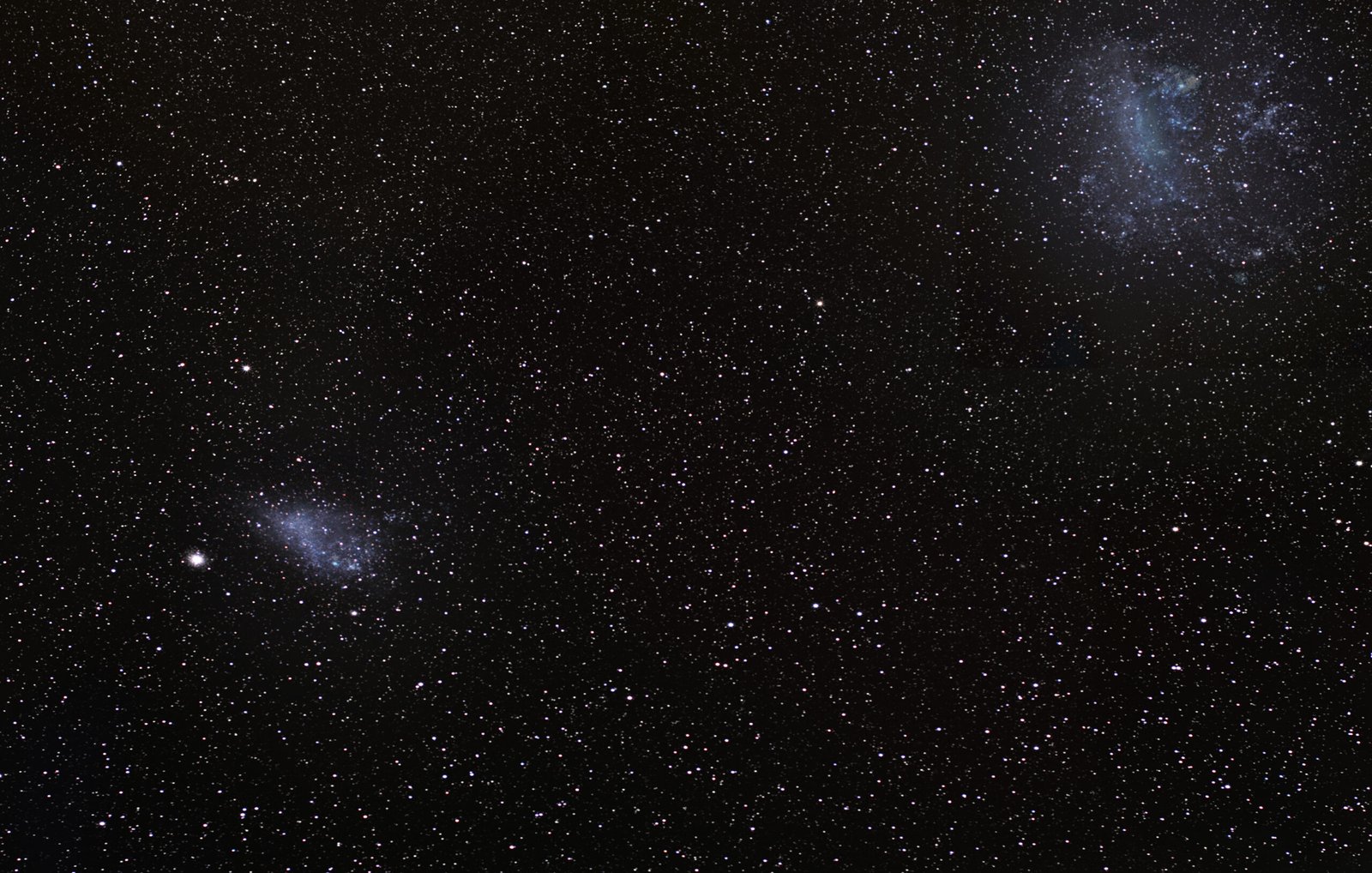
The Large and Small Magellanic Clouds: these distinct satellite galaxies drift like isolated celestial islands in the southern sky. Their path demonstrates that true independence does not mean total isolation; they remain permanently and gracefully linked to the gravitational pull of their roots.
From a philosophical perspective, there is a parallel here: Isla has had to stand as her own independent island universe, navigating the immense responsibility of raising her own daughter single-handed. An adult daughter becomes her own core ecosystem—anchored by her own distinct trajectory, internal logic, and choices. Yet, much like the Magellanic Clouds, that fierce independence does not mean total isolation; she remains intrinsically linked to her origins and the gravity of her family roots.
2. Pockets of Stellar Creation
On a smaller scale within galaxies, interstellar gas clouds form localized environments where physics drives the creation of new matter. These nebulae function as distinct islands of activity, bright against the dark background of space, where new generations are born.
The Great Orion Nebula (M42) is a prime example of such an environment, acting as a dense sanctuary of energy and light. Much like the monumental ruins of Persepolis, an ancient, enduring citadel built to safeguard a civilization’s grandest ideals and culture through centuries of history, M42 stands as a monumental celestial sanctuary.
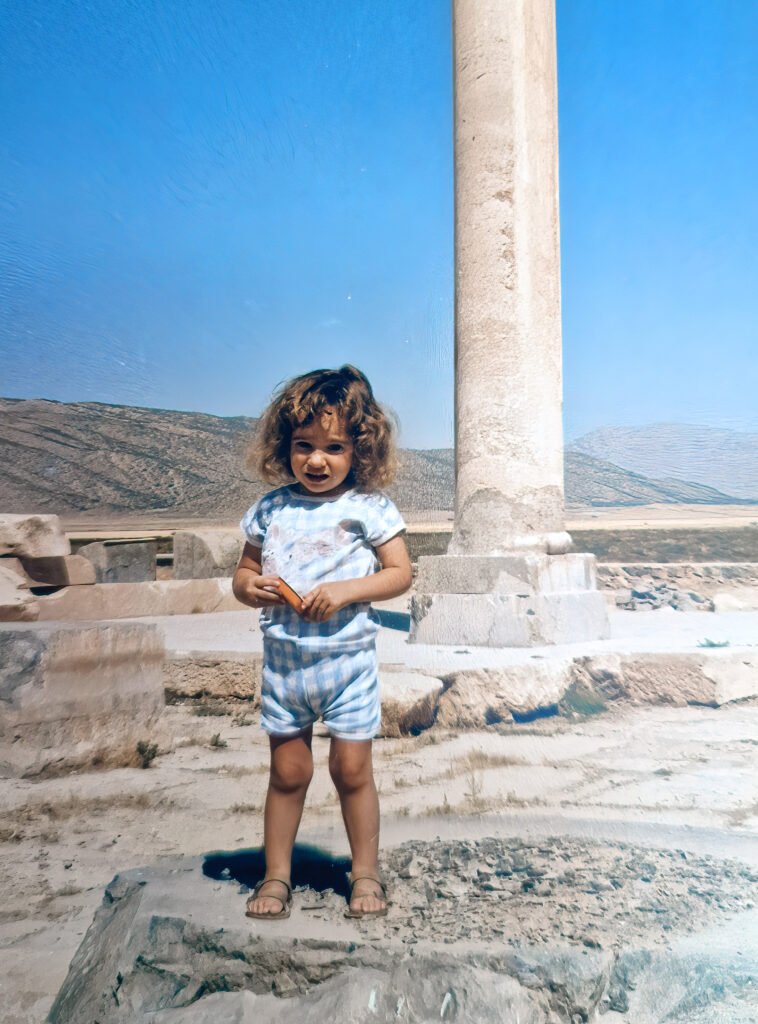
The Architectural Pillars of Persepolis
A young Isla stands amidst the ancient ruins of Persepolis, the ceremonial capital of the Achaemenid Empire, with a massive stone column cutting into the horizon against the backdrop of the rugged landscape. Founded by Darius the Great around 515 BC, this UNESCO World Heritage site stands as one of antiquity’s most significant architectural achievements. Its monumental terraces, intricate reliefs, and towering pillars were engineered not merely as a seat of power, but as an enduring sanctuary-built stone by stone to preserve a civilization’s cultural legacy across millennia. It remains a profound earthly testament to structural resilience—a physical counterpart to the vast, protected cosmic sanctuaries we map across the interstellar medium.
It is an environment designed to preserve and cultivate the raw ingredients of the future. This structural resilience mirrors the internal foundation required to anchor a life; it takes an immense level of resilience to build a protective sanctuary from the ground up, ensuring that the legacy of knowledge, storytelling, and classical potential is safely passed down to the next generation.
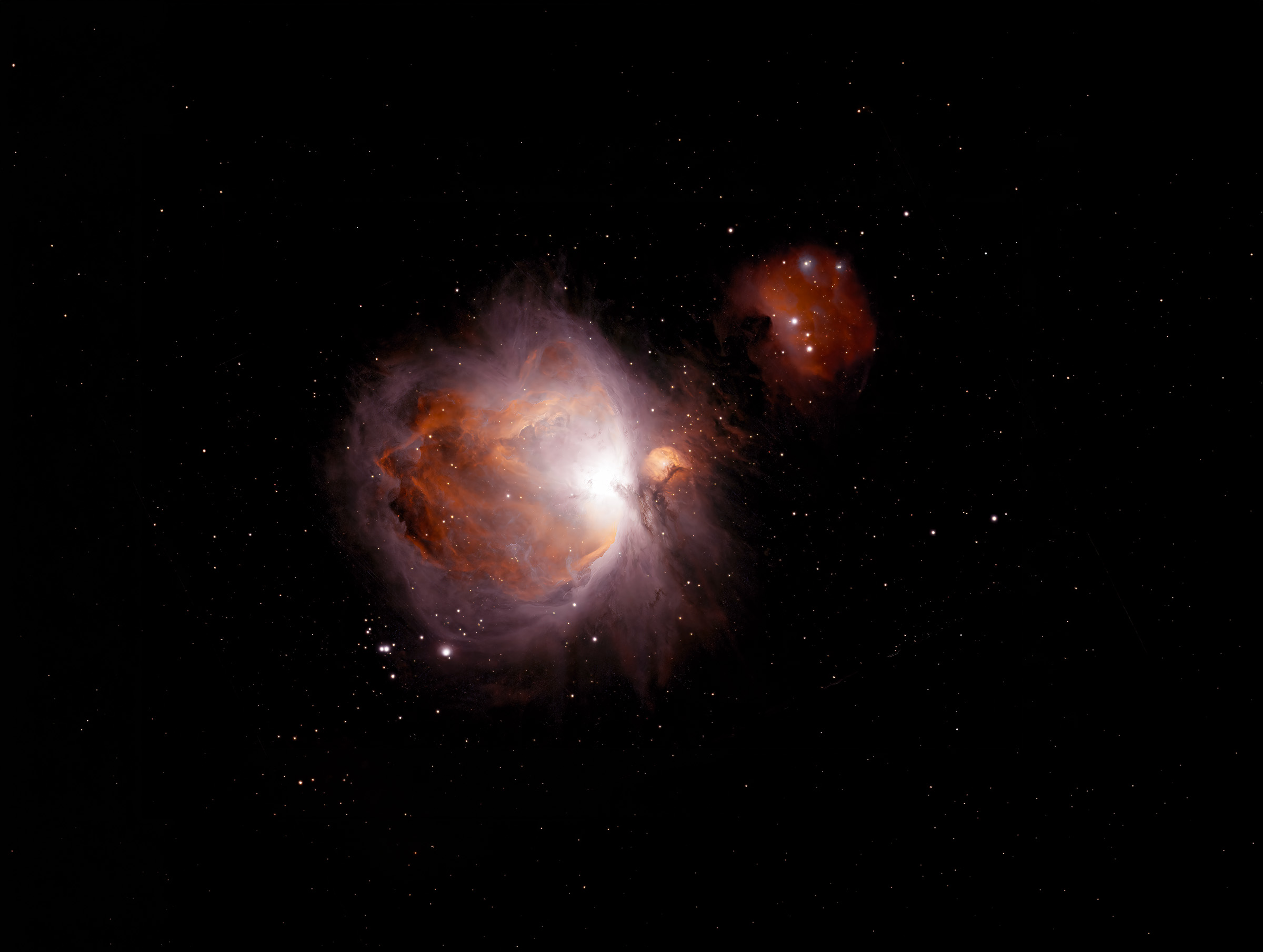
The Great Orion Nebula (M42) A dense, brightly glowing sanctuary of cosmic dust and energy where physics drives the creation of a new stellar generation. Standing as an enduring monument to growth within a cold, empty void—much like the architectural resilience of ancient Persepolis—it reflects the strength required to build a lasting foundation for the future.
In the Southern sky, the Lagoon Nebula (M8) shows a similar dynamic, where intense, turbulent stellar forces carve out sharp, defined boundaries that resemble cosmic shorelines.
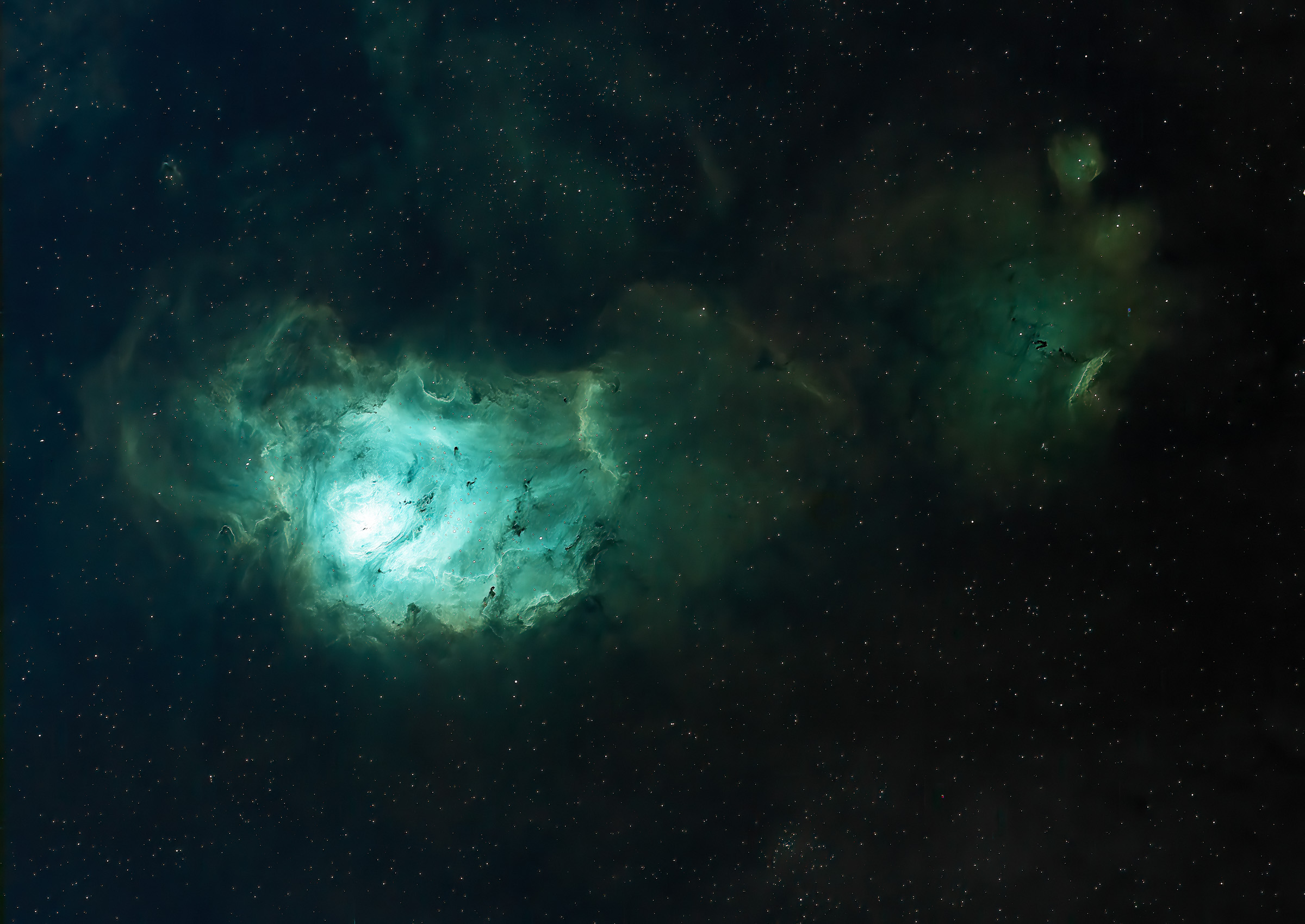
The Lagoon Nebula (M8) Violent, turbulent interstellar winds sculpt the high-energy gas of this stellar nursery into sharp, defined boundaries that resemble a cosmic shoreline. A reminder of the bravery it takes to hold a calm track against overwhelming external forces.
These regions represent the spark of potential and ongoing development against harsh conditions. They remind us that even in a cold, indifferent universe, structured pockets of warmth, energy, and growth naturally form: it takes a very brave person like Isla to hold the line against turbulent forces, sticking fast to keep her daughter on a calm track through times of struggle. Out of that protective, focused environment, new potential has flourished, leading her daughter forward to study the depths of literature and writing at university—a path that, much like the ruins of Persepolis, honours the enduring power of the written word.
3. The Coastal and Aquatic Motifs
Because an island is defined by its relationship to water, the night sky naturally offers a thematic connection through objects named after maritime and coastal forms, representing the balance between protective shores and the open sea.
In the Northern sky, the Pelican Nebula (IC 5070) is a dynamic emission nebula shaped by dark dust lanes and glowing gas, resembling a coastal bird patrolling the shoreline, fiercely protective of its environment.
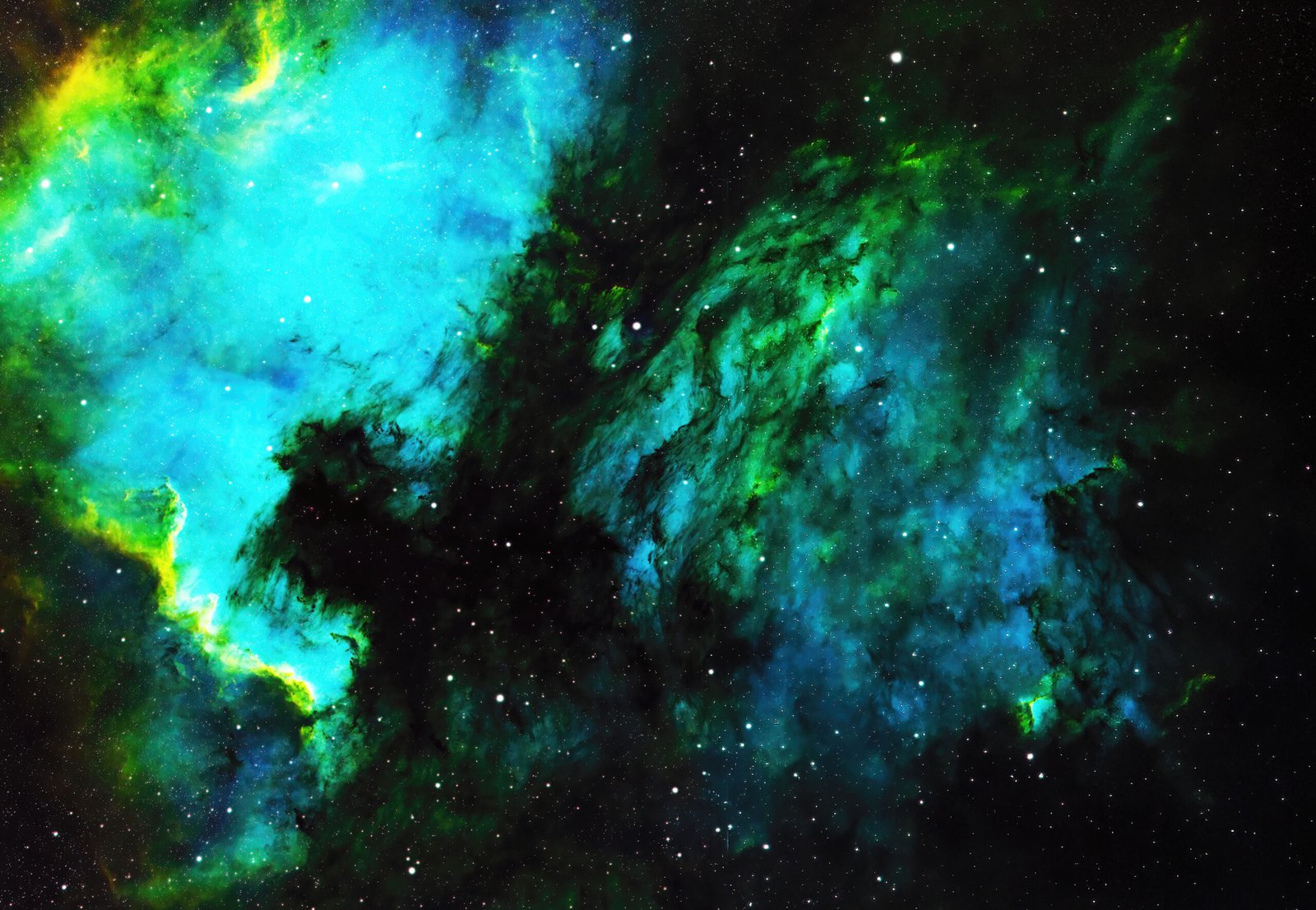
The Pelican Nebula (IC 5070) Complex, dark dust lanes slice through glowing gas clouds to shape this dynamic emission nebula, evoking a coastal bird, standing on the right and looking towards the left, patrolling its protective shores. It represents the steady, unyielding presence required to anchor those under our care.
Spanning the celestial equator nearby is the Seagull Nebula (IC 2177), a massive, winged structure that evokes the image of a bird in flight over an ocean expanse.
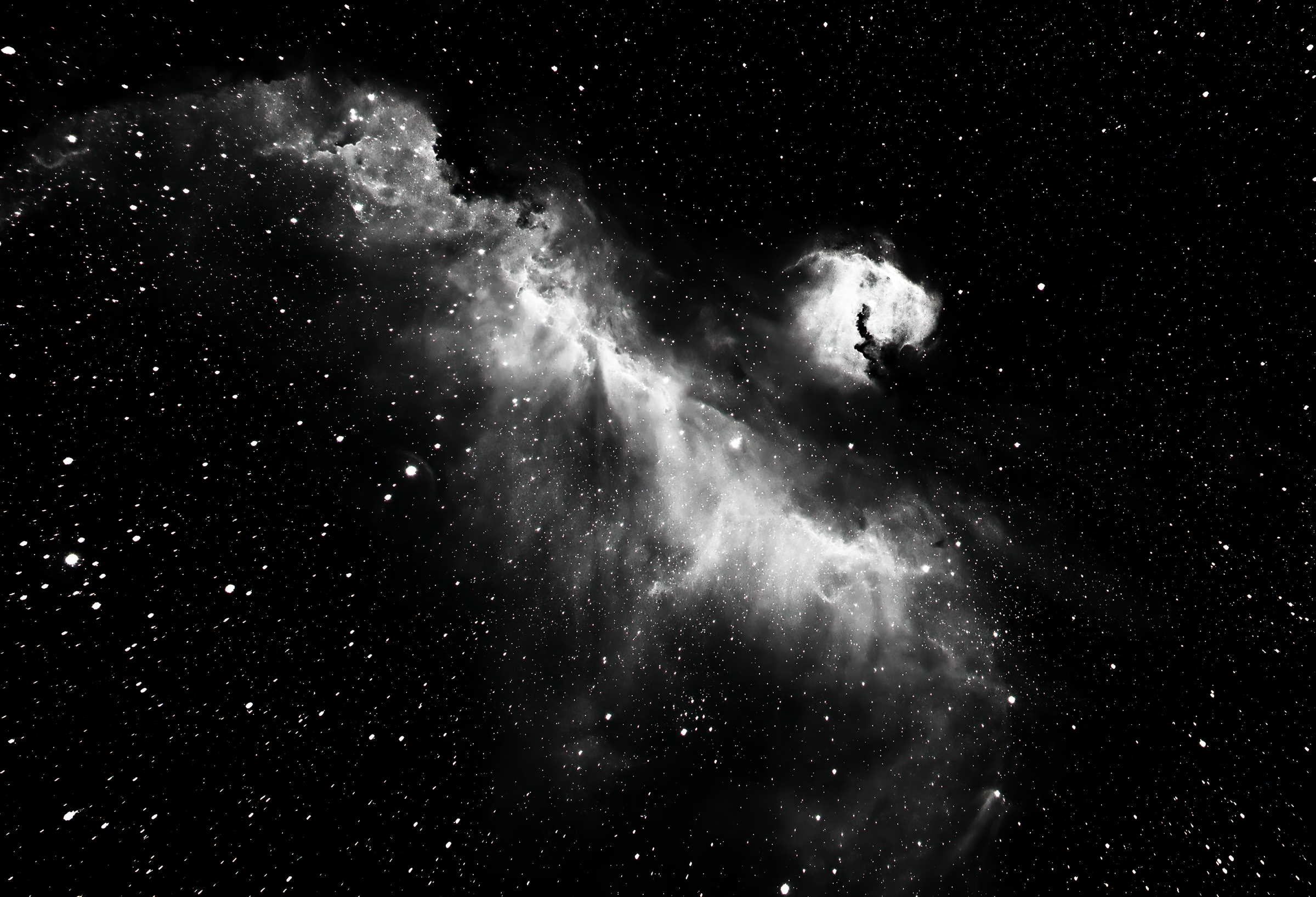
The Seagull Nebula (IC 2177): Spanning across the celestial spheres, the sweeping wings of this emission nebula symbolize navigation and untamed transition. It reflects the open horizon available to a young adult moving out past safe shores to explore the wider universe.
Both the Pelican and the Seagull represent navigation and the transition from the safety of the shore to the open horizon. While the Pelican symbolizes the steady, protective presence Isla maintained during the years of care, the Seagull represents the ability to eventually traverse wide distances without being confined. It is a fitting visual metaphor for a mother who stayed anchored so that her daughter could safely navigate the broader, open horizons of the world.
The Broad Perspective
Looking out at the cosmos from either hemisphere underscores the reality that we are all navigating our own relative isolation, looking for structures of meaning. This photographic journey is a quiet acknowledgement of Isla’s exceptional strength and place in that wider picture, as she continues to build, protect, and navigate her own corner of the universe.
The data sets for these objects are available for viewing in the Northern and Southern Hemisphere gallery collections.