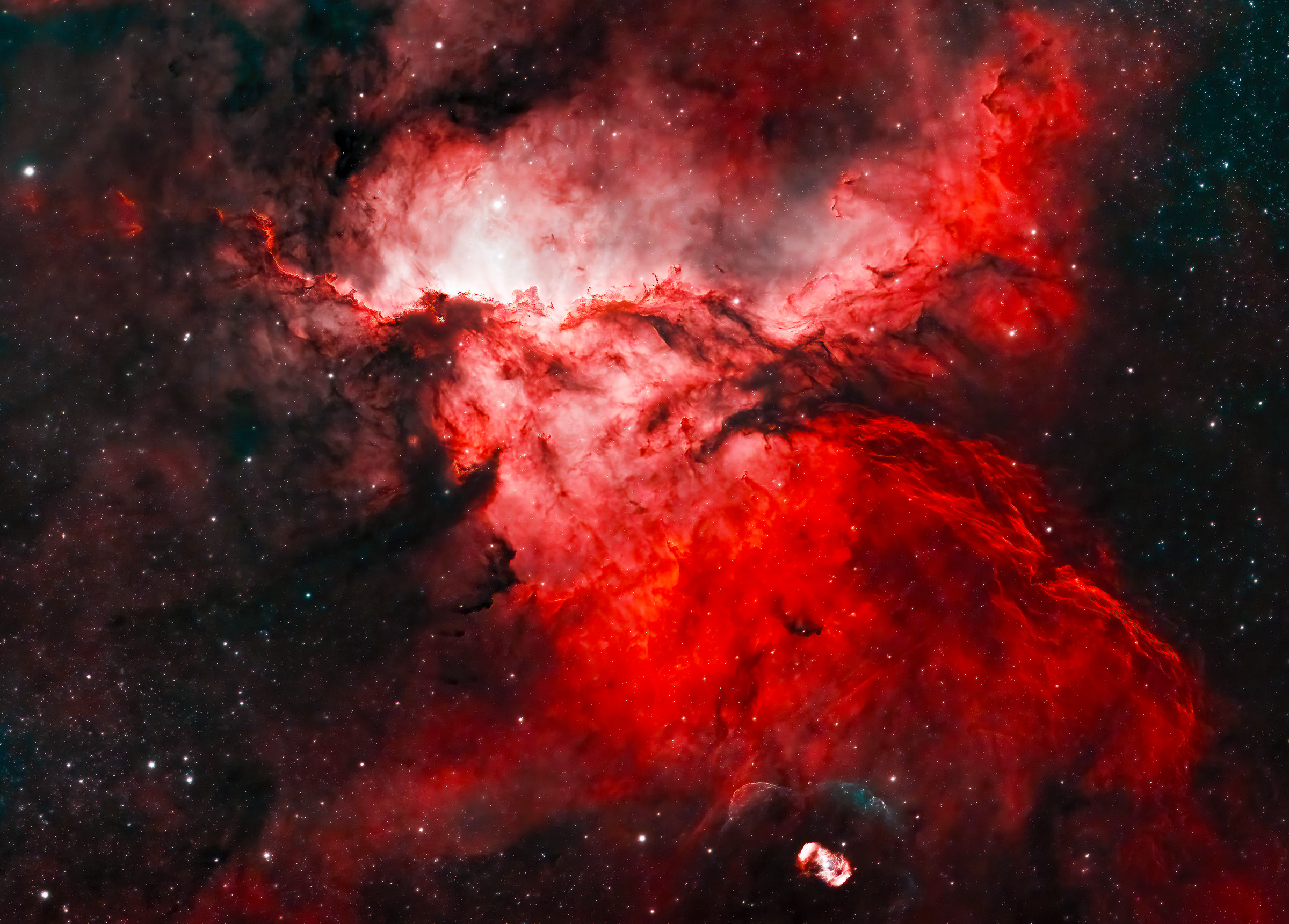
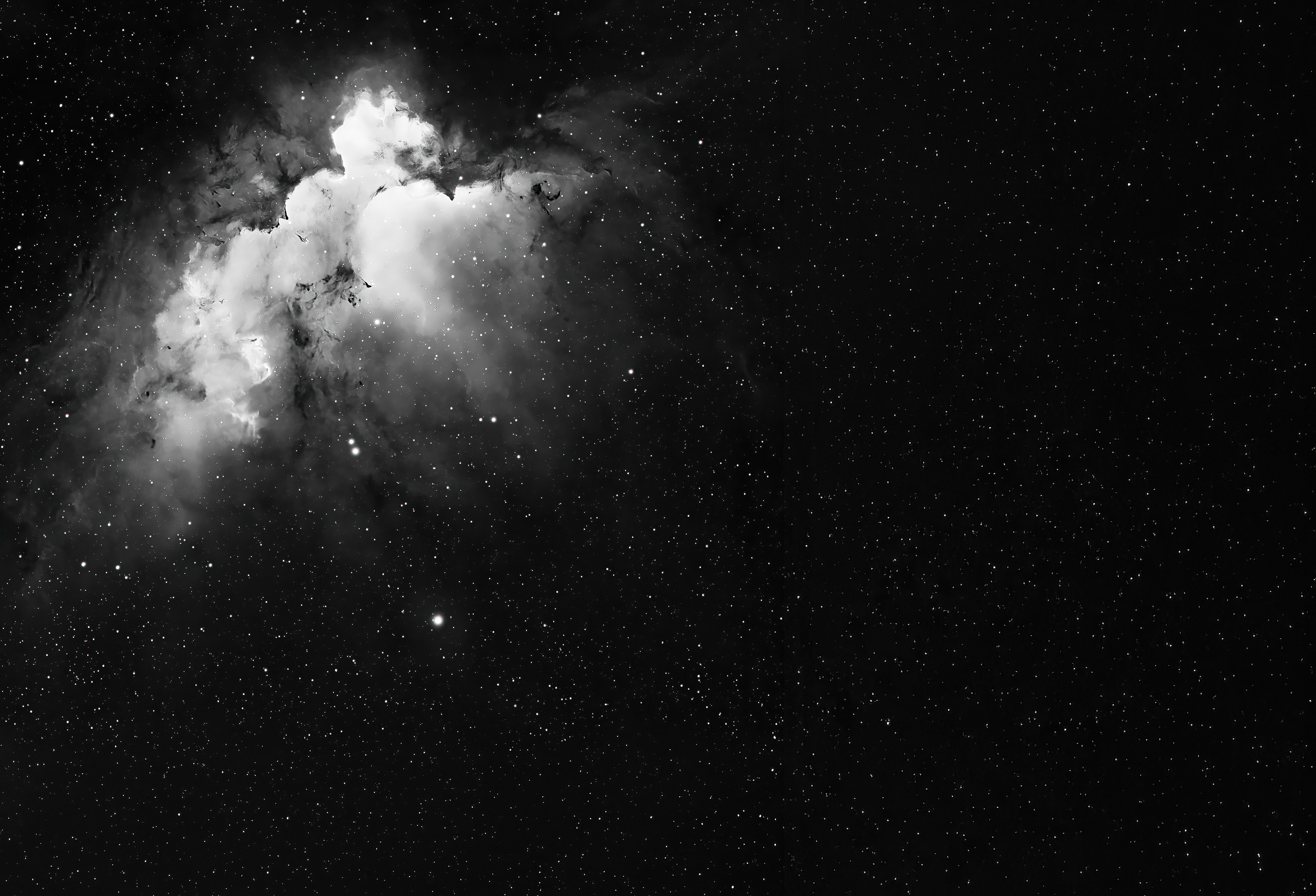
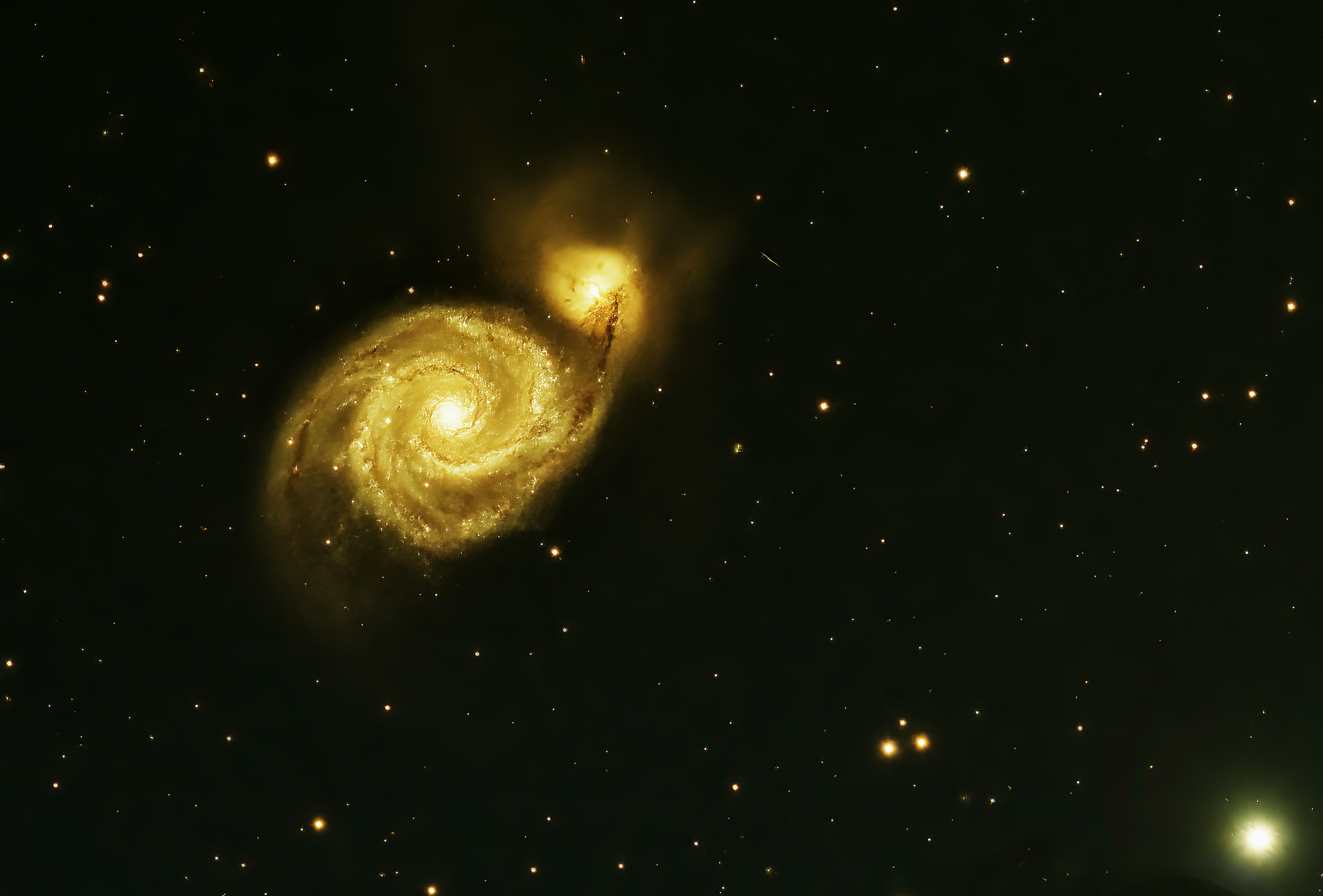
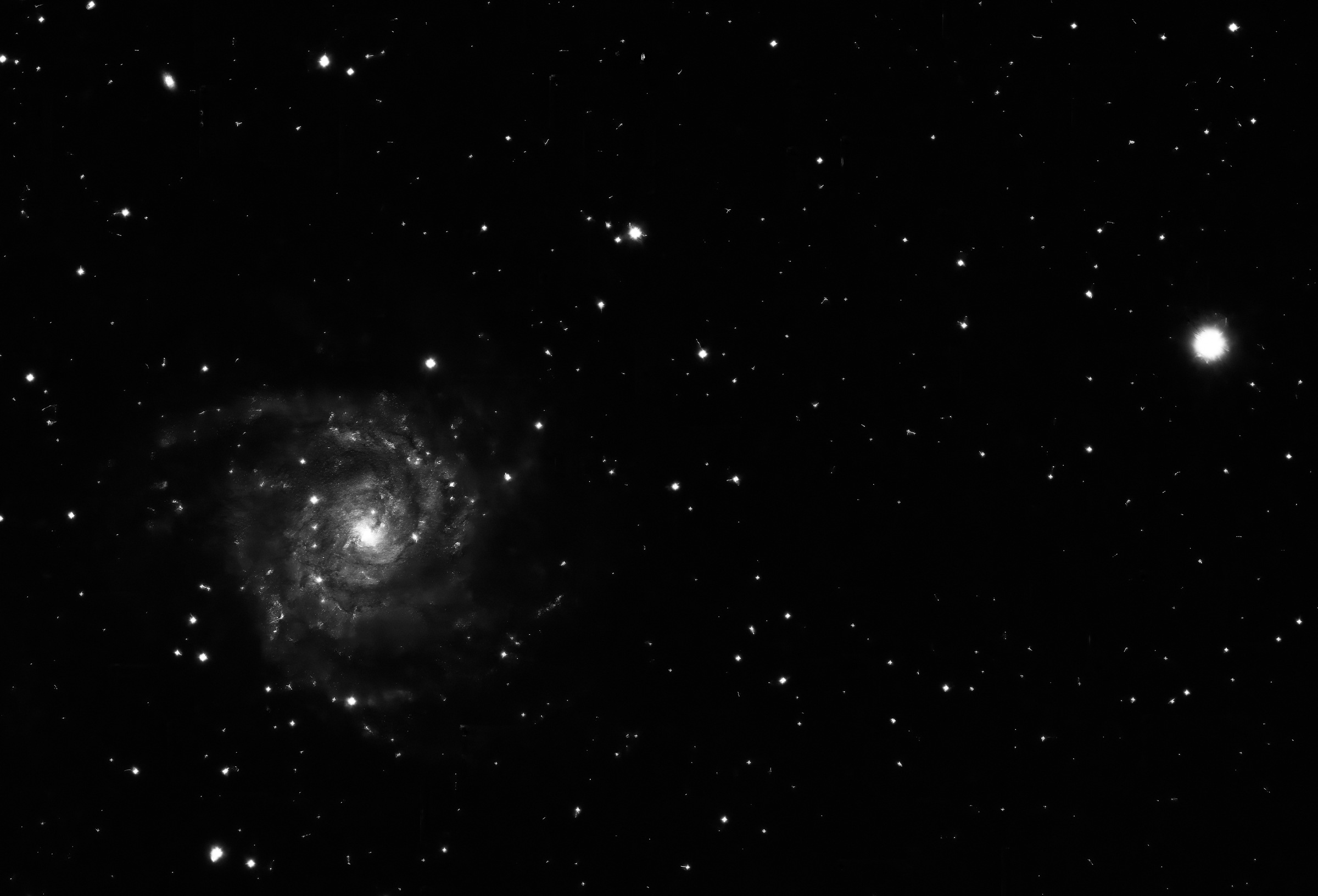
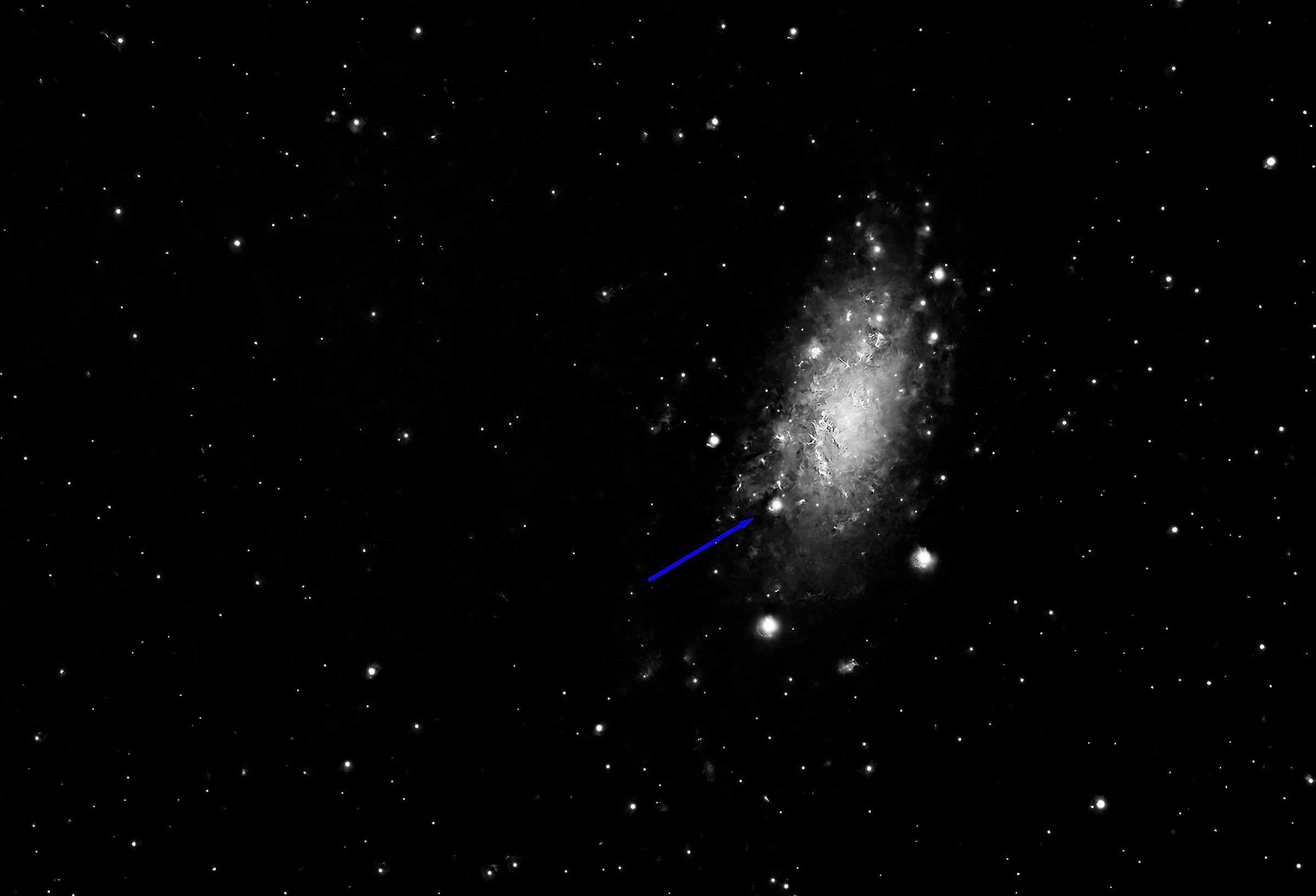
As astrophotographers, we collect photons. We capture the light emitted by, what to us, are distant nebulae and galaxies. Images like the complex, cosmic dust-lanes of the Fighting Dragons of Ara (NGC 6188) or the delicate hydrogen glow of the Wizard Nebula (NGC 7380) illustrate the power of light.
But there is a very different story waiting for us in the dark.
What we capture is only a small fraction of what is actually out there. In fact, the universe is much more complicated than what meets our sensors. Everything we can see, touch, and photograph makes up just a small proportion of what is reality to us. The rest is completely dark to us, existing as dark matter and dark energy.
The Cosmic Pie Chart: What is the Universe Made Of?
When we point our telescopes at a deep-sky object, we are only looking at “baryonic matter” – ordinary matter made of protons, neutrons, and electrons. As far as we understand, the breakdown of our universe is thus:
This means that when you look at the galleries and collections here on astroanderson.com, roughly only 5% of the universe if captured. The remaining 95% remains invisible.
Dark Matter: The Cosmic Glue
If dark matter is invisible, how do we know it is there? The answer lies in how galaxies behave.
According to the laws of physics, the stars at the outer edges of a spiral galaxy should rotate much slower than the stars near the core, just as Neptune orbits the Sun much slower than Mercury.
Instead, we observe that outer stars travel at the same speed as inner stars. By all accounts of physics, spiral galaxies should rip themselves apart. There is not enough visible mass to create the gravity needed to hold them together.
The scientific conclusion is that there must be a massive halo of invisible matter surrounding the galaxies, providing the extra gravitational “glue” to keep them intact. While we cannot photograph dark matter directly, we can see its structural effects in some of our images.
Galactic Cohesion: When you view the images of the Whirlpool Galaxy (M51), the face-on arms of the Hidden Galaxy (IC 342), or the edge-on dust lane of the Silver Sliver Galaxy (NGC 891), you are looking at structures that are physically held together by the invisible grip of dark matter.
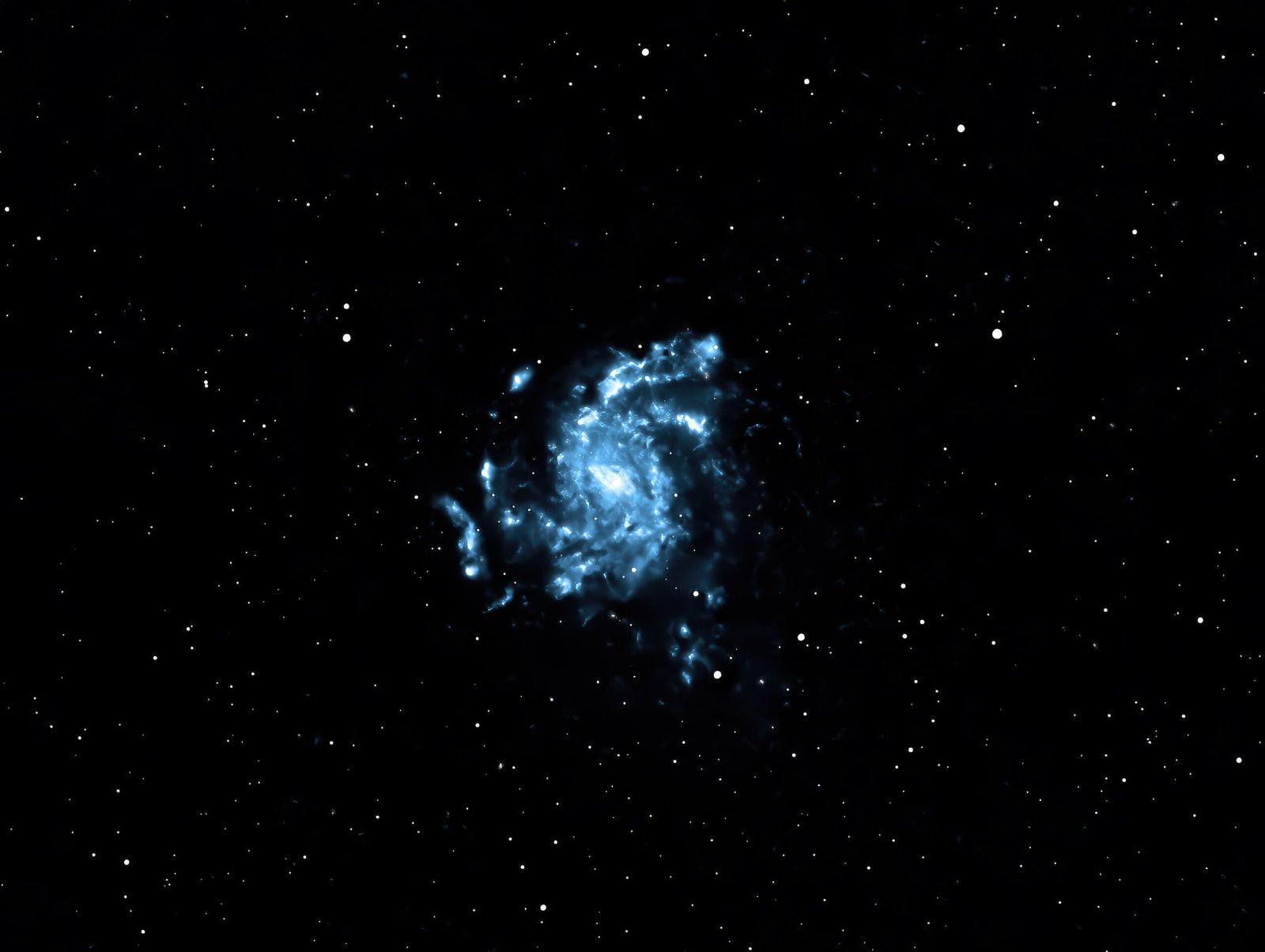
NGC 6946 (The Fireworks Galaxy) shows that while regular matter dominates the gravity of its inner core, a massive halo of dark matter completely dictates its outer boundaries. Without it, the starbursting arms would fly out into the intergalactic void.
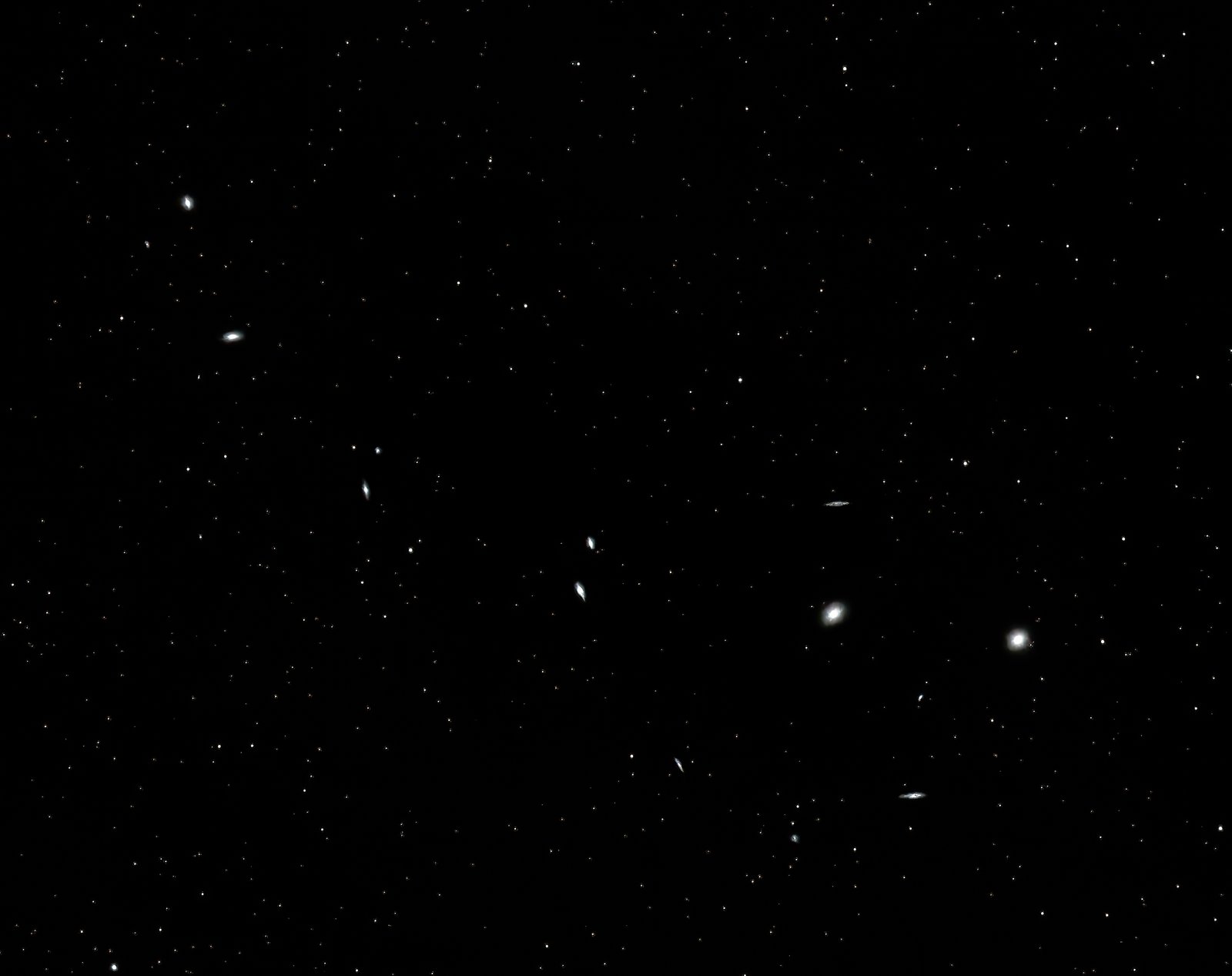
Galactic Communities: Markarian’s Chain shows a curved line of at least eight prominent galaxies bound together. These structures are not isolated; they group into massive, gravity-bound communities called galactic clusters. The ordinary matter we can see is not nearly heavy enough to forge these cosmic networks—they are anchored by immense webs of dark matter.
What Could Dark Matter Be?
The leading scientific theories suggest dark matter is made of entirely new, undiscovered subatomic particles:
- WIMPs (Weakly Interacting Massive Particles): WIMPs have mass (exerting gravity) but completely ignore electromagnetism. Light passes right through them. Billions of them could be streaming through one’s camera every second without leaving a single artifact on the CMOS sensor.
- Axions: These are incredibly light, ultra-low-mass particles that would behave almost like a giant, cold cosmic fluid washing across galaxies.
- Primordial Black Holes: A theory suggesting that millions of tiny black holes formed a fraction of a second after the Big Bang are scattered throughout space, acting as the universe’s missing mass.
Dark Energy: The Cosmic Accelerator
If dark matter is the attractive force pulling galaxies together, dark energy is the repulsive force pushing the universe apart.
Measurements of distant Type Ia supernovae find that the expansion of the universe is not slowing down due to gravity. It is speeding up. Something is actively stretching the fabric of space-time at an accelerating rate.
A Visual Metaphor: The Gum Nebula
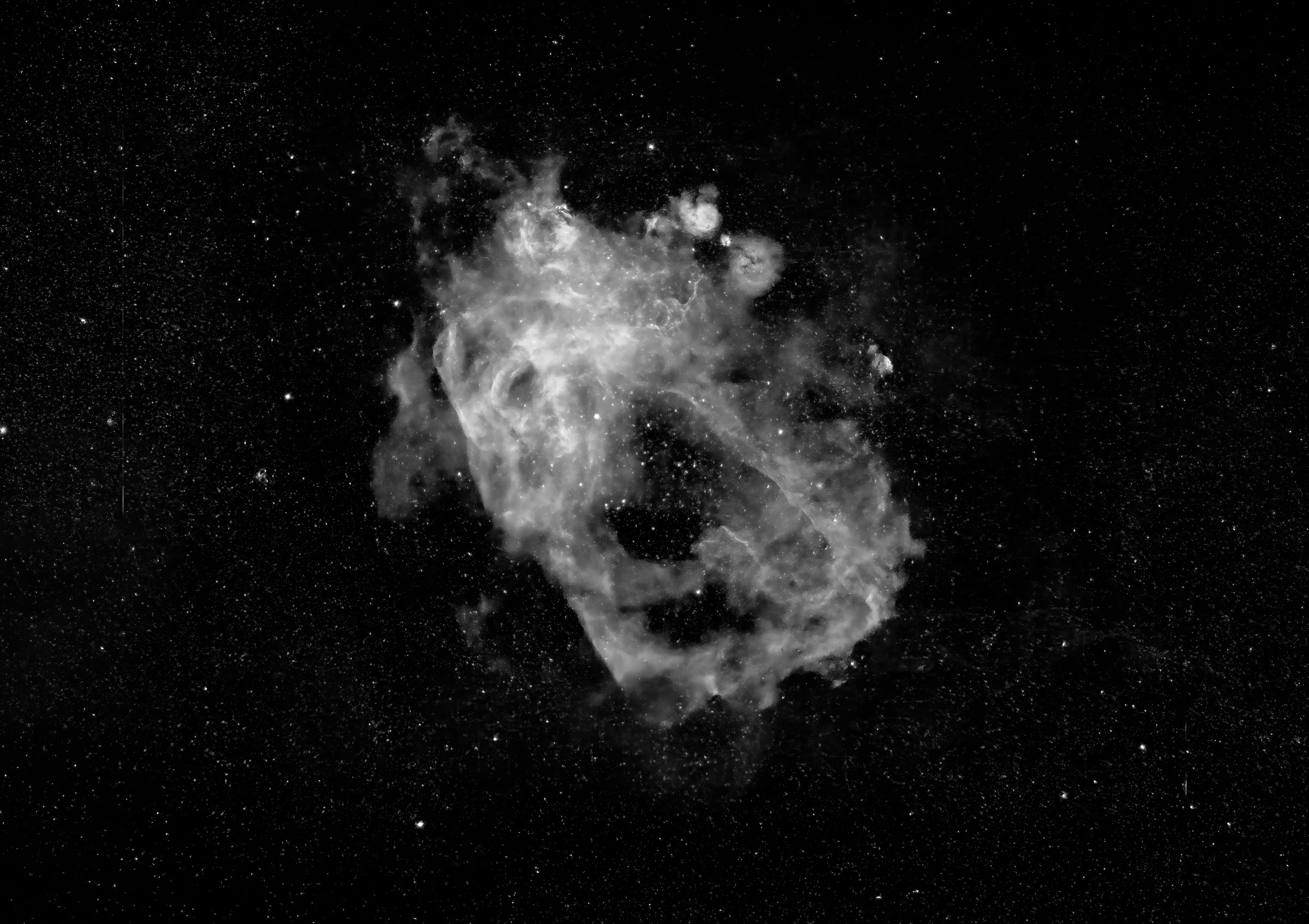
To visualize dark energy on a human scale, look at the image of the Gum Nebula (Gum 12). Spanning a massive 36° across the night sky, this network of long, glowing hydrogen filaments is an expanding cosmic shell. It is blown outward by internal energies—such as intense supernova remnants and fierce stellar winds from hot giant stars.
The Gum Nebula (Gum 12): Spanning an incredible 36° across the southern sky, this ancient, expanding supernova remnant serves as a visual metaphor for dark energy. While the nebula expands locally from internal stellar winds, dark energy acts as a cosmic wind stretching the very fabric of space-time itself.
While the Gum Nebula expands into local interstellar space due to internal physics, dark energy acts like an invisible, inescapable “wind” blowing through the whole the universe itself. It creates a constant outward pressure that stretches empty space, pushing the boundaries of our universe farther apart.
What Could Dark Energy Be?
- The Cosmological Constant (The Weight of Nothing): Albert Einstein’s concept that empty space is not actually empty. It has a native, constant energy density. As the universe expands and more empty space is created, more dark energy appears with it, relentlessly pushing space apart.
- Quintessence (The Changing Field): A dynamic, evolving energy field filling the cosmos. Unlike the Cosmological Constant, quintessence could change its strength and behaviour over time.
- Modified Gravity: A radical idea suggesting that our understanding of gravity (General Relativity) is slightly wrong on massive scales, causing space to expand differently across billions of light-years.
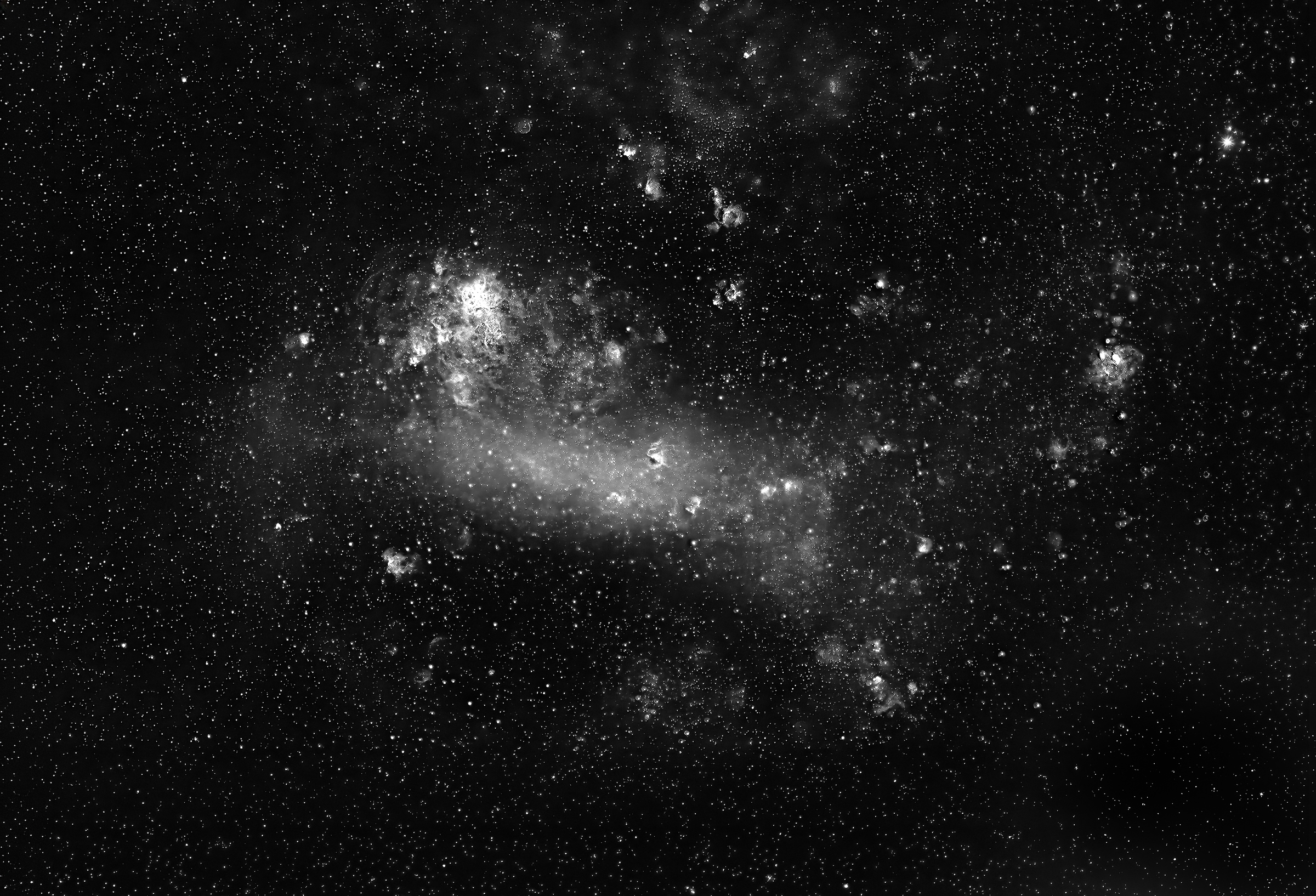
While dark matter dominates on a “local” scale, holding individual galaxies like our companion dwarf galaxy, the Large Magellanic Cloud (LMC), together, dark energy dominates on a grand cosmic scale.
It is slowly driving separate galaxy clusters away from each other. Billions of years from now, dark energy will have pushed distant galaxies so far apart that their light will no longer be able to reach Earth. Future astrophotographers would look out at a lonely, dark night sky, entirely devoid of deep-sky targets beyond our own local group. Even a stellar explosion like the Type II Supernova (SN 2024ggi) would eventually happen completely out of view, its photons stretched into infinity by the expanding cosmos.
The Philosophical Exposure
There is a deep philosophical beauty in this realization for anyone who practices astrophotography.
Our hobby is an exercise in revealing hidden truths. We use long exposures to pull structural details out of the dark noise of the night sky. Yet science tells us that no matter how long our exposures are, or how sensitive our cooled sensors become, the vast majority of the cosmos will always remain in the dark.
Photons are just the foam on top of a deep, invisible cosmic ocean. As astrophotographers, we are ultimately light-chasers. But understanding these theories adds a new layer of depth to the hobby. When we peer into the deep sky, we are not just looking at isolated islands of gas and stars. We are looking at regular matter that is trapped inside invisible cocoons of WIMPs or Axions, being pushed across a canvas stretched out by the Cosmological Constant.
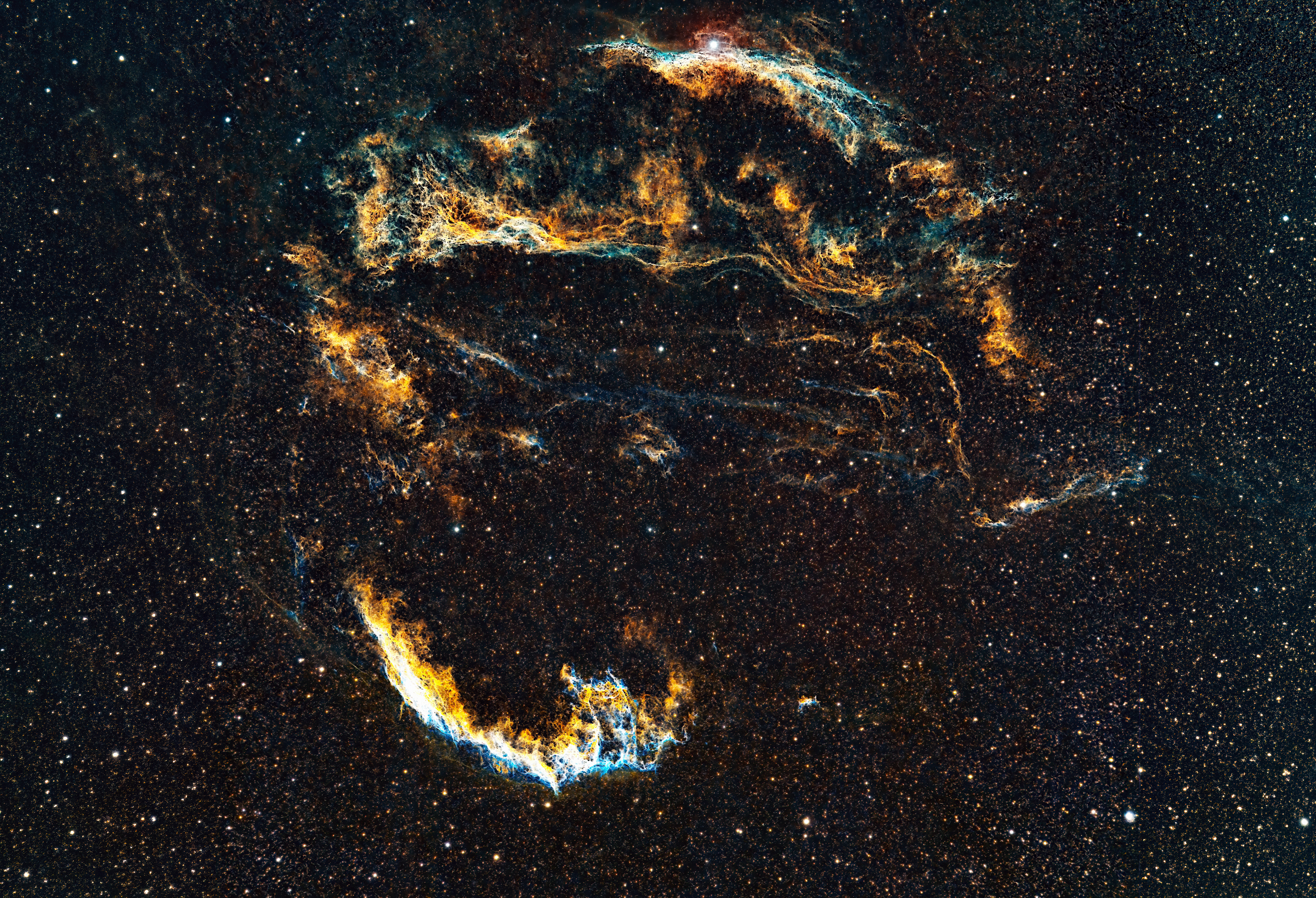
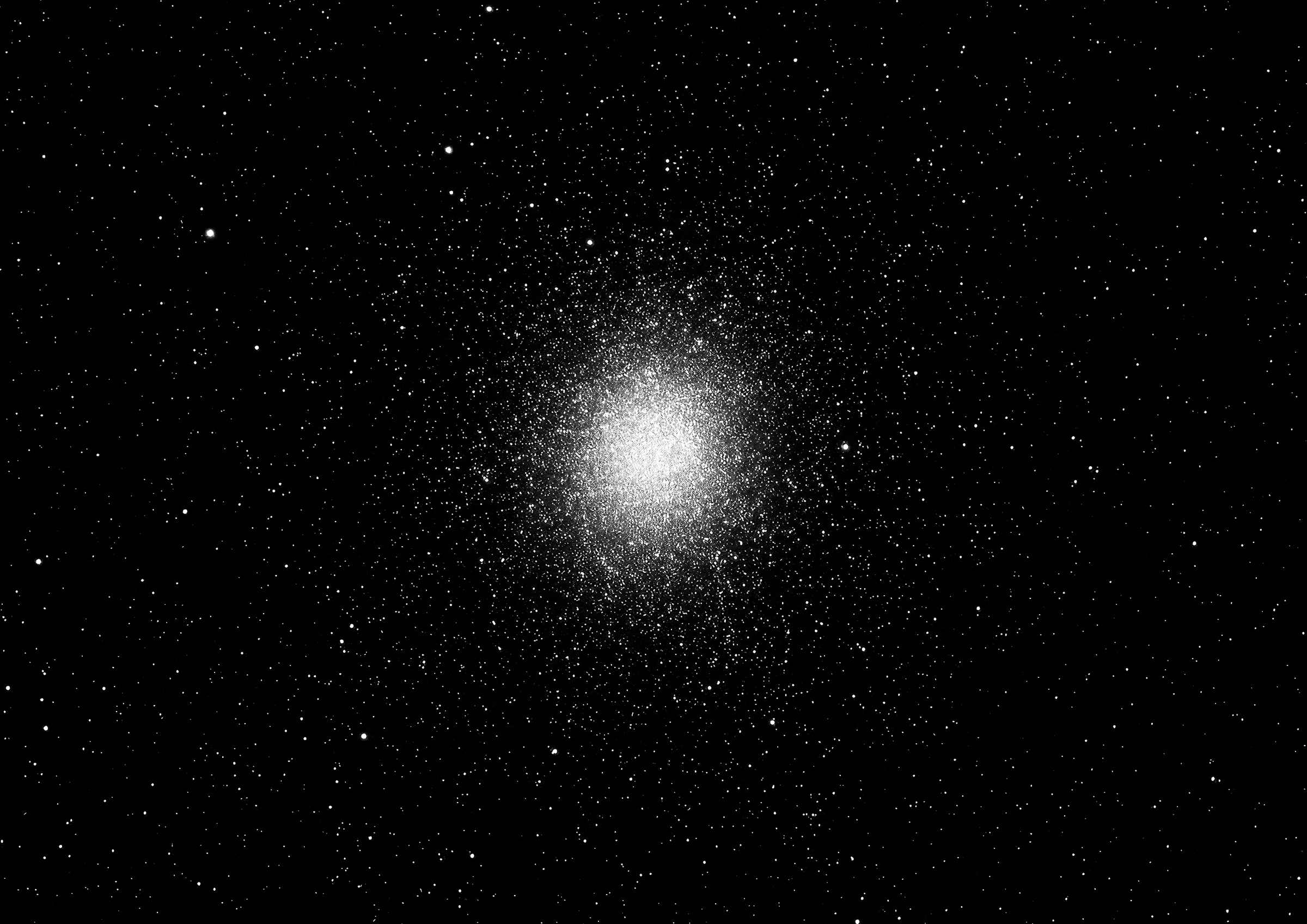
When one looks at the glowing gases of the Veil Nebula or the star clusters of Omega Centauri, they are not just objects floating in empty space: they are the bright, visible marker buoys riding the waves of a universe dominated by the unseen.