When most of us think of a telescope, we imagine looking through a tube to see a tiny object blown up to a massive size. In everyday language, we call this magnification. However, in deep-sky astrophotography, magnification is actually a secondary effect. If you take a tiny, incredibly dim galaxy and simply magnify it without gathering more light, you will just get a larger, blurrier, and even dimmer smudge.
To reveal deep-space structures, telescopes do not simply look at things closer; instead, they function as massive light buckets. They gather faint photons (light particles) that, from our perspective (but, not the photon’s) have travelled for millions of years, compressing all those photons down into a concentrated beam that hits the sensors of our cameras.
The human eye pupil only opens to about 7mm wide, catching a tiny trickle of light. A telescope replaces your pupil with a massive front lens or mirror to scoop up thousands of times more light. Depending on the size, brightness, and distance of the target, a specific bucket size (aperture) and optical design are needed to balance total photon capture with the ideal frame size.
Below is an inside look at how the four different telescopes that I use work, how they differ in collecting light, and what types of deep-sky and solar system objects each is best paired with.
- Celestron EdgeHD 9.25” – The Giant Light Reservoir
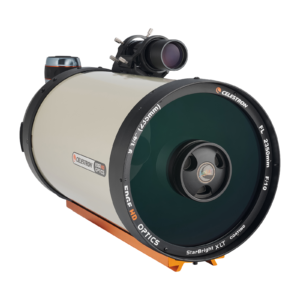
- How It Works: This is a Schmidt-Cassegrain (SCT) catadioptric design combining mirrors and lenses. Light passes through a front glass corrector plate, bounces off a curved primary mirror at the back, reflects off a secondary mirror at the front, and passes through an internal corrector lens assembly before hitting the camera. The “EdgeHD” optics correct for coma and field curvature, providing sharp stars across the entire sensor frame.
- The Light Collection: This is my largest light bucket by far, with a 235mm (9.25 inches) aperture that collects roughly 11 times more light than my smallest refractors. Because it stretches that light across a massive 2350mm focal length (f/10), the image naturally becomes dimmer on the sensor. It needs this massive mirror to scoop up a torrent of photons so the camera can record fine details at high magnification.
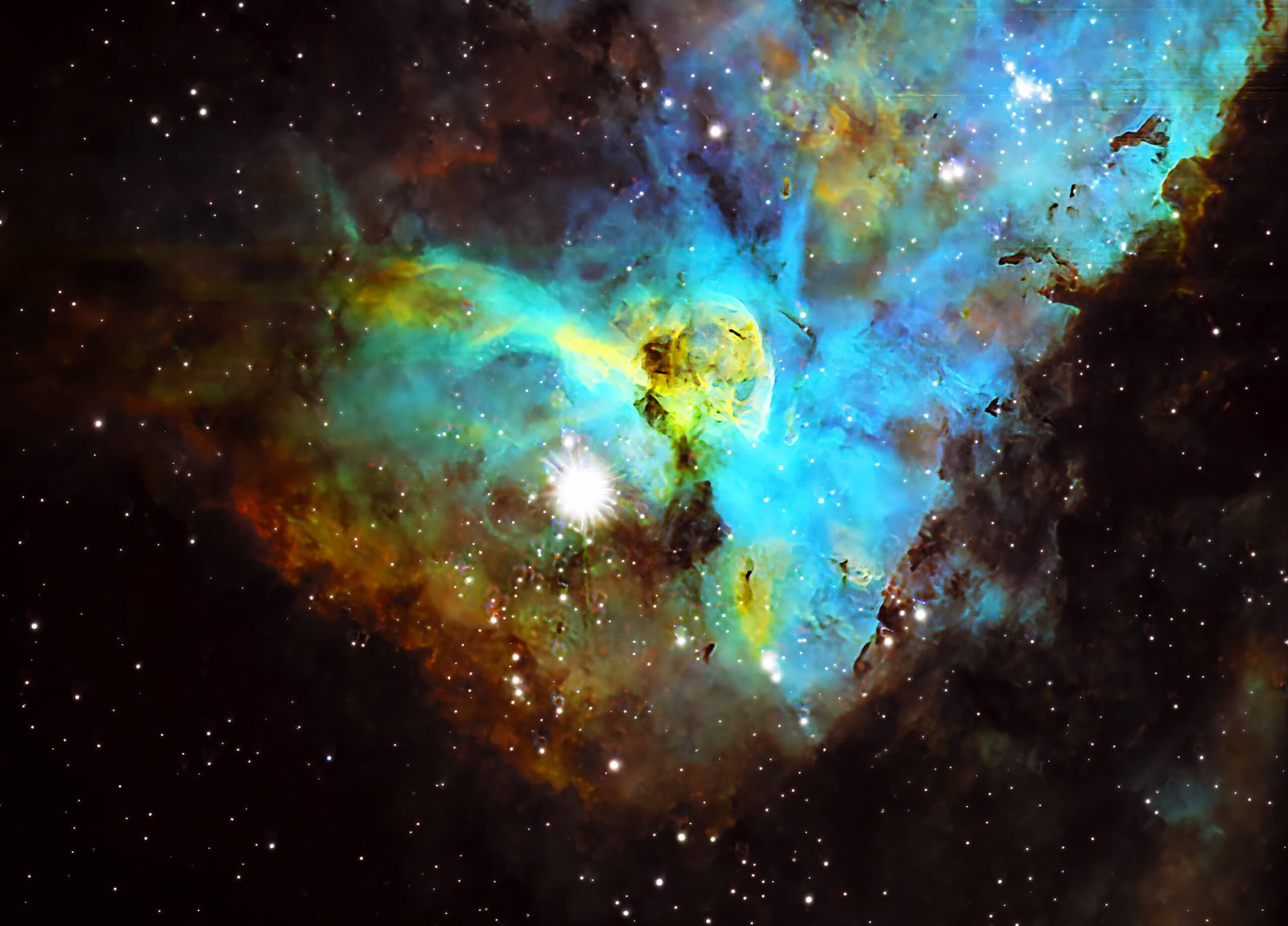
- Best Targets: Small planetary nebulae, distant galaxy clusters, and close-up fine details in structures like the complex core of the Carina Nebula.
The Homunculus Nebula: Captured at a massive focal length using the EdgeHD 9.25”, this image resolves the chaotic, expanding twin lobes of dust and gas surrounding the unstable star system Eta Carinae. Only a giant light bucket with high resolving power can slice through the brightness to map these intricate, tiny cosmic structures. The Homunculus Nebula is the faint hourglass shape spreading each side of the Eta (η) Carinae star system, slightly down to the left and up to the right; it is composed of gas and dust ejected by the Eta (η) Carinae star system during a massive outburst observed between 1838 and 1845; the cloud expands outwards at 2.1 million km/hour.
- TS CF-APO 130mm – The Deep, Sharp Well
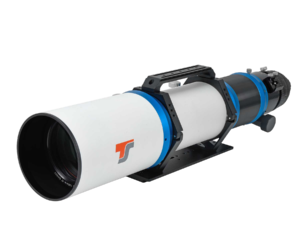
- How It Works: This is a premium Apochromatic (APO) Refractor using a three-element triplet lens configuration at the front, featuring premium FPL55 extra-low dispersion glass. Refractors bend light through glass, which can cause colour fringing. This triplet design forces red, green, and blue wavelengths to converge at the exact same focal point, producing exceptional colour purity and contrast.
- The Light Collection: With a 130mm (5.1 inches) aperture, this bucket has more than triple the light-gathering surface area of the smaller wide-field scopes. It collects a massive number of photons, balancing resolution and framing via its native 910mm focal length (f/7). It maintains high contrast and rich details without making the image too dim.
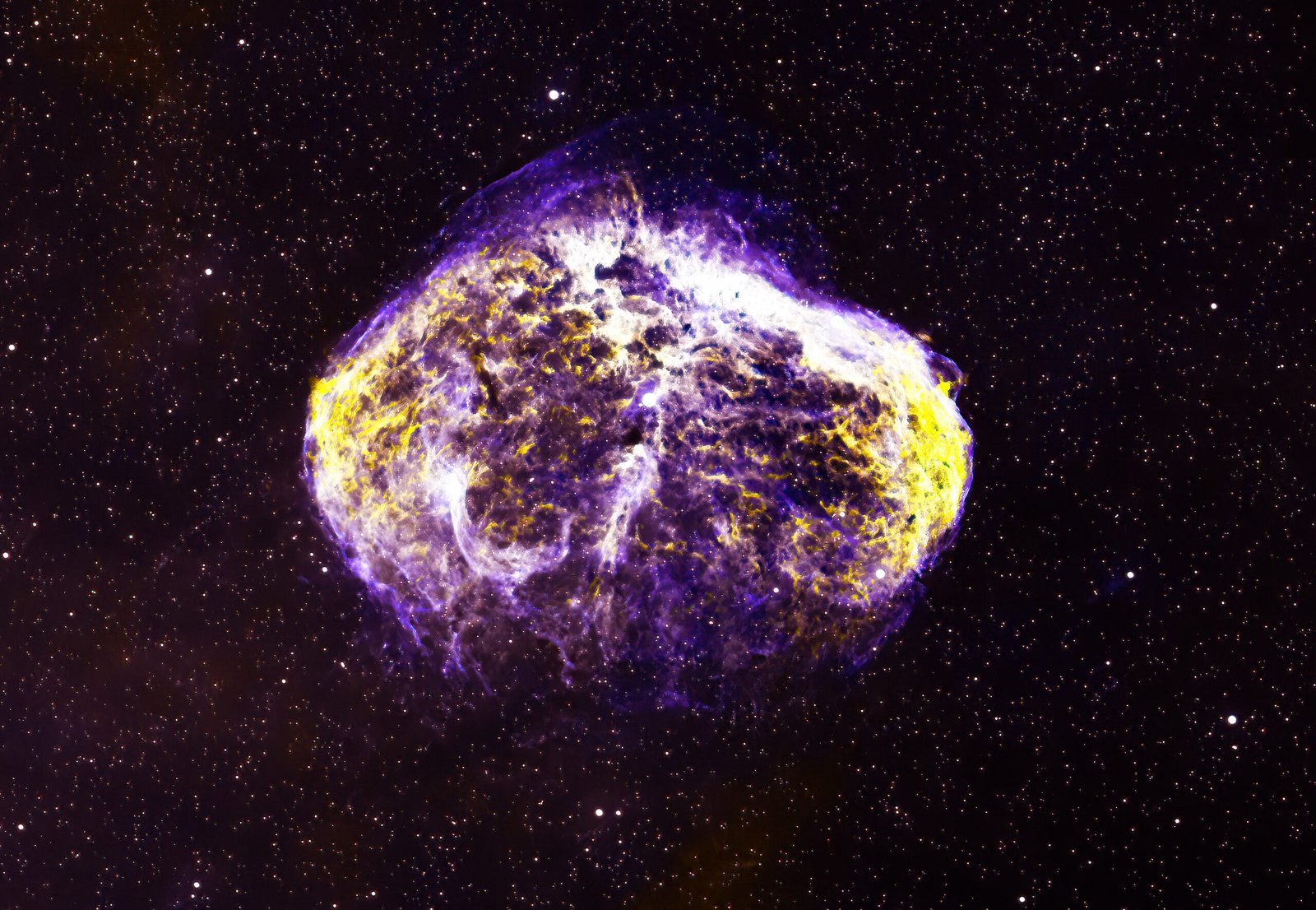
- Best Targets: Mid-sized deep-sky objects requiring high resolution, including the Crescent Nebula, or individual high-detail segments of the Vela Supernova Remnant.
Crescent Nebula (NGC 6888): The pristine triplet optics of the TS 130mm isolate the delicate, glowing shells of ionized gas blown away by a massive Wolf-Rayet star (a rare, supermassive star in a late, fast stage of life. It blasts fierce stellar winds into space, shedding its outer hydrogen layers to expose a hot core rich in helium, carbon, and nitrogen). Notice the high-contrast structural filaments and clean, pinpoint stars made possible by perfect colour convergence.
- William Optics RedCat 71 APO – The Wide-Field Flat-Field Cruiser
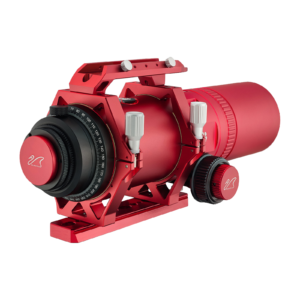
- How It Works: The RedCat 71 utilizes a unique 4-element Petzval optical design. It features a doublet lens element at the front and a secondary lens grouping near the rear of the tube. These rear lens elements flatten the field of view automatically, eliminating the need for separate spacing or external field flatteners, providing perfectly round stars right to the edges of the sensor.
- The Light Collection: This features a modest 71mm aperture, but its short 348mm focal length (f/4.9) means it concentrates its collected light onto a small, tight area on the sensor. This makes the optics “fast”—filling up the camera pixels with light quickly to capture faint, sweeping cosmic landscapes in fewer imaging sessions.
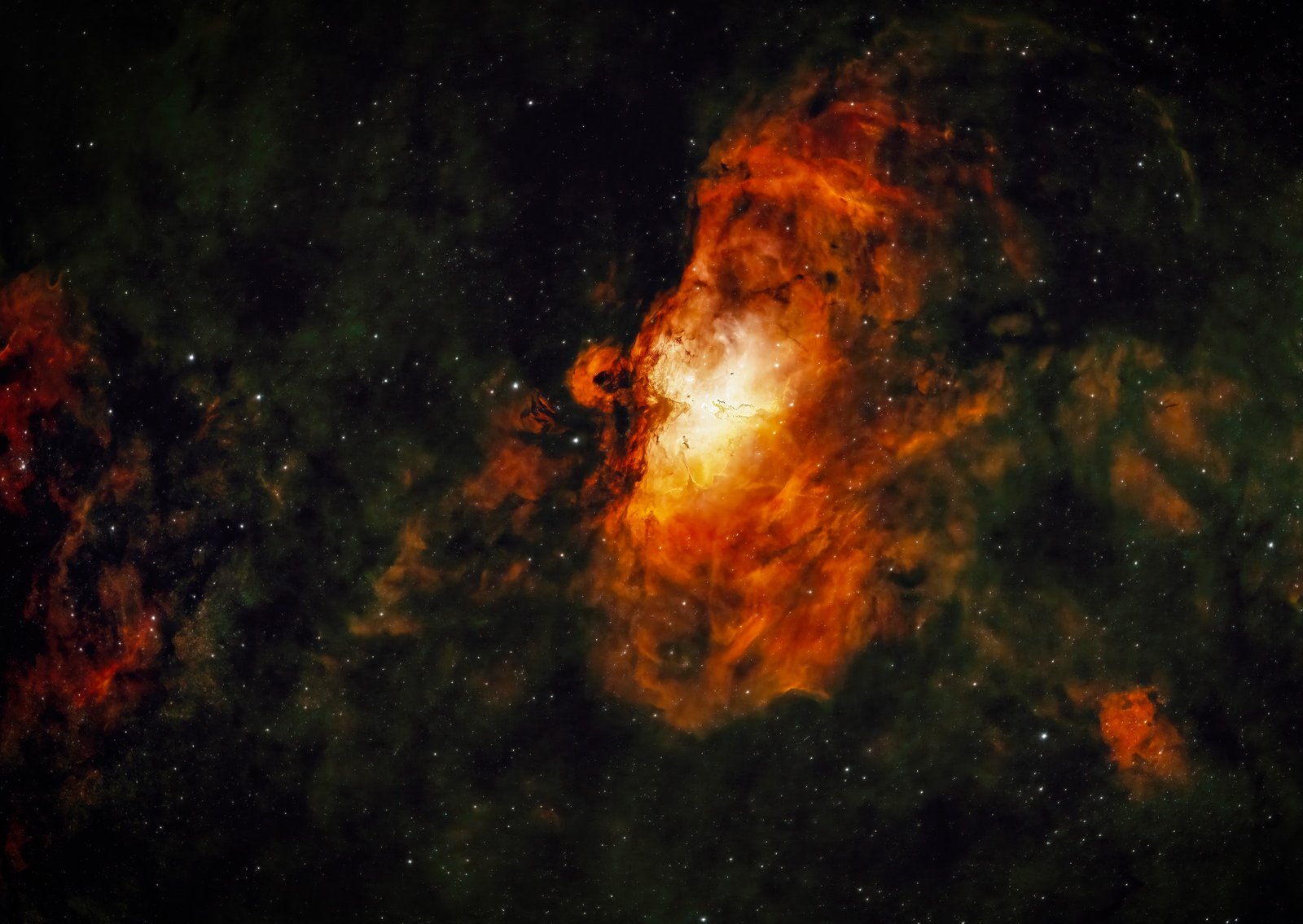
- Best Targets: Large emission nebulae and sweeping stellar landscapes, such as the Eagle Nebula, or the vast expanse of the Large Magellanic Cloud.
The Eagle Nebula (M16): Framed beautifully by the RedCat 71’s wide field of view, this image shows the famous Eagle Nebula that contains the Pillars of Creation nested within their wider cosmic nursery. The specialized Petzval design keeps the thousands of surrounding stars perfectly round right to the very edge of the frame.
- William Optics Pleiades 68 – The Ultra-Fast Astrograph
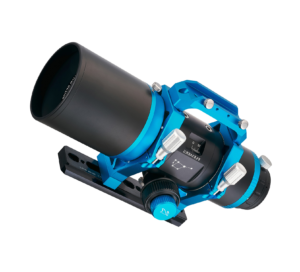
- How It Works: This system is a highly specialized, dedicated 7-element super-astrograph engineered from the ground up purely for high-speed astrophotography. Featuring a complex internal lens configuration, it achieves incredibly fast light-gathering capability without introducing optical distortions or aberrations across wide fields of view.
- The Light Collection: With a 68mm aperture and an incredibly short 260mm focal length, this is our fastest optical system (f/3.8). It functions like a wide, shallow scoop, packing incoming photons tightly together. The concentrated light yields intense image brightness, allowing us to map expansive, incredibly dim structures in a fraction of the time required by traditional setups.
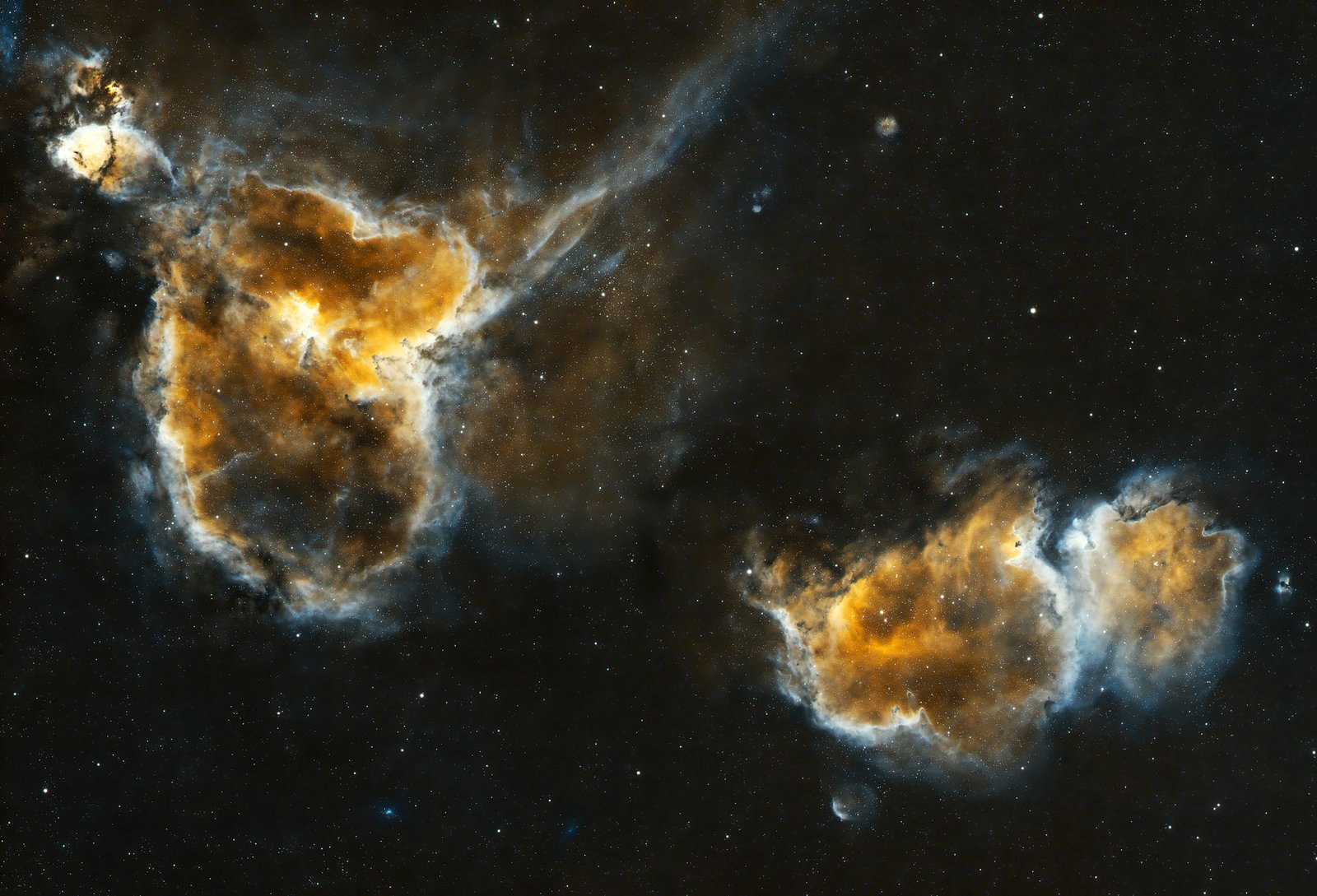
- Best Targets: Expansive, dim, or dusty structures that span huge portions of the night sky, including the California Nebula, and the Heart and Soul Nebulae.
The Heart and Soul Nebulae (IC 1805 & IC 1848): An expansive view of the Heart and Soul complexes captured in a single frame using the ultra-fast Pleiades 68 astrograph. Operating at f/3.8, this super-astrograph scooped up faint, sweeping structures of dark hydrogen dust across vast degrees of the night sky in record time.
Shifting Gears: Telescopes for Planetary and Lunar Imaging
While deep-sky astrophotography is a battle against faint light, Solar System imaging is an entirely different game. The Moon and major planets like Jupiter, Saturn, and Mars are exceptionally bright, but they are incredibly small in our night sky.
When imaging planets, we actually do want extreme magnification, paired with high-frame-rate “lucky imaging” video techniques to freeze atmospheric turbulence. Here is how the four light buckets perform when looking closer to home:
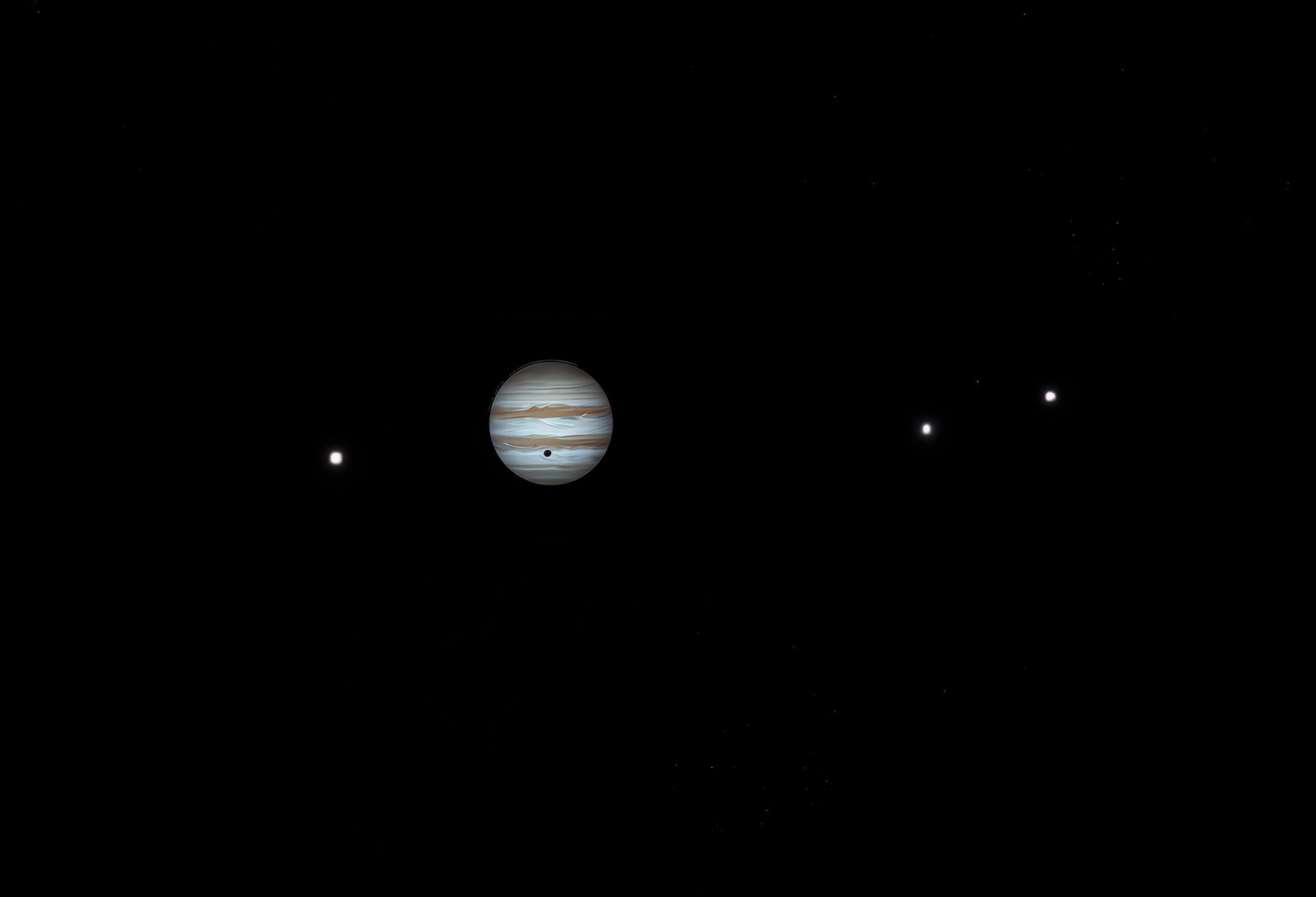
- Celestron EdgeHD 9.25” (The Planetary King): This telescope is an absolute powerhouse for planetary and high-resolution lunar imaging. Its massive 2350mm native focal length can be extended even further to 4700mm or more using a 2x or 3x Barlow lens. Because planets are so bright, the slower f-ratio does not matter. The huge 9.25-inch aperture yields the resolving power necessary to split the Cassini Division in Saturn’s rings, reveal individual storm bands on Jupiter, and resolve tiny craters or rilles on the Moon’s surface, and without the Barlow, Jupiter and its four Galilean moons.
Jupiter and its four Galilean Moons: Pushing the EdgeHD 9.25″ to extreme focal lengths using high-speed lucky imaging, this frame freezes atmospheric turbulence to reveal Jupiter’s dynamic storm bands alongside its four historic companions from left to right: Callisto, Ganymede (shadow over Jupiter surface), Io and Europa.
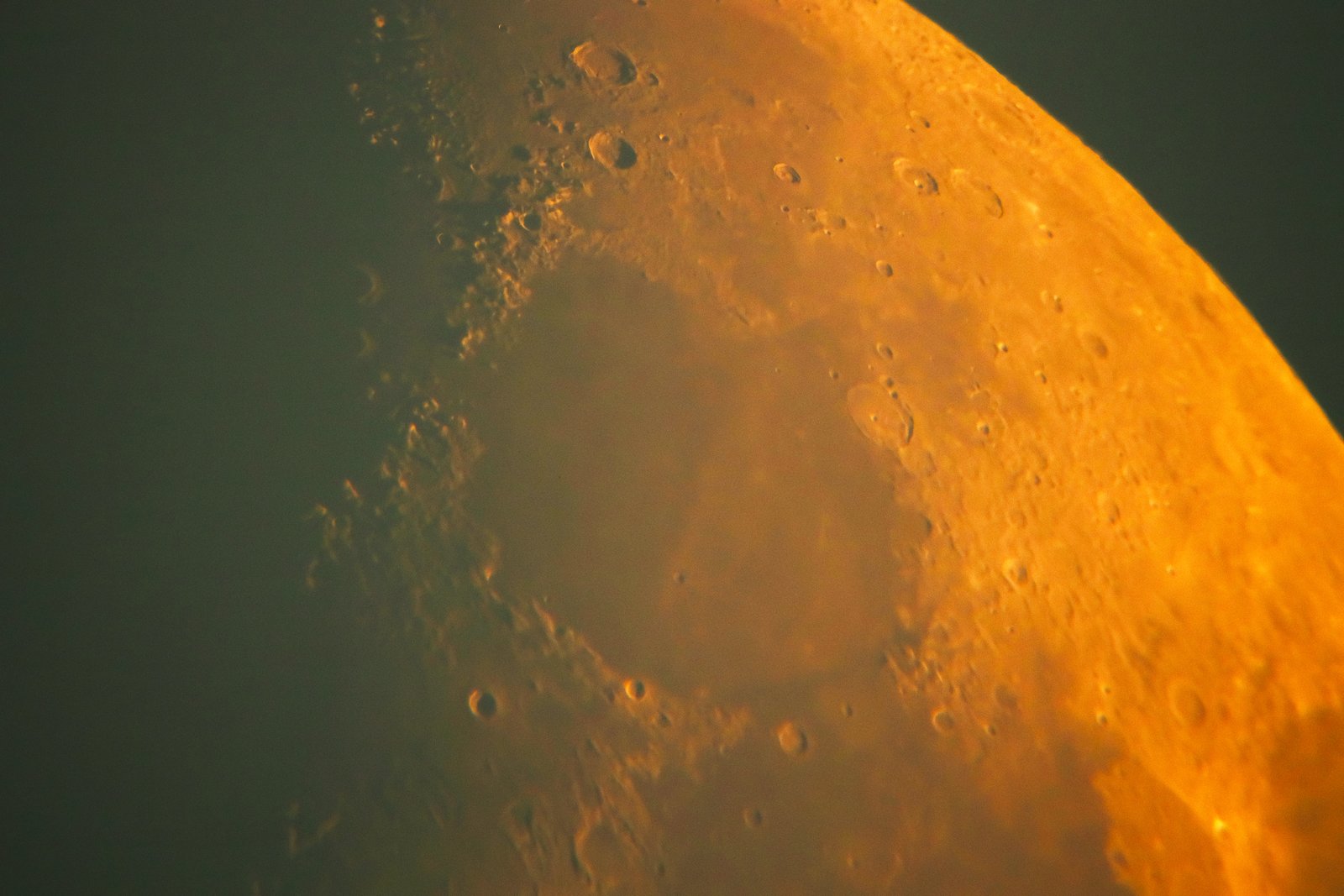
- TS CF-APO 130mm (The Sharp Lunar Specialist): Thanks to its pristine triplet glass and perfect color convergence, this scope delivers razor-sharp contrast. While it lacks the raw focal length of the EdgeHD for tiny planets, it is an incredible tool for full-disk or mosaic lunar imaging. Paired with a Barlow lens, it reveals crisp, colour-fringe-free views of lunar mountain ranges and crater ejecta blankets with remarkable clarity, such as the Sea of Tranquillity.
Sea of Tranquillity (Mare Tranquillitatis) on the Moon: The razor-sharp contrast of the TS 130mm brings out the subtle textures and ancient lava flows of the Moon’s Sea of Tranquillity. The high-purity glass reveals crisp, shadow-defined crater rims without a trace of artificial colour fringing.
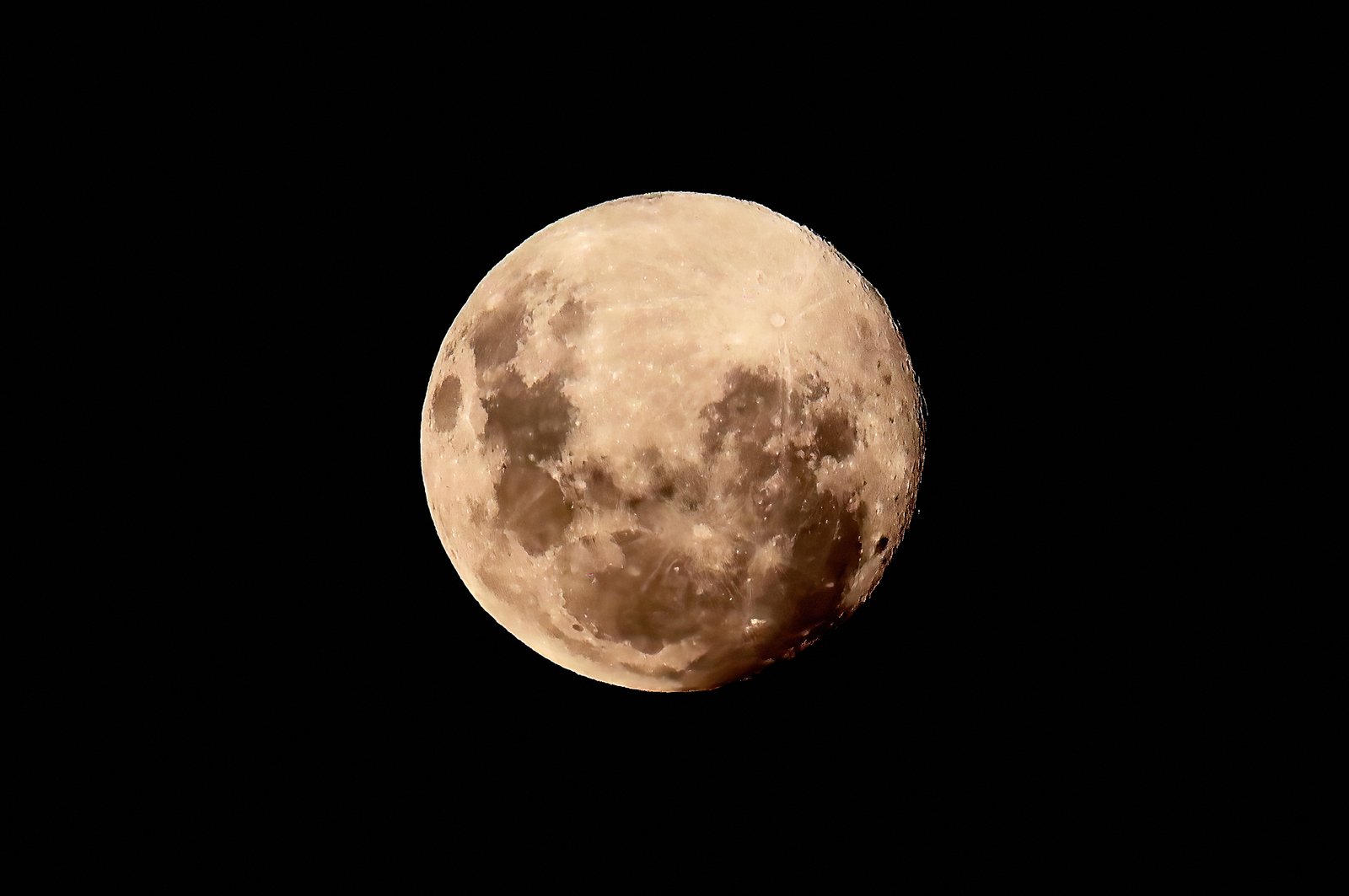
- RedCat 71 & Pleiades 68 (The Wide-Field Lunar Framers): These ultra-short focal length astrographs are generally not suited for planetary imaging; planets will look like tiny dots on the sensor. However, they excel at wide-field lunar landscapes. They are perfect for capturing the full Moon framed beautifully against a background starfield, tracking a lunar eclipse, or shooting dramatic conjunctions where the Moon sits alongside a planet or a star cluster like the Pleiades. Here, we have the half-moon during the day and the full moon during the night.
Half Moon at Day: Captured during the day, this artistic wide-field shot highlights the delicate relief of the lunar terminator line. The short focal length balances the bright blue atmospheric glare with the subtle, pale contrast of the daytime moon.
Full Moon at Night: A striking, wide-field view of the Full Moon shining brilliantly in the dark night sky. The compact optics perfectly frame the entire lunar disk, highlighting the bright ray systems of craters against deep space.
One Sky, Four Perspectives
By understanding how light behaves, we can transform our telescopes from simple tubes into specialized tools designed to map the cosmos. Whether we are utilizing the massive light-gathering power of the EdgeHD 9.25” to resolve the chaotic depths of the Homunculus Nebula, or deploying the ultra-fast Pleiades 68 to sweep up the faint dust of the Heart and Soul Nebulae, each instrument plays a vital role in how we document the universe.
Capturing these targets requires patience, precise tracking, and the right “light bucket” for the job. The next time you explore the galleries here at astroanderson.com, you will see exactly how these four distinct optical paths allow us to bridge the gap between our world and the edge of deep space across both hemispheres.
Clear skies, and thank you for looking up with astroanderson.com!