Search Content
View Special Collections
Astro Thoughts

Light vs. Gravity: The Math Behind the Ultimate Cosmic Balance Sheet

The Cosmic Balance Sheet: Matter vs. Gravity

To understand how the universe cancels itself out to zero, we have to look at physics through a simple ledger of positive and negative values. In our universe, energy comes in two opposing forms:

  1. Positive Energy (The Stuff): This is the energy locked up in matter, light, radiation, and kinetic movement. It is the visible energy that powers stars, builds galaxies, and registers on our camera sensors during long astrophotography exposures. It is quantified by Einstein’s famous equation: E = mc2. (Energy = mass times the speed of light squared).
  2. Negative Energy (The Cage): This is gravitational potential energy. In physics, gravity is an attractive force, meaning it pulls objects together. To pull two objects apart against gravity, you have to inject external energy. Therefore, a bound gravitational field inherently possesses negative energy.


The Mathematics of Cosmic Zero

The mathematical proof for this relies on Newton’s law of universal gravitation, which defines gravitational potential energy (U) between two masses (M and m) separated by a distance (r) as: 
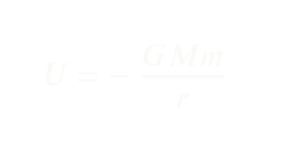
Where G is the gravitational constant, 6.6743 × 10⁻¹¹ m3 kg-1 s-2. The minus sign is vital. It dictates that as objects get closer together, their gravitational potential energy becomes increasingly negative.

When applied to the entire universe using general relativity, cosmologists calculate the total gravitational energy of a smooth, expanding universe. Crucially, astronomical observations show that our universe is geometrically flat, Ω = 1. [Saying our universe is geometrically flat means that space on a large cosmic scale follows the rules of standard Euclidean geometry, where parallel lines never meet and the angles of a triangle always add up to 180°]. In a perfectly flat universe, the positive relativistic mass-energy (mc2) of all particles is precisely equal to the absolute value of the negative gravitational potential energy (U) pulling them together.

When you add them together, the cosmic ledger balances perfectly:

Total Energy = Matter + Gravity = 0


From Quantum Fluctuations to Cosmic Inflation

If the net energy required to build a universe is zero, the laws of physics do not require a massive external power source to jumpstart the Big Bang. Instead, the universe could have emerged spontaneously out of a quantum vacuum.


The Dynamic Vacuum

In quantum mechanics, a vacuum is never truly empty. According to Heisenberg’s Uncertainty Principle, there is a fundamental limit to how precisely we can know a system’s energy at a specific time. This relationship is written as:
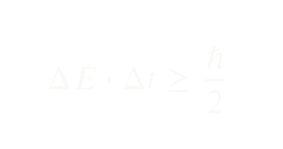
The equation is that Uncertainty in Energy times Uncertainty in Time (or lifetime of a state) is greater than or equal to the reduced Planck constant divided by 2 (The reduced Planck constant, ℏ, is a fundamental physical constant defined as the standard Planck constant (h) divided by 2π: it is the quantum of angular momentum and action, with an exact value of 1.05×10⁻³⁴ J ⋅ s). The equation means that for virtual particles energy, can be “borrowed” out of nothing to create particles, as long as they vanish within time ΔT.

Because of this, the energy (ΔE) of empty space can fluctuate wildly for incredibly brief moments (ΔT). These quantum fluctuations manifest as virtual particle-antiparticle pairs that spontaneously pop into existence, borrow energy from the vacuum, and instantly annihilate each other back into nothingness.


The Exponential Spark

Usually, these fluctuations cancel out locally on subatomic scales. However, roughly 13.8 billion years ago, an extraordinary event occurred. A tiny, localized quantum fluctuation became dominated by a unique state of vacuum energy characterized by negative pressure.

In general relativity, pressure contributes to gravity. While normal matter has positive pressure and creates attractive gravity, this intense vacuum energy possessed a negative pressure equal to its density, written as:

This produced a violently repulsive gravitational effect, triggering an era known as cosmic inflation. During inflation, space expanded exponentially—faster than the speed of light—stretching a subatomic patch of space by a factor of at least 1026 (1 followed by 26 zeros) in a mere fraction of a second (10-32 seconds).

This rapid stretching did two revolutionary things:

  • Froze the Fluctuations: It ripped the virtual particles apart before they could annihilate each other, transforming fleeting quantum ghosts into real, permanent, macroscopic particles of matter and radiation.
  • Separated the Ledger: As inflation created massive amounts of positive matter, it simultaneously stretched space, creating a vast, matching reservoir of negative gravitational potential energy.

Inflation acted as a cosmic amplifier, blowing up a microscopic quantum whisper into the vast, expanding macro-universe we inhabit today.


Mapping the Void: The Skeleton of Our Universe

How do we know this inflationary story holds up? We look at the large-scale layout of the cosmos. When inflation froze those subatomic quantum fluctuations, it left an imprint. Over billions of years, gravity pulled matter along the lines of those original fluctuations, creating a cosmic web of galaxy filaments separated by massive, empty voids.

We can now see this web in unprecedented detail thanks to the Dark Energy Spectroscopic Instrument (DESI), based at the Kitt Peak National Observatory near Tucson, Arizona.
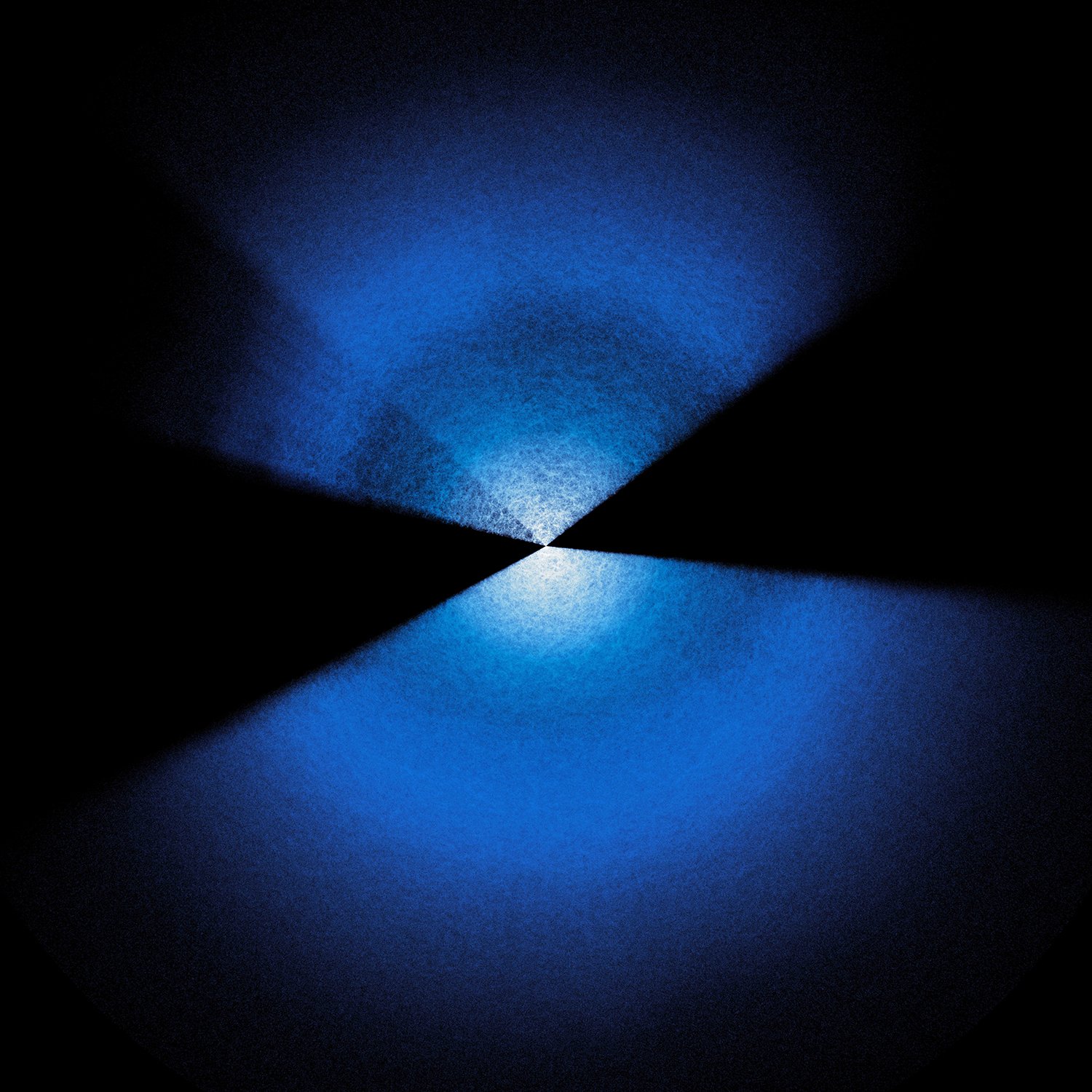
DESI has mapped more than 47 million galaxies and quasars, creating the largest high-resolution 3D map of our Universe to date (April 2026). Earth is at the centre of the wedges, and every dot is a galaxy.

DESI has mapped more than 47 million galaxies and quasars, creating the largest high-resolution 3D map of our Universe to date (April 2026). Earth is at the centre of the wedges, and every dot is a galaxy

This breathtaking 3D map reaches back nearly 11 billion years into cosmic history. It serves as a visual confirmation of physics: it shows exactly how a universe with a net energy of zero structurally organized its matter out of a microscopic quantum event, all while driven by the mysterious push of dark energy.


Windows to the Cosmos: Northern Hemisphere Jewels

Because our universe emerged from this zero-sum quantum event, matter was able to clump together over billions of years to create the deep-sky targets we love to photograph. For astrophotographers observing from the Northern Hemisphere, these two targets show us just how beautifully that primordial matter arranged itself against the background void:

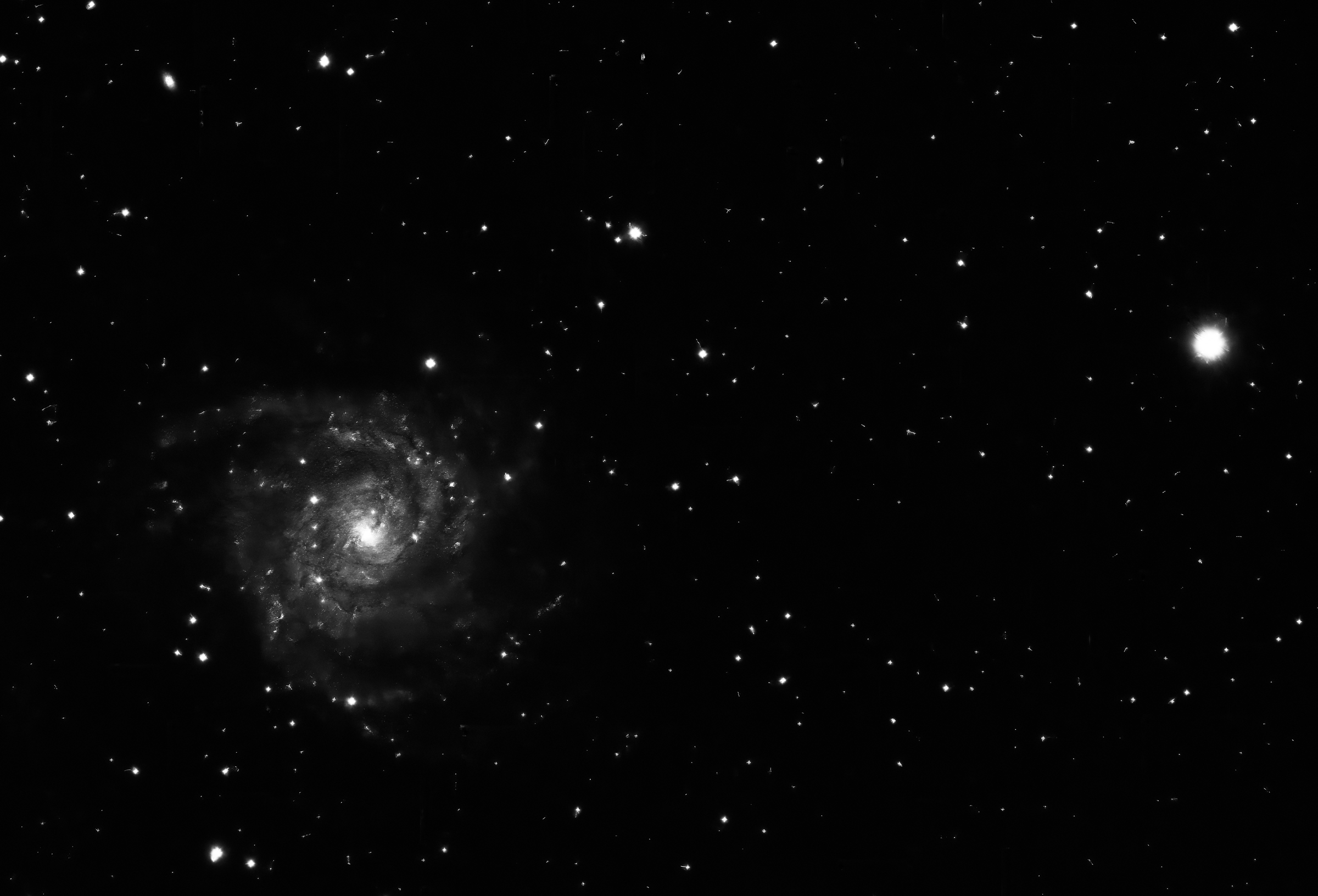
Hidden Galaxy (IC 342), spiral galaxy 11 million light-years distant, 60,000 light-years across, with active, ionized hydrogen core. Collections: Galaxies

The Hidden Galaxy (IC 342) Tucked behind thick lanes of cosmic dust near the galactic equator; IC 342 is a magnificent face-on spiral galaxy. Often called the “Hidden Galaxy,” it perfectly illustrates how a local concentration of positive mass-energy overcomes cosmic expansion to sculpt giant, winding arms of stars and gas—all held in a perfect structural balance by its own negative gravitational potential energy.

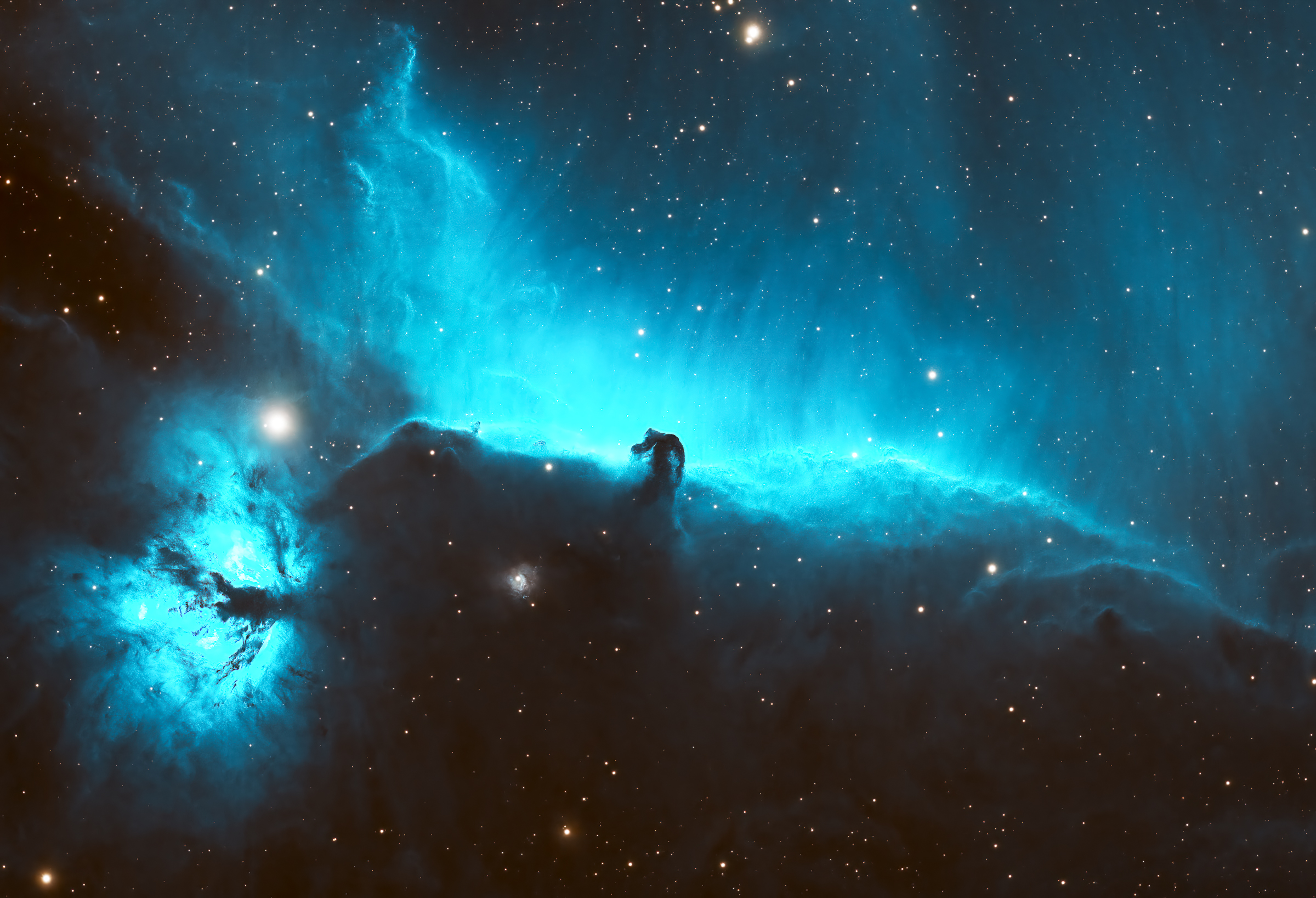
IC 434, emission nebula 1400 light-years distant, against which the dark, silhouetted Horsehead Nebula (Barnard 33) is visible. Collections: Northern Celestial Hemisphere.

The Horsehead Nebula (IC 434) Silhouetted against a brilliant ribbon of glowing hydrogen gas, the iconic Horsehead Nebula (Barnard 33) rises as a dense, dark cloud of interstellar dust. This target vividly demonstrates the push and pull of the zero-energy universe: the bright background emission nebula represents active, energetic radiation, while the dark profile of the horse’s head shows cold, collapsing matter transitioning under the silent pull of gravity.

Windows to the Cosmos: Southern Hemisphere Wonders

Traveling south of the equator reveals an entirely different perspective of our zero-energy universe. The Southern Hemisphere holds some of the most dynamic, high-mass energetic structures accessible to backyard telescopes:

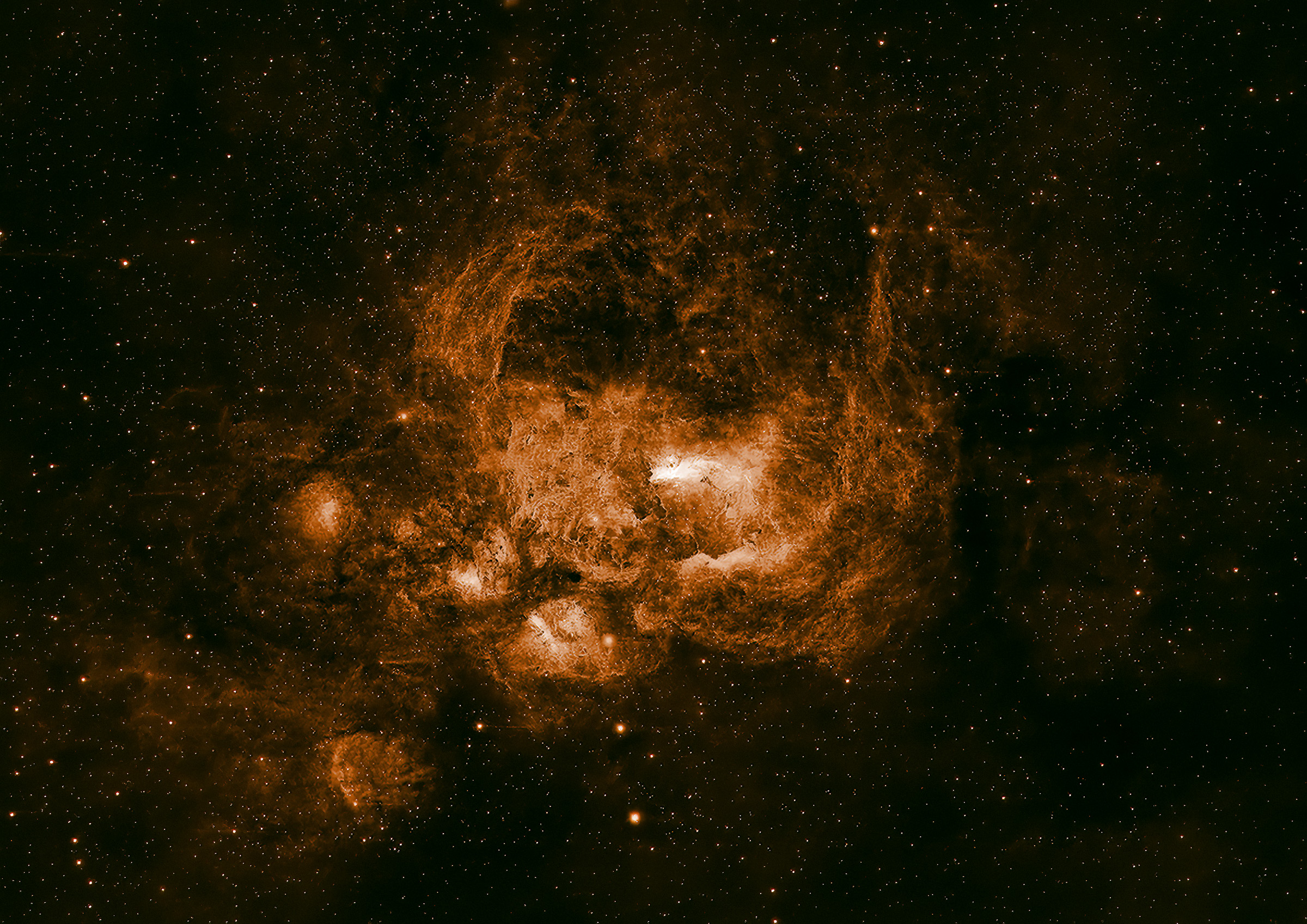
Lobster Nebula NGC 6357, producing some of the most massive and luminous stars in the Milky Way galaxy. Collections: Southern Celestial Hemisphere

The Lobster Nebula (NGC 6357) Located deep within the constellation Scorpius, this chaotic emission nebula is a violent laboratory of star formation. Packed with some of the most massive, hot, and luminous stars known to science, NGC 6357 shows us positive mass-energy at its extreme limits, as fierce stellar winds carve immense, glowing bubbles out of the surrounding gas fields.

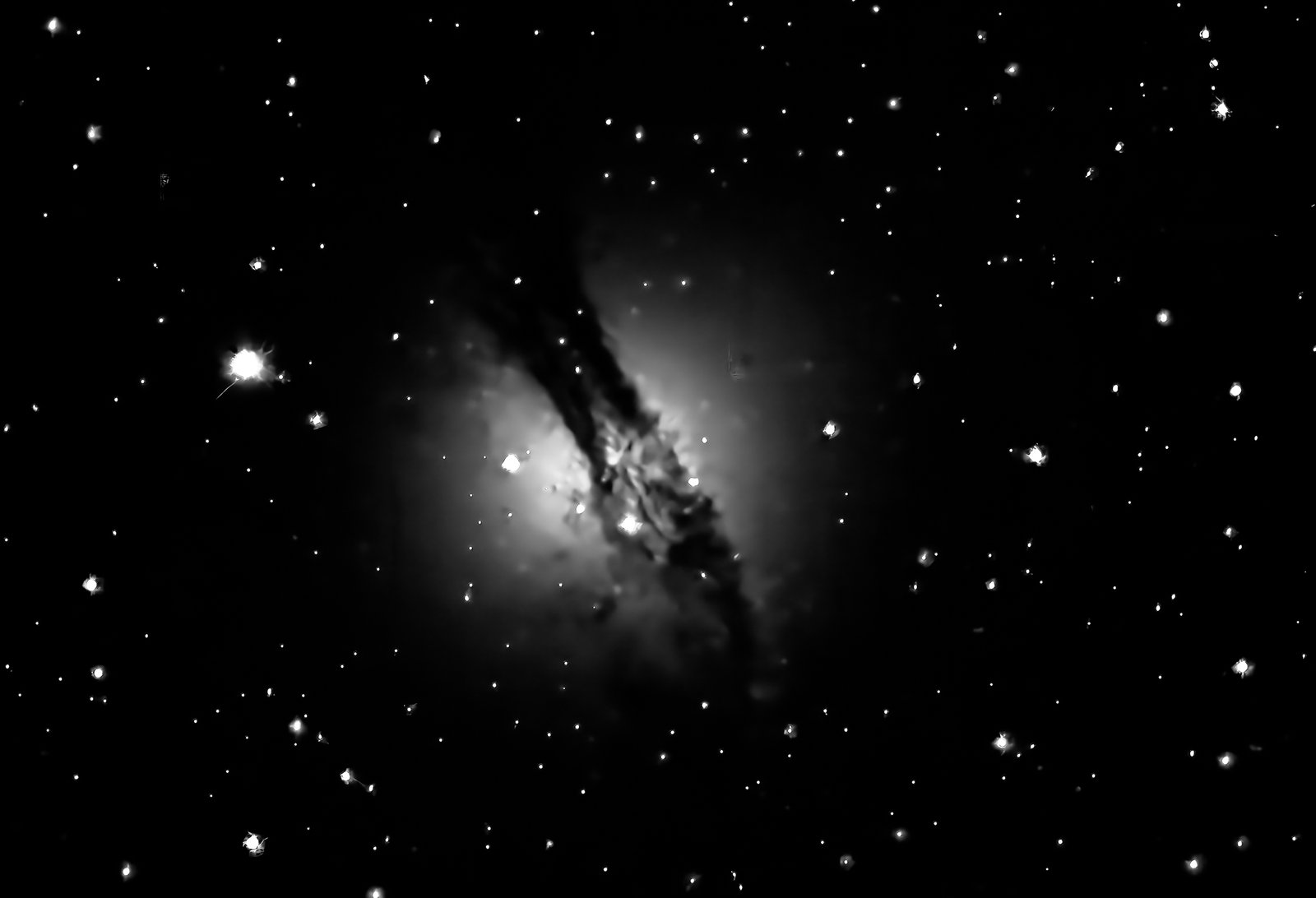
Centaurus A (NGC 5128), 12 million light-years distant; features dark dust across its centre, a remnant of a smaller spiral galaxy that merged with the larger elliptical galaxy about 450 million years ago, triggering intense star formation. The galaxy houses a very active supermassive black hole at its core and has intense radio emission lobes one million light-years wide. Collections: Galaxies _ Southern Celestial Hemisphere

Centaurus A (NGC 5128) Centaurus A is a spectacular giant elliptical galaxy torn apart by a colossal cosmic collision. Strikingly bisected by a thick, churning lane of dark dust, it harbours a supermassive black hole at its core that shoots out powerful relativistic jets. It is a stunning visual example of the ultimate balance sheet—where active, energetic radiation from stellar collisions is contained by an immense, invisible cage of negative gravitational energy.

Final Thoughts: The Ultimate Free Lunch

When we capture the light of distant galaxies on our camera sensors at astroanderson.com, we aren’t just looking at pretty targets. We are looking at a perfectly balanced mathematical equation.

The stars, the nebulae, and the planets are all real, but they are sustained by the invisible, negative weight of gravity. We exist because “nothing” split itself open, creating an equal measure of light and gravity—a universe born from a quantum fluctuation, costing absolutely nothing at all.

Click on the equation to view the less scientific version

html