
Carina Nebula - Jewel of the South.....
As an astrophotographer, I have been incredibly fortunate to capture the night sky from both hemispheres. From my roots in England to my travels beneath the southern stars, my telescope has peered into some of the most breathtaking corners of our universe. The Northern Celestial Hemisphere offers cosmic masterworks like the delicate California Nebula.
Yet, if you ask me which deep-sky object holds my heart, my answer is immediate and unchanging: the Carina Nebula (NGC 3372).
Shining brightly at a declination of roughly -60°, this masterpiece belongs strictly to the Southern Celestial Hemisphere. For me, it is the ultimate canvas of cosmic art, structure, and raw power. Here is why I have never tired of pointing my lens at it.
1. It Dwarfs the Famous Orion Nebula
Northern observers often point to the great Orion Nebula (M42) as the gold standard of stellar nurseries. Orion is spectacular—but Carina is on an entirely different scale.
- The Scale: The Carina Nebula is four times larger and significantly brighter than Orion.
- The Luminary: It is anchored by Eta Carinae, a volatile, titanic binary star system blasting out five million times more luminosity than our Sun.
- The Drama: When you look at Carina, you are looking at a hyper-violent environment of intense stellar winds and crushing gravity. It is the heavy-metal concert of the cosmos. Fun fact: It is so chaotic that it actually inspired musicians Jonathan Anderson and Mike Salow to compose a progressive metal track named after it.
2. A Playground for Artistic Processing
One of the main reasons I love this target is how beautifully it responds to different processing workflows. It is a chameleon. On astroanderson.com, I have broken my work on this nebula down into distinct thematic collections to capture its multi-faceted nature:
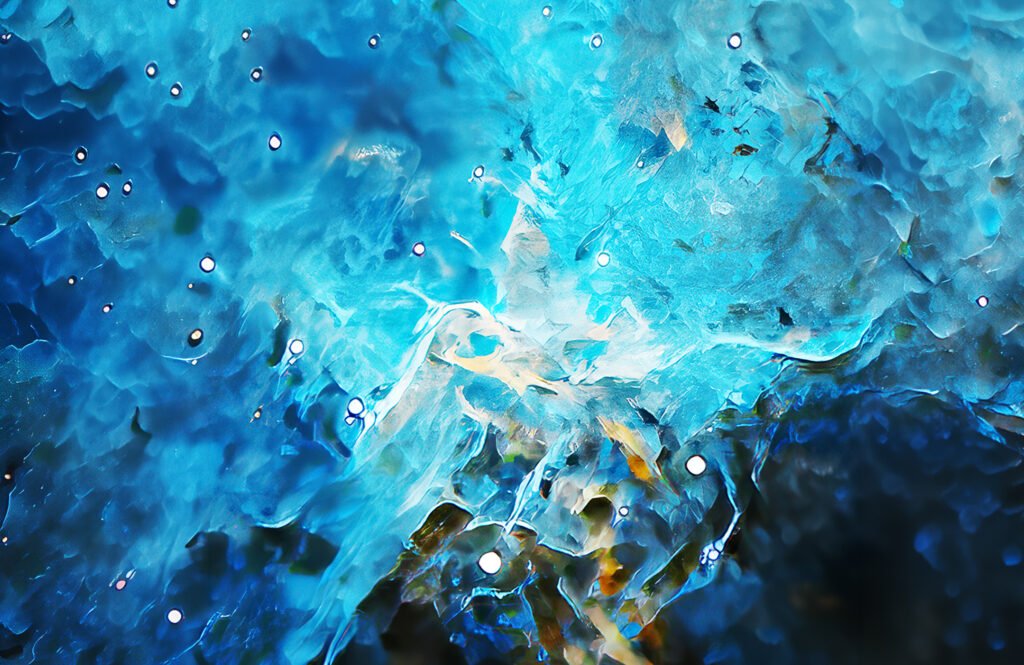
- The Core Collection: My baseline imagery captures the immense scope of the entire diffuse complex, mapping out the wide cosmic web where gas and dust seamlessly intertwine.
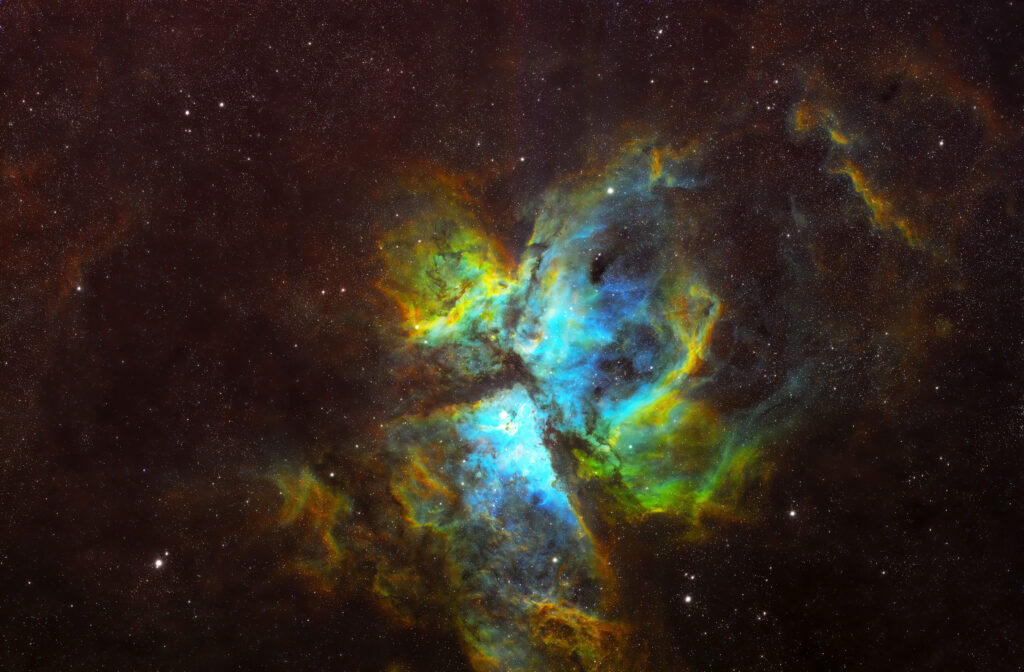
- The Artistic Collection: Because Carina is incredibly rich in ionized Hydrogen, Sulphur, and Oxygen gases, it provides an infinitely complex playground for narrowband palette manipulation. This collection is my space for pure creative expression, shifting colour balances to expose hidden depth, texture, and emotion.
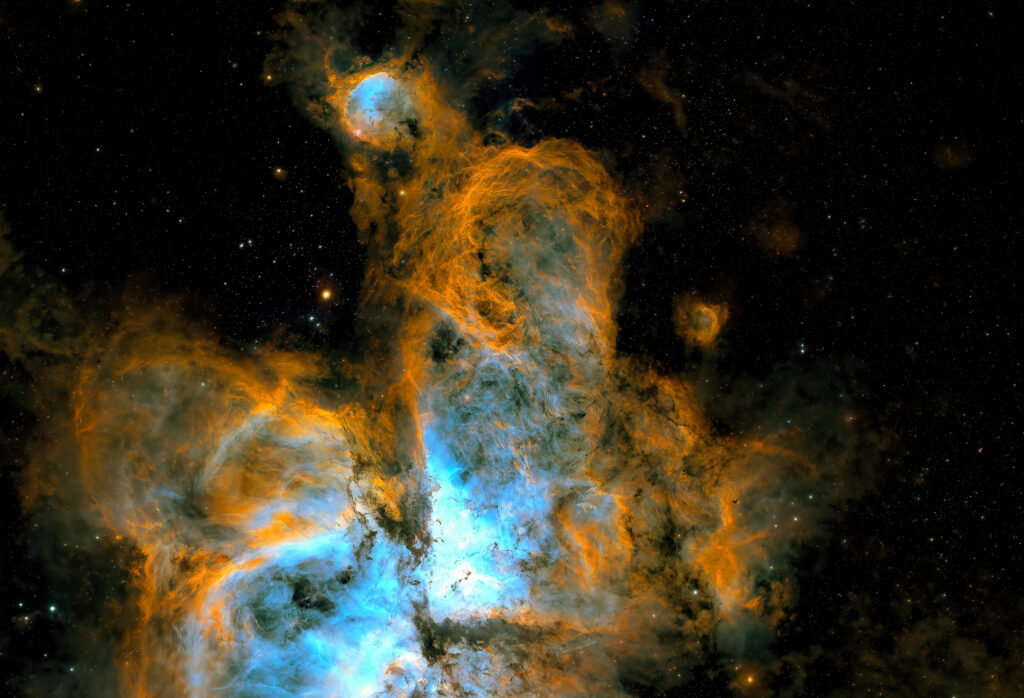
- The Structural Collection: Zooming into the nebula reveals an intricate architecture of dark, dense dust pillars—like the famous Keyhole Nebula—and billowing shockwaves sculpted by newborn stars. This collection isolates those violent close-ups.
3. A Bridge Between Hemispheres
Because the Carina Nebula cannot be seen from high northern latitudes, it carries a sense of magic for someone who spent a large portion of life under northern skies. Moving between the hemispheres fundamentally shifts your perspective as an imager.
Carina was my grand introduction to the treasures of the south. It stands as a stark reminder of how vast our single cosmic home truly is. It rewards hours of tracking, stacking, and processing with a level of intricate detail that no other nebula in the sky can provide.
Conclusion: The Infinite Canvas
Every astrophotographer has a target they return to year after year. For me, NGC 3372 is an infinite canvas. Whether I am focusing on its grand sweeping scales, isolating its dense structural towers, or painting its rich gases in creative narrowband palettes, it always reveals something new. It is a monument to the beautiful, chaotic, creative engine of the universe—and it is exactly why I love astrophotography. Watch the video…..(Music by Brian J. Podesta)