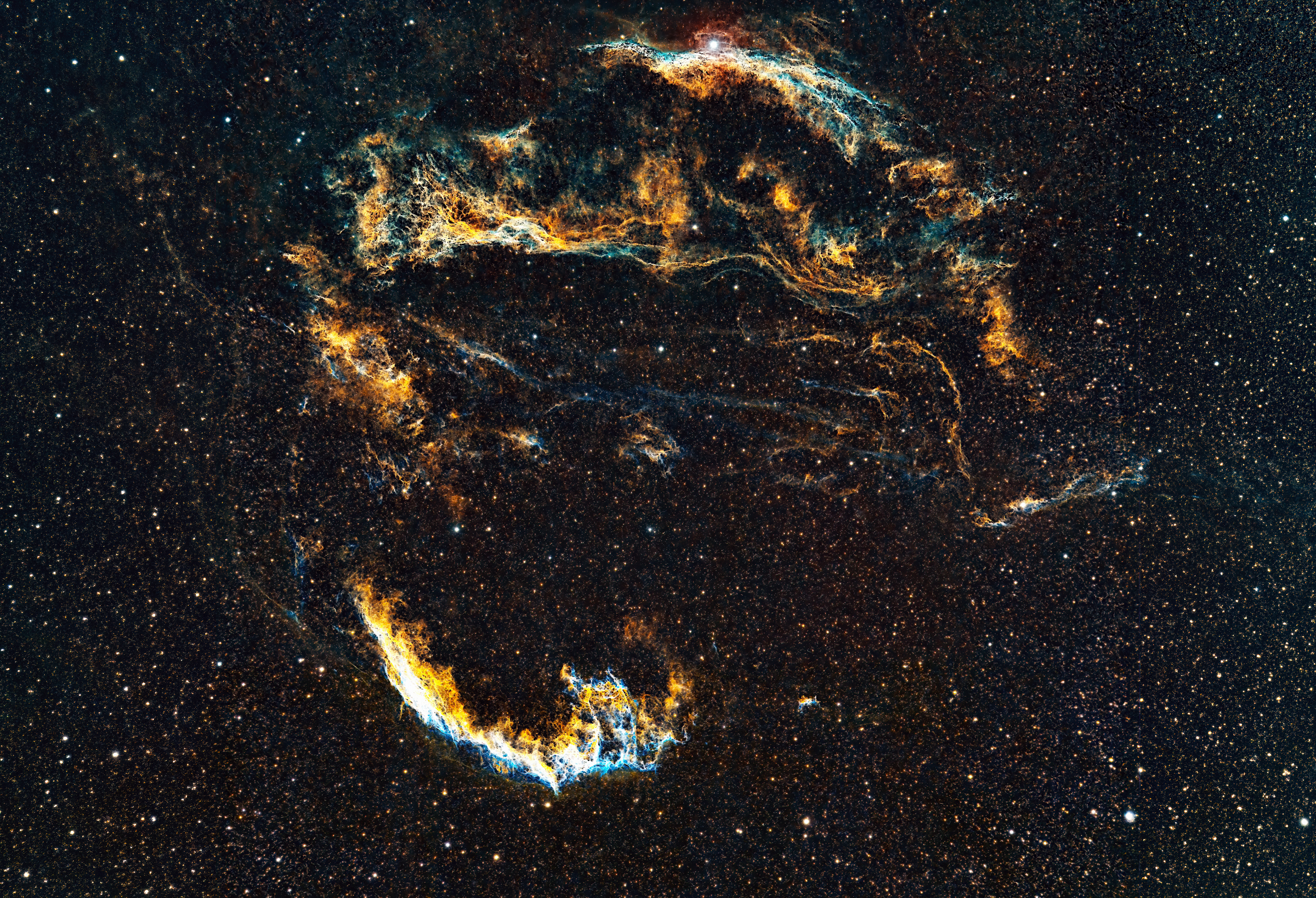
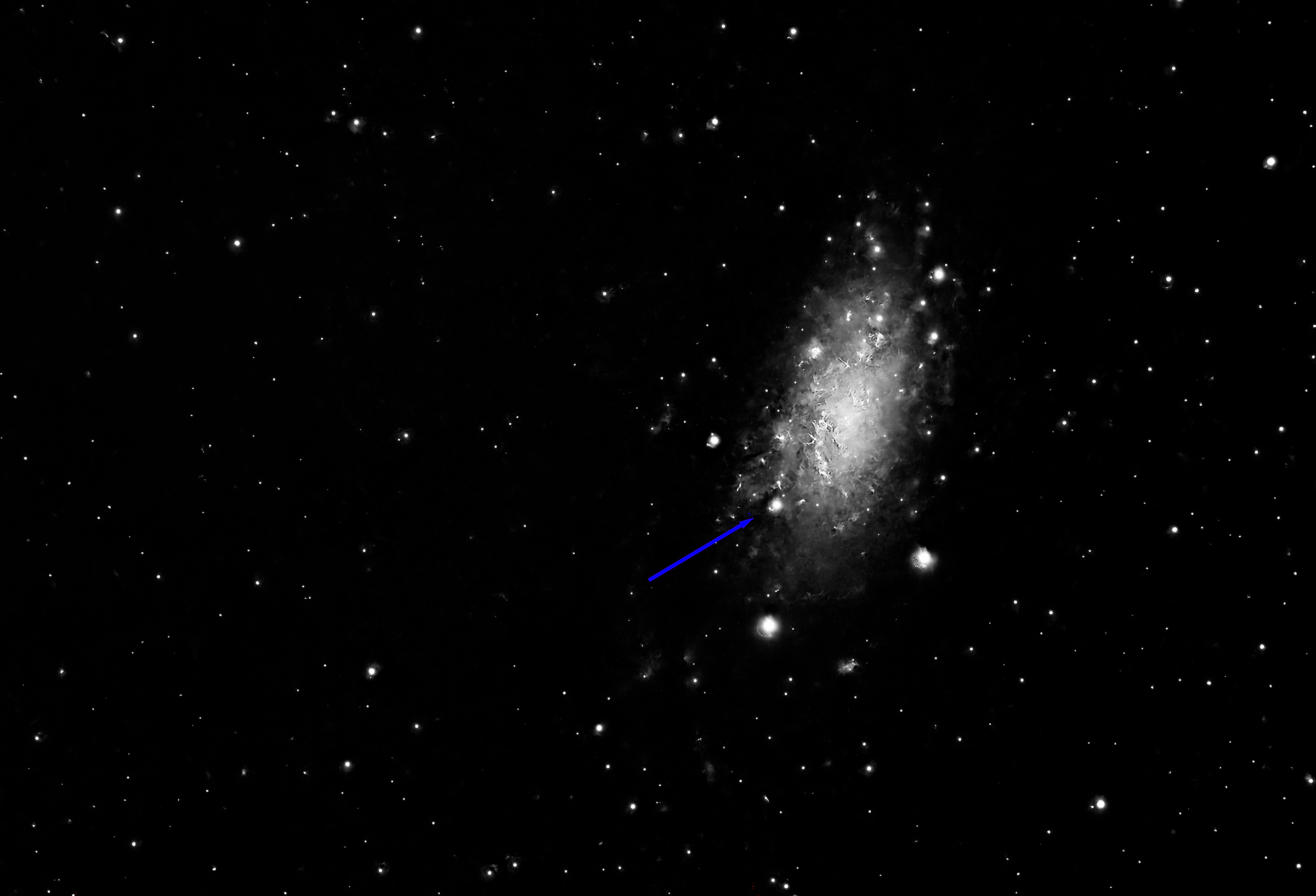
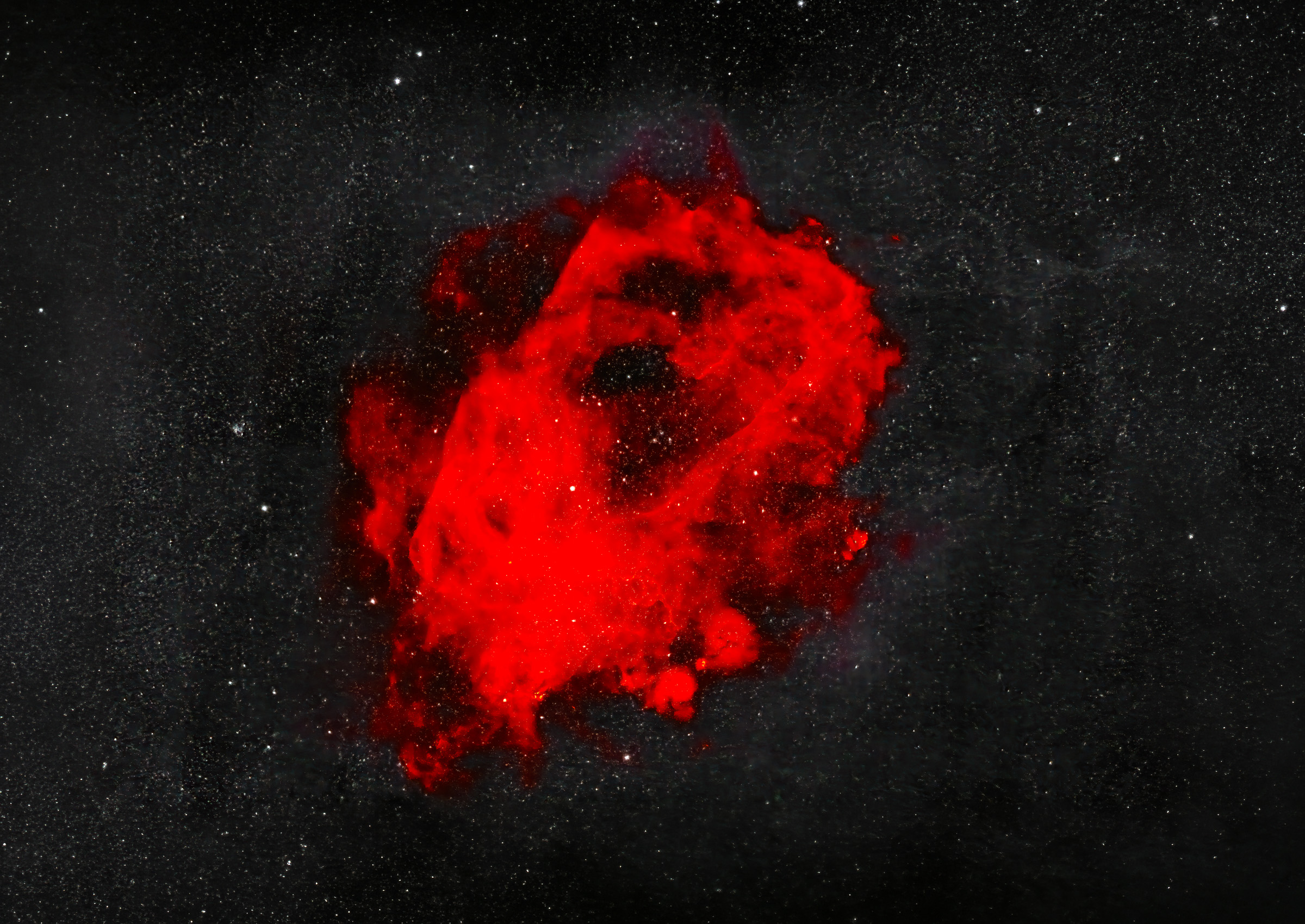
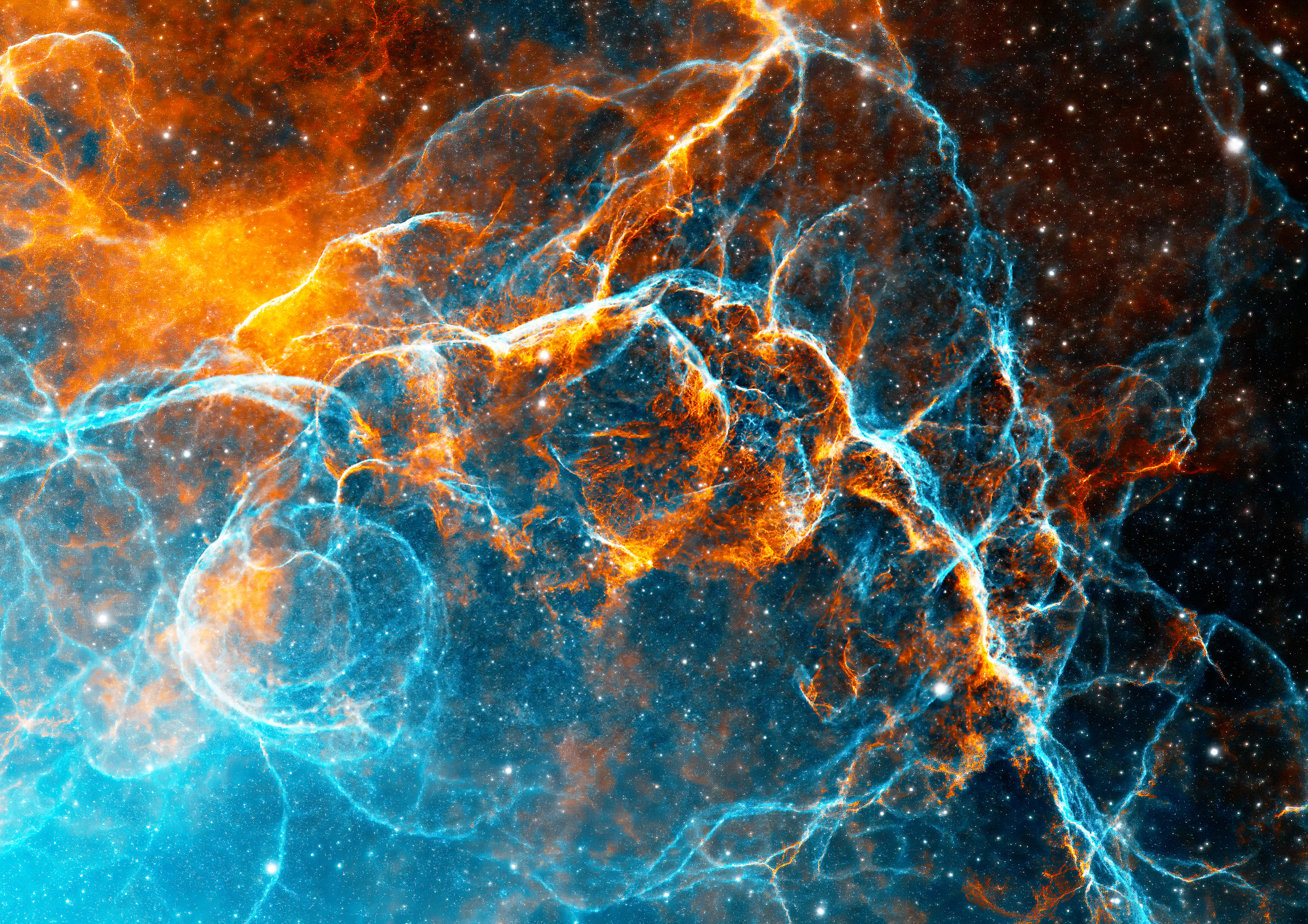
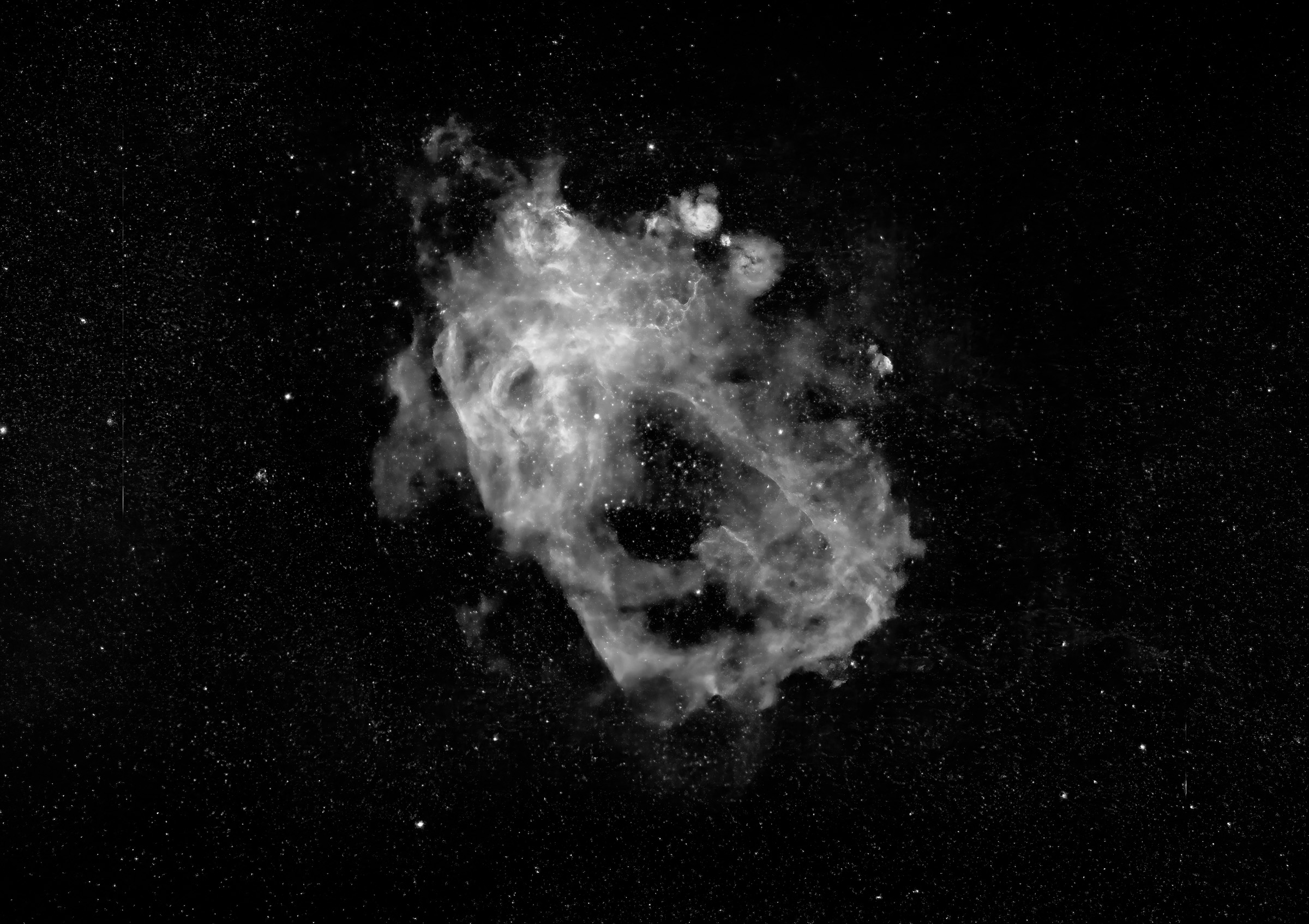
A supernova is the colossal, extremely bright explosion of a star at the very end of its lifetime. It is the largest explosion known to take place in space, capable of releasing more energy in just a few seconds than our Sun will emit over its entire 10-billion-year lifespan. For a brief period of weeks or months, a single supernova can outshine an entire galaxy containing billions of stars.
The four supernovae and remnants included here (Cygnus Viel, Gum12, Jellyfish, and SN2024ggi) are Type II Core-Collapse Supernovae which happen to massive stars that are at least 8 times the size of our Sun. Throughout its life, a star balances the inward pull of gravity with the outward pressure of nuclear fusion in its core. When the star runs out of nuclear fuel, the core cools and pressure drops. Gravity wins instantly, causing the core to collapse in less than a second into a neutron star or a black hole. The outer gaseous layers then crash into this ultra-dense core, rebounding outward in a massive shockwave.
Supernovae are critical engines for cosmic recycling and evolution, forging heavy elements like iron, calcium, and nickel, and hurling these newly created elements into interstellar space at up to 10% the speed of light.