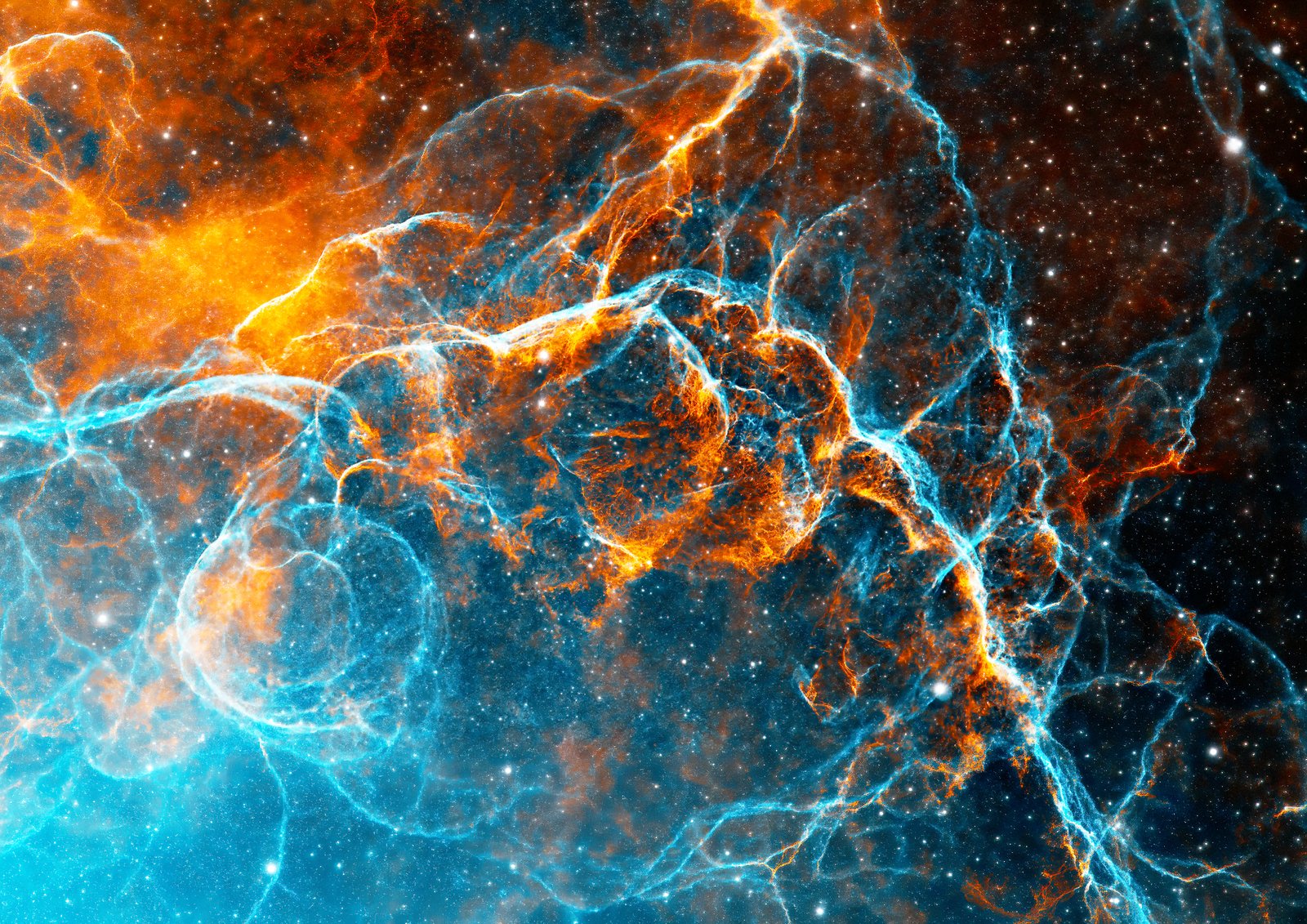
Click on image for larger view
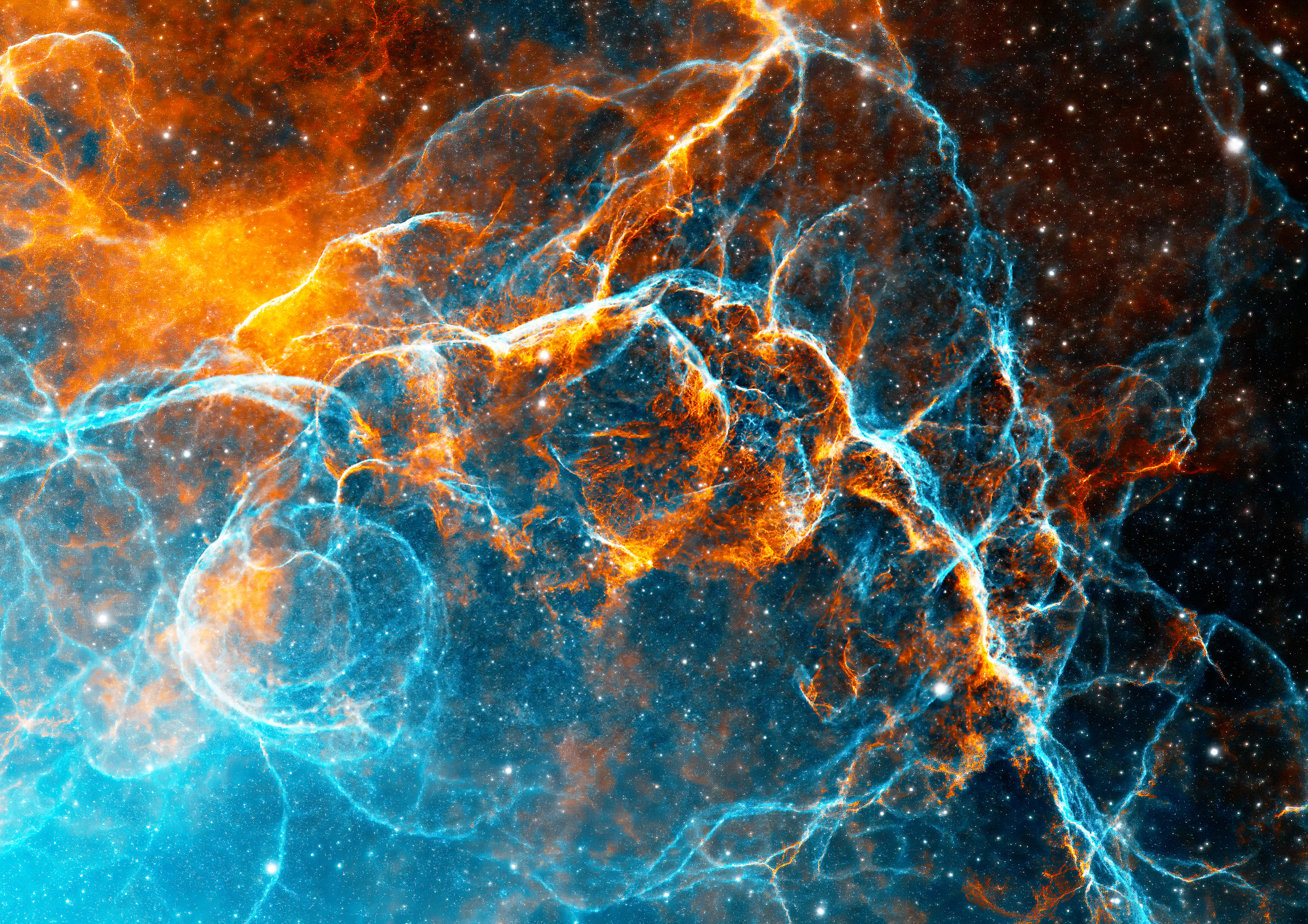
Colour image of Vela Supernova Remnant (SNR), Gum 16, (SNR G263.9-03.3), 700 light-years distant, the aftermath of a massive star that exploded 11,000 years ago; sits within Gum12.Collections: Southern Celestial Hemisphere - Supernovae _ VelaSNR
Click on image for larger view
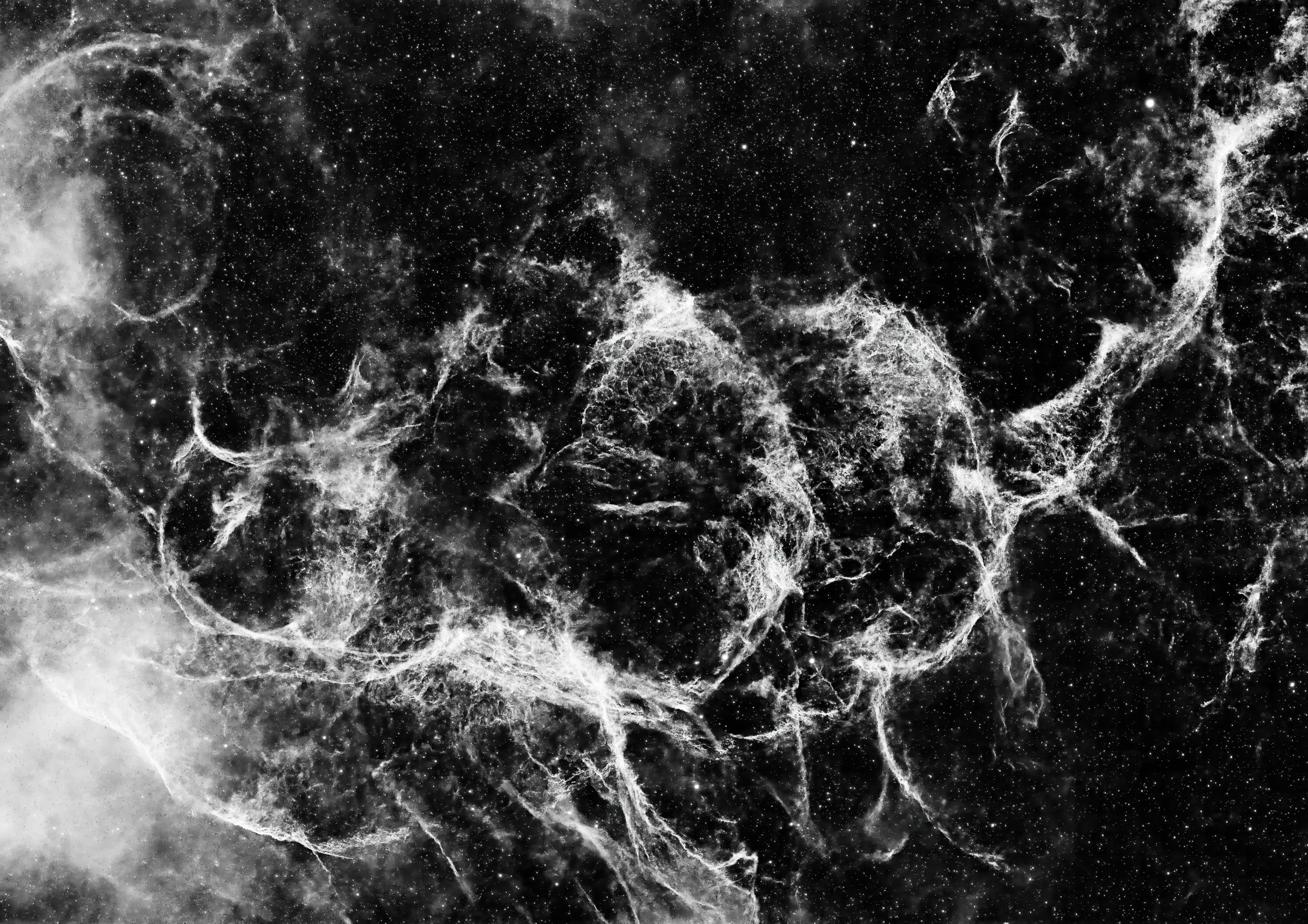
Monochrome image of Vela Supernova Remnant (SNR), Gum 16, (SNR G263.9-03.3). Collections: VelaSNR
Click on image for larger view
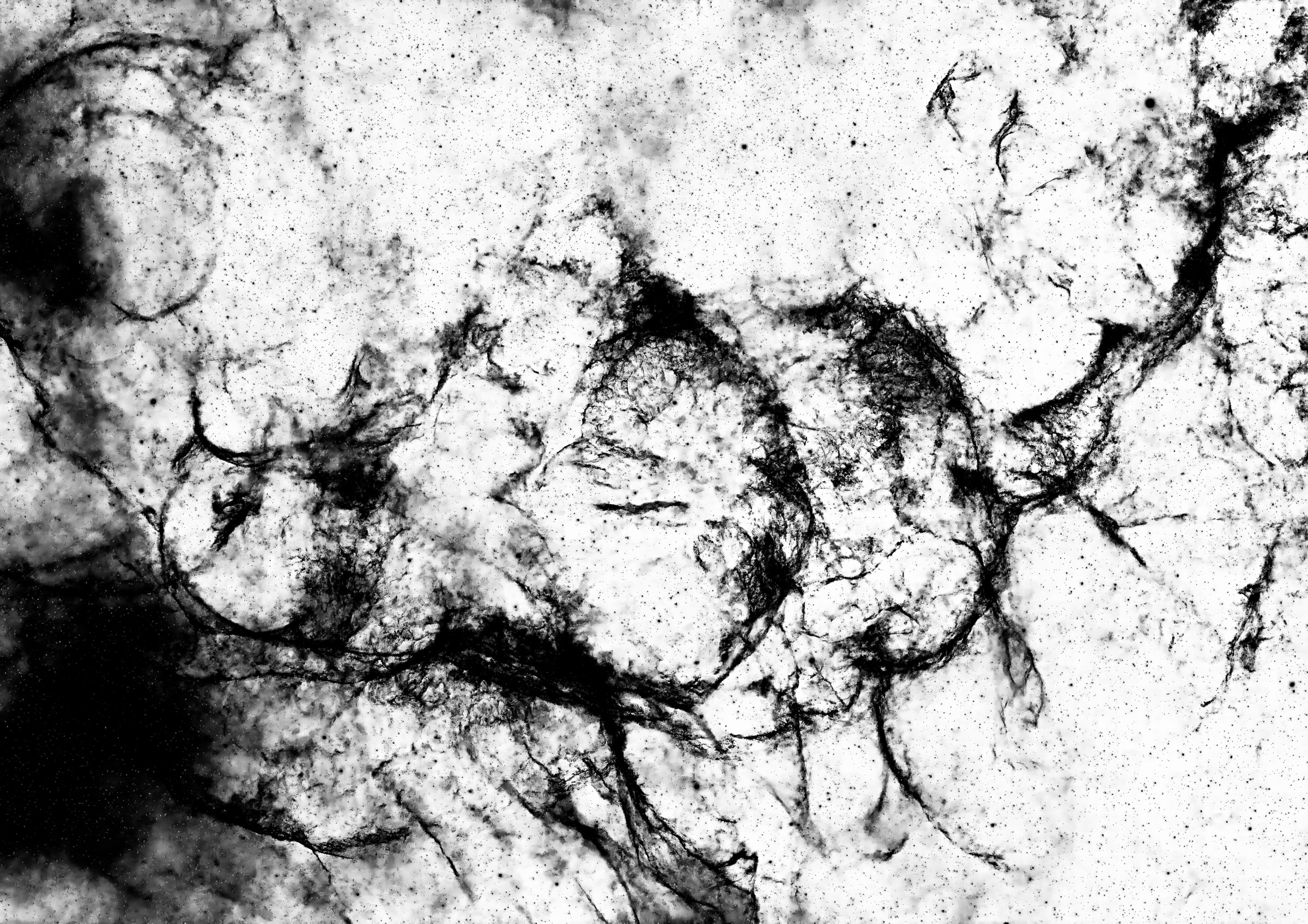
Inverted monochrome image of Vela Supernova Remnant (SNR), Gum 16, (SNR G263.9-03.3). Inverted with Adobe Photoshop. Collections: VelaSNR
Click on image for larger view

The Vela Supernova Remnant: While the initial blast wave from the core-collapse explosion roughly 11,000 years ago moved at millions of kilometres per hour (up to 10% the speed of light), it has slowed down significantly over the millennia to between 250,000 to 500,000 km/h. As the debris expands outward into interstellar space, it continuously plows into the surrounding gas and dust, creating a massive, glowing shell of shocked filaments that now spans nearly 100 light-years across.
Click on image for larger view
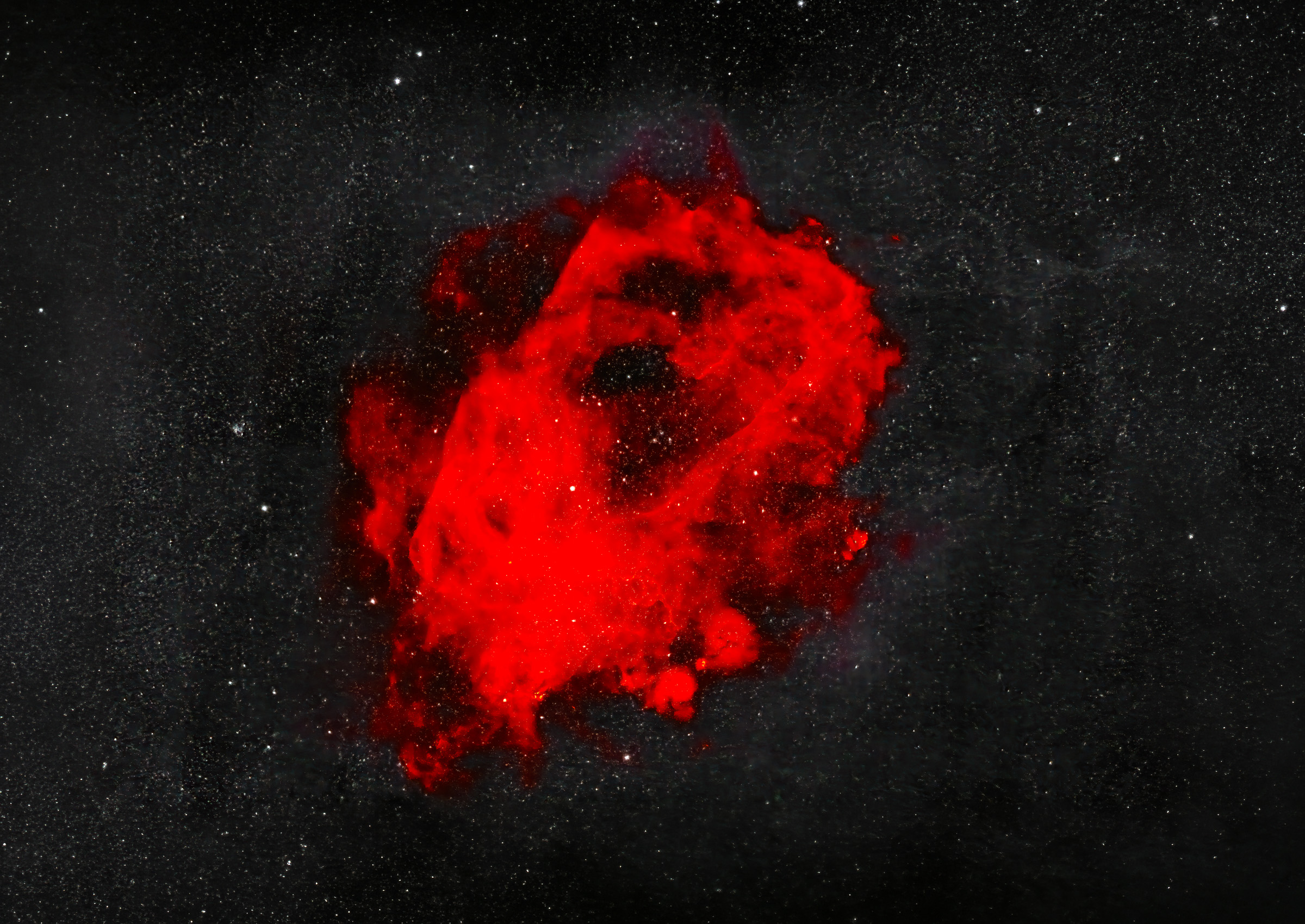
Colour image of Gum Nebula (Gum 12), a vast emission nebula spanning 36° in the night sky, 1,000 light-years across, 1,500 light-years distant, believed to be a million-year-old expanding supernova remnant. Contains Gum 16 (the Vela Supernova Remnant). Collections: Southern Celestial Hemisphere - Supernovae
Click on image for larger view
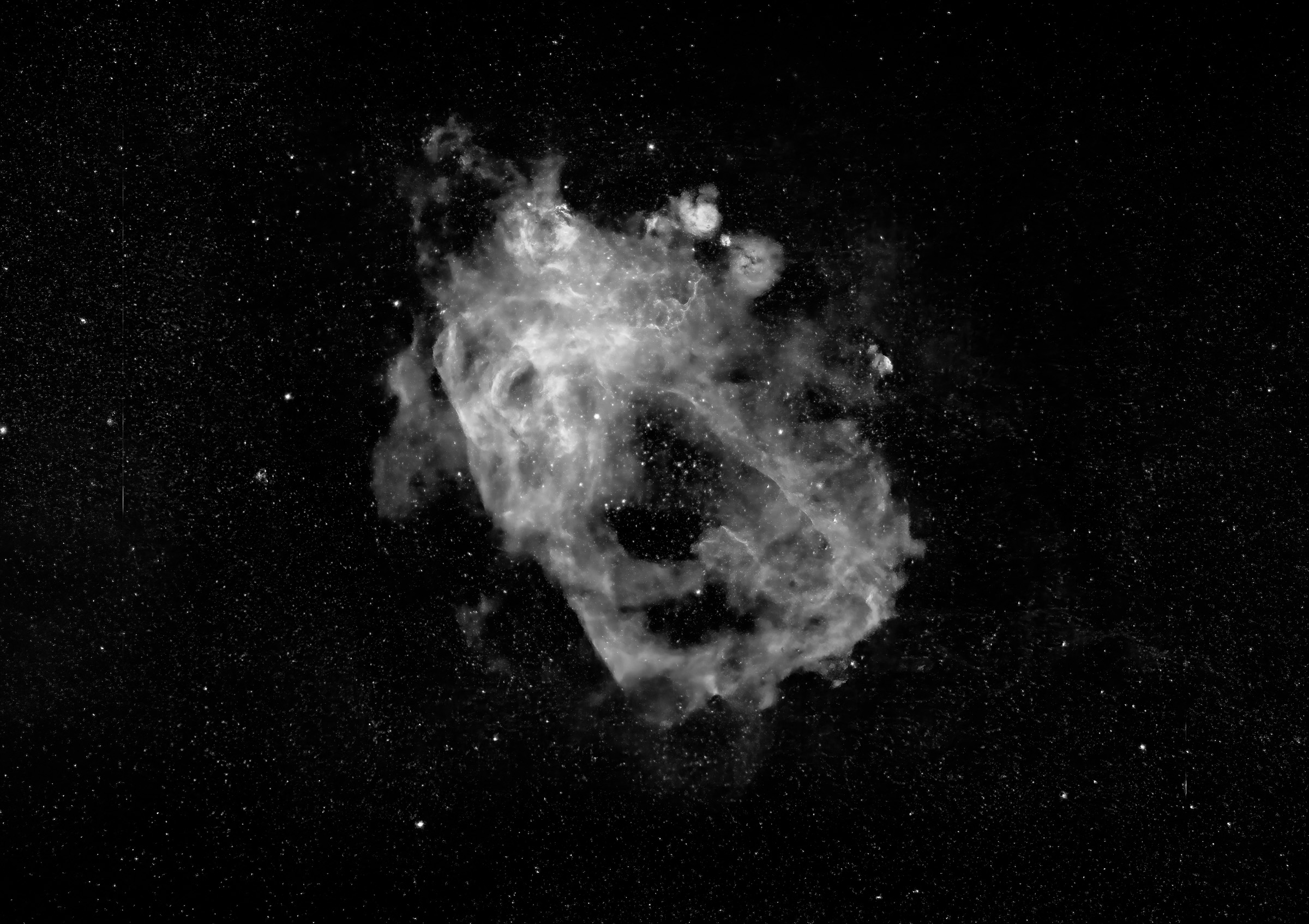
Monochrome image of Gum Nebula (Gum 12), containing Gum 16 (the Vela Supernova Remnant). Collections: Supernovae
Click on image for larger view
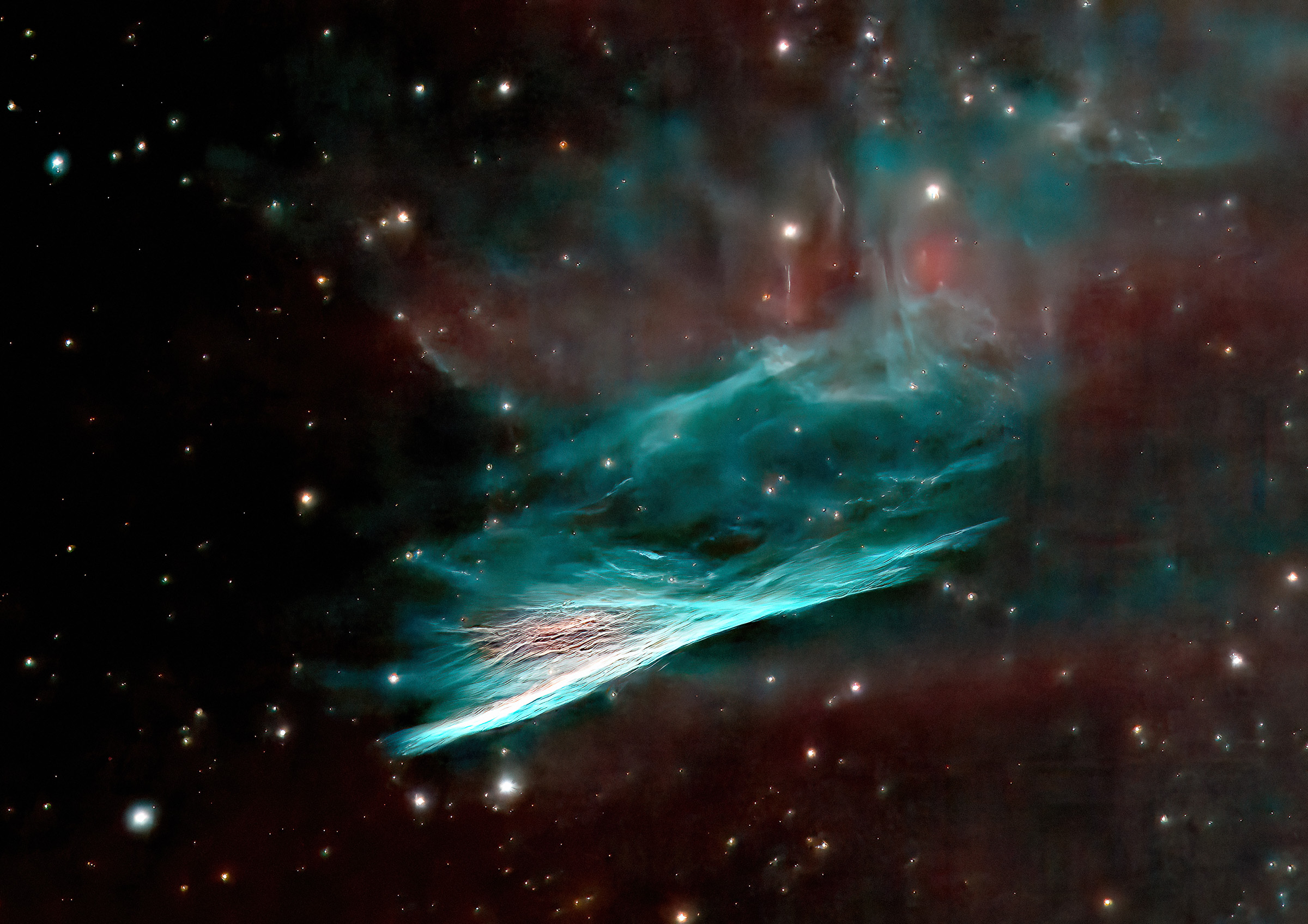
Colour image of Pencil Nebula (NGC 2736), moving at 180km/s, 815 light-years distant, part of the larger Vela Supernova Remnant. Collections: VelaSNR
Click on image for larger view