
Click on image for larger view
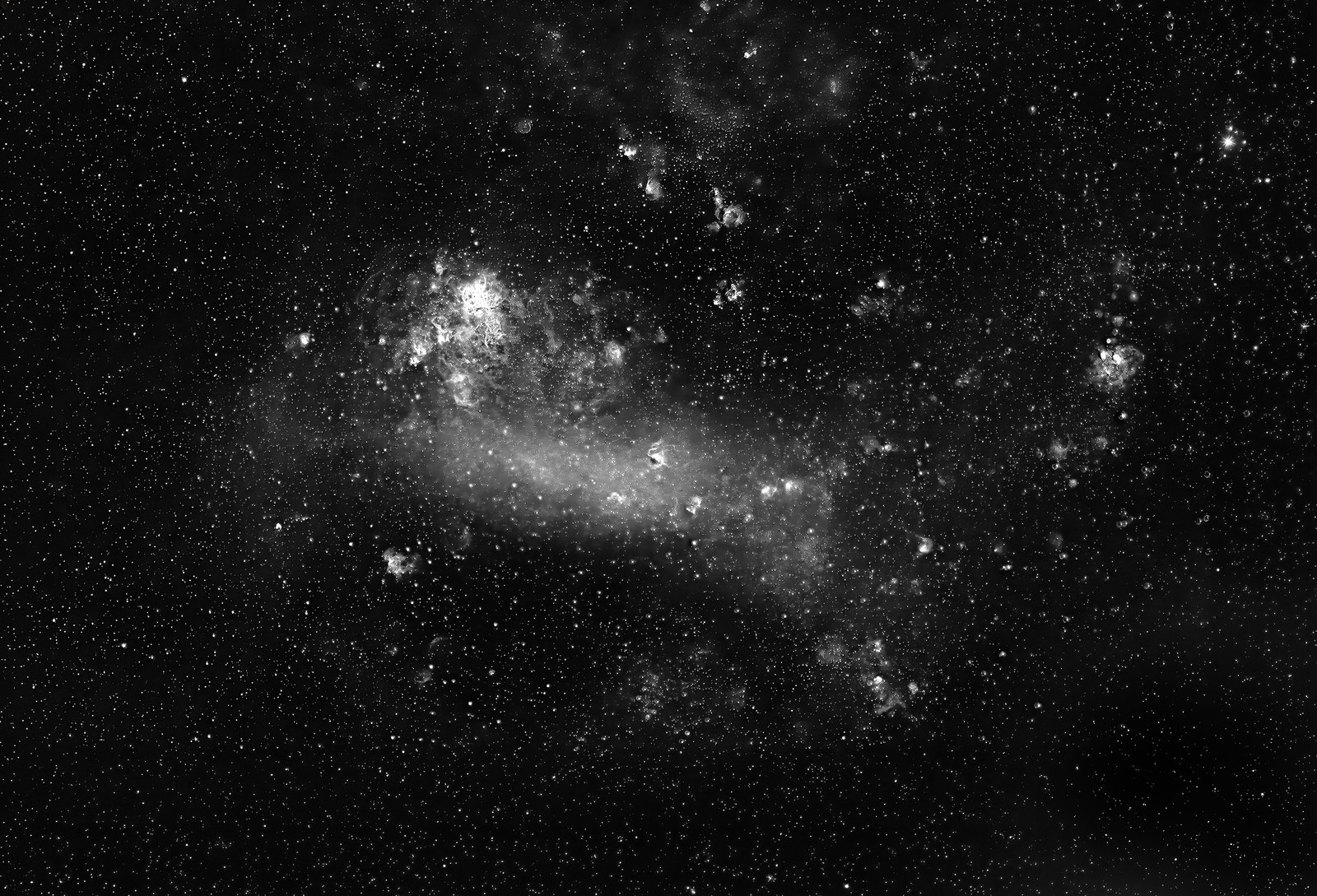
Our closest cosmic neighbor stripped down to its core elements. This monochrome presentation of the Large Magellanic Cloud (LMC) isolates the raw structural dynamics of this irregular satellite galaxy. By removing color, the central barred stellar structure and the churning hyperactive nurseries of the Tarantula Nebula (top left of LMC) stand out with exceptional clarity.
Click on image for larger view
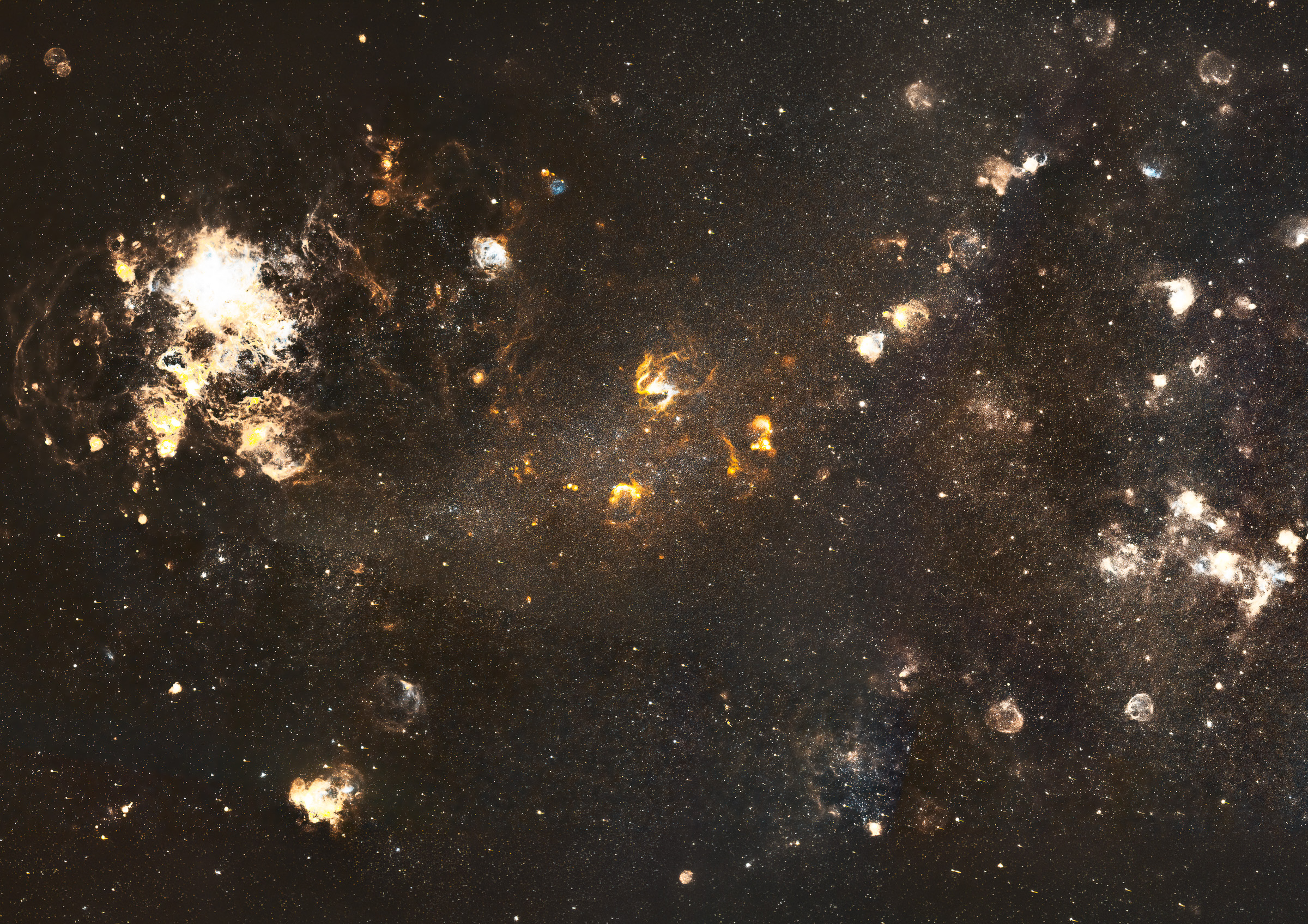
Colour mosaic image of Large Magellanic Cloud captured with Redcat 71. Collections: LMC _ Southern Celestial Hemisphere
Click on image for larger view
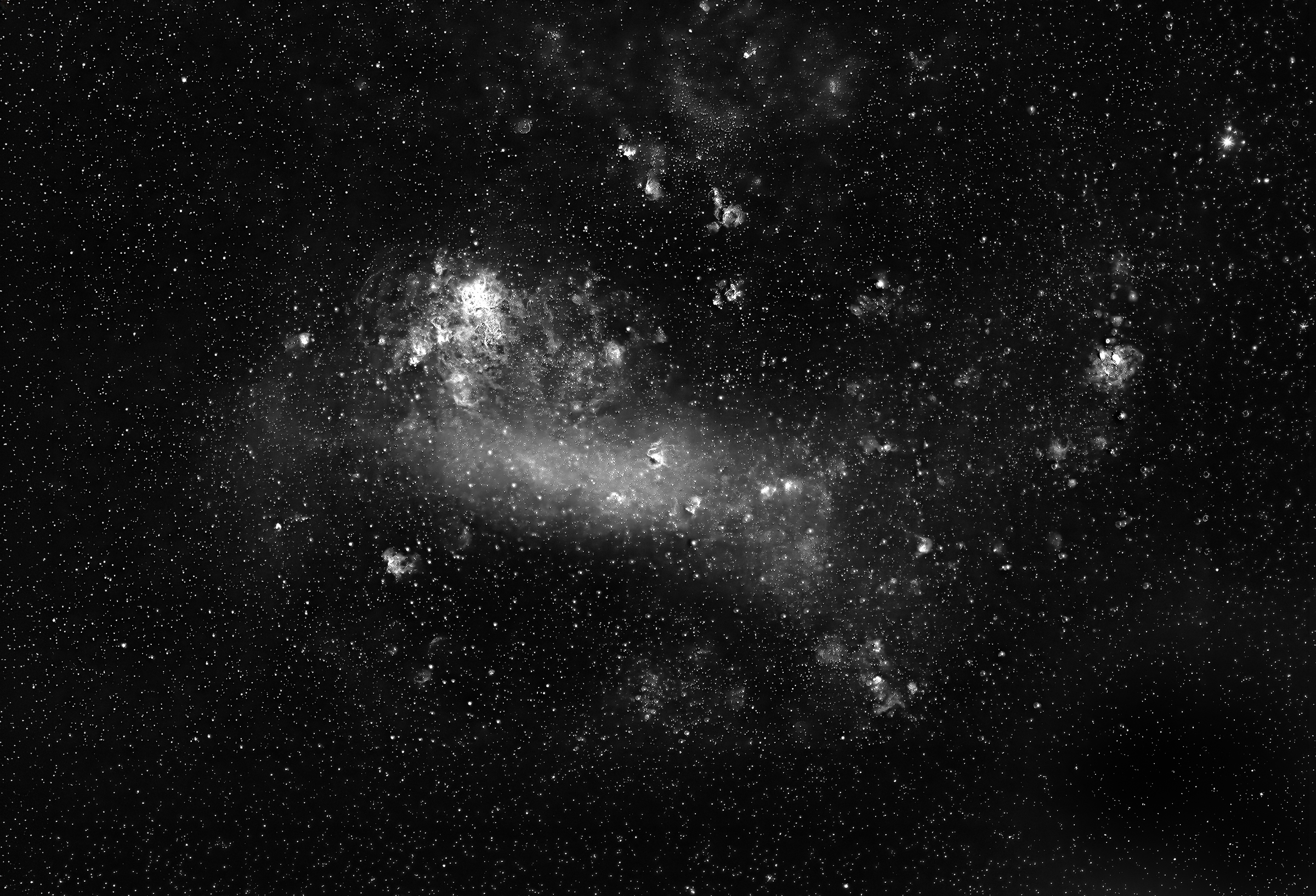
Monochrome image of Large Magellanic Cloud captured with Sigma 85mm lens, Ha filter and ASI 2600mm camera. Collections: LMC _ Southern Celestial Hemisphere
Click on image for larger view
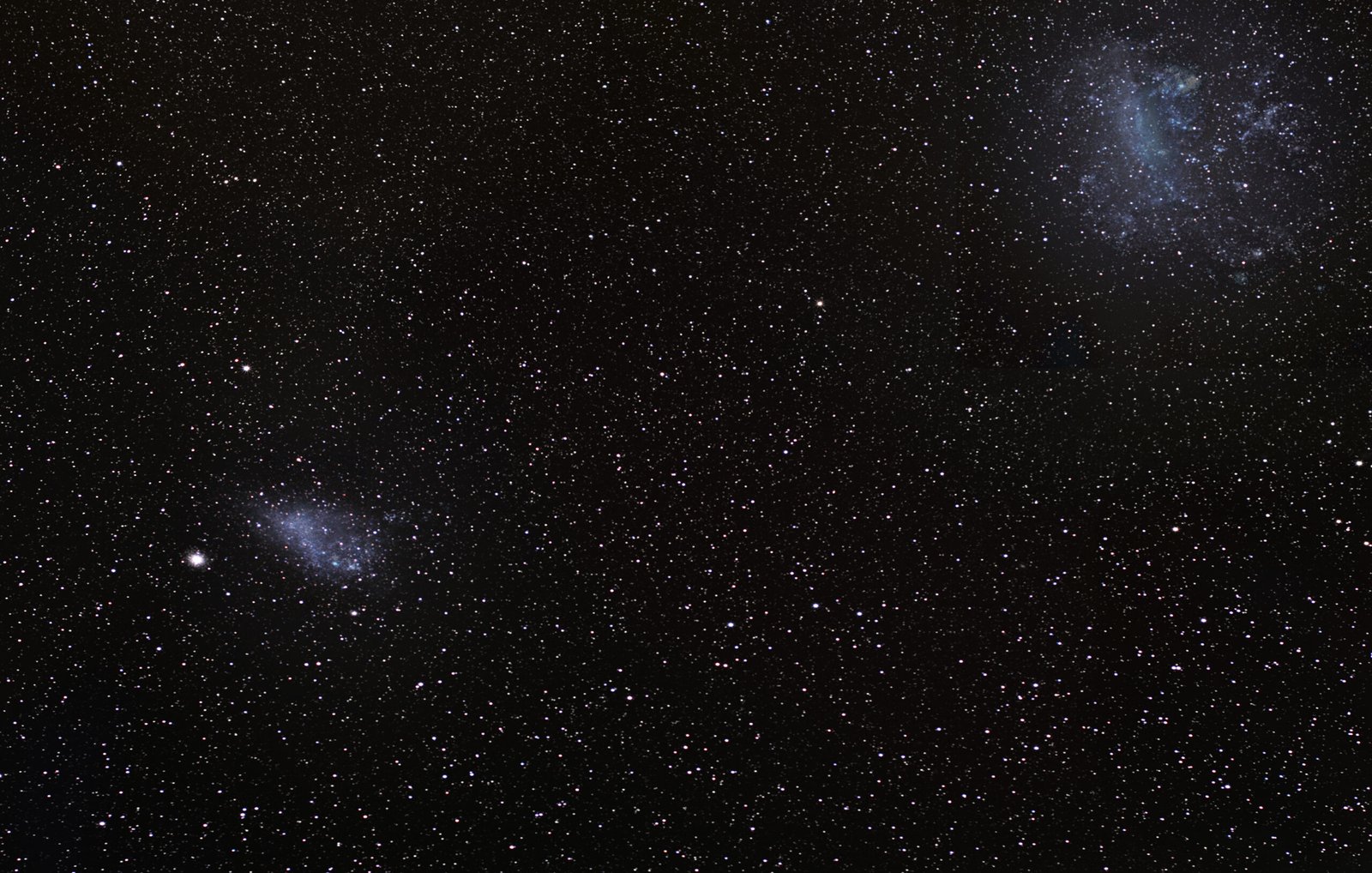
The dynamic duopoly of the southern sky. Framed together in a single ultra-wide perspective, the Large and Small Magellanic Clouds stand as the Milky Way's most prominent satellite galaxies. Located roughly 160,000 and 200,000 light-years away respectively, this deep-sky capture highlights their irregular cosmic structures and the vast intergalactic gap between them
Click on image for larger view
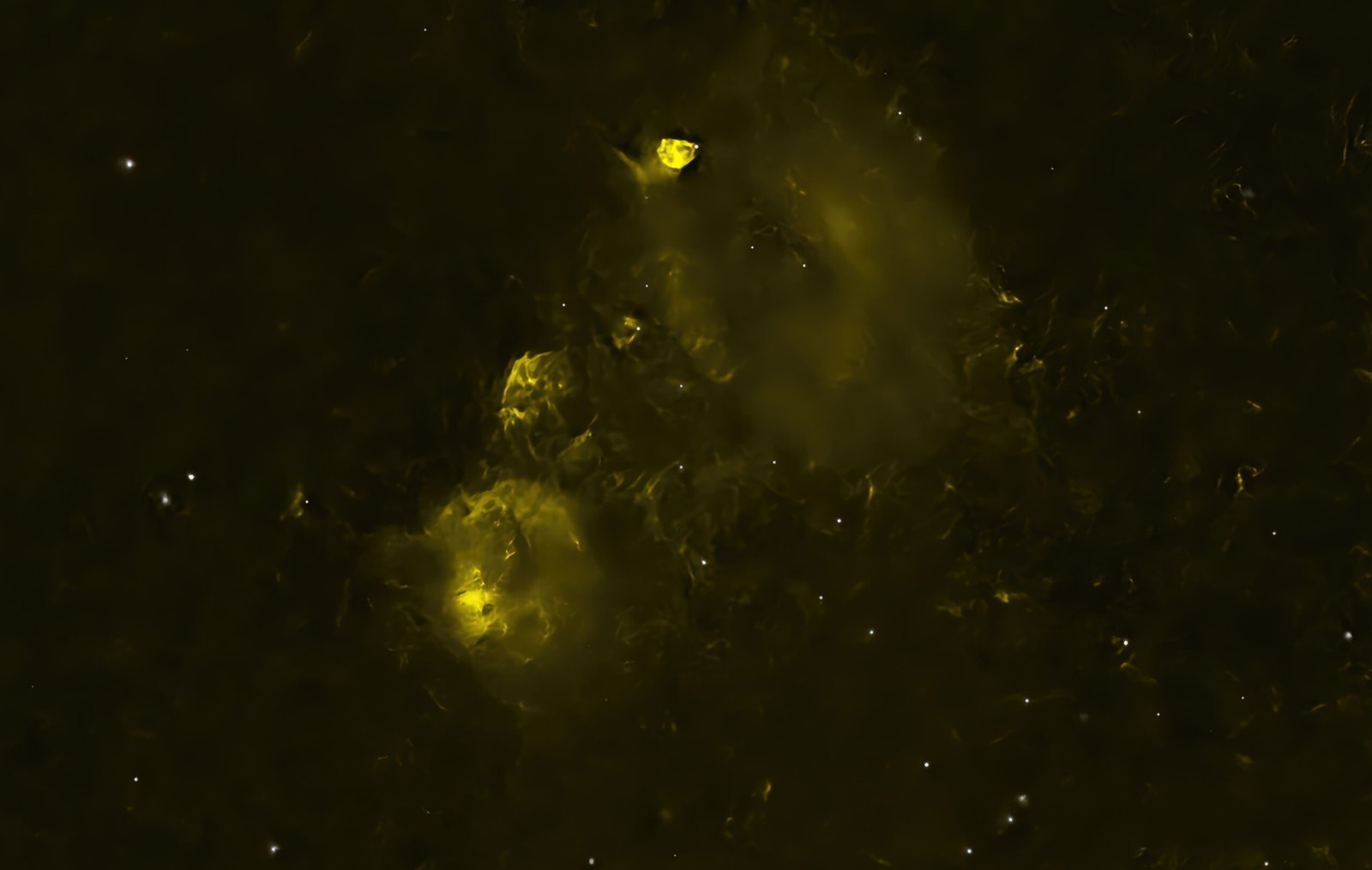
Astrophotography of the LHA 120-N138 complex within the Large Magellanic Cloud, showing the larger NGC 1949 structure in the top right and the smaller DEM L179 nebula in the bottom left against a dense star field.
Click on image for larger view
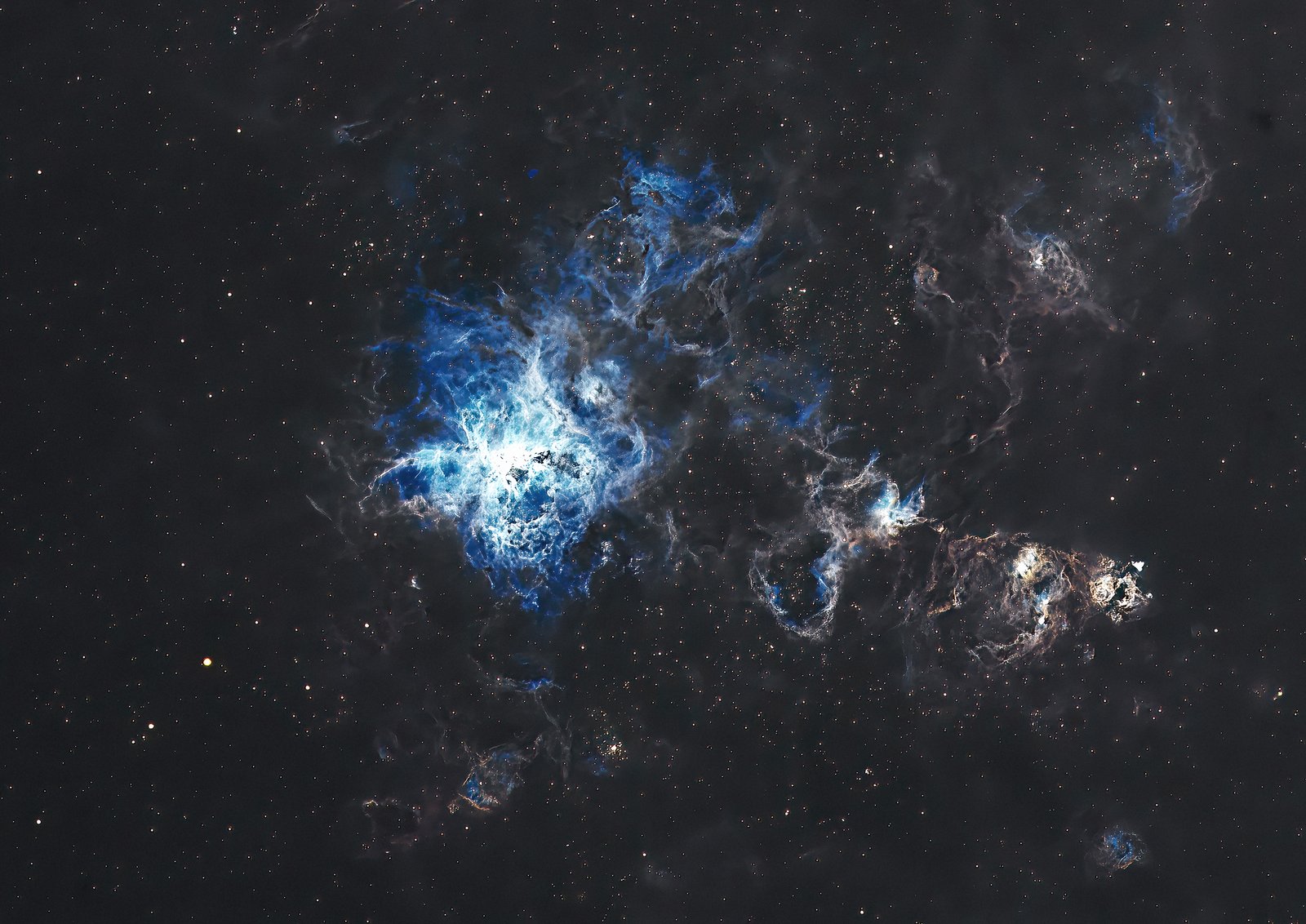
Nestled in the Large Magellanic Cloud, this wide-field view of the chaotic Tarantula Nebula spans hundreds of light-years. Drifting into the smoky gas layers just to the top right of the intense central cluster, a clever observer can spot the sharp, triangular profile of a fox's face peering through the dark lanes.
Click on image for larger view
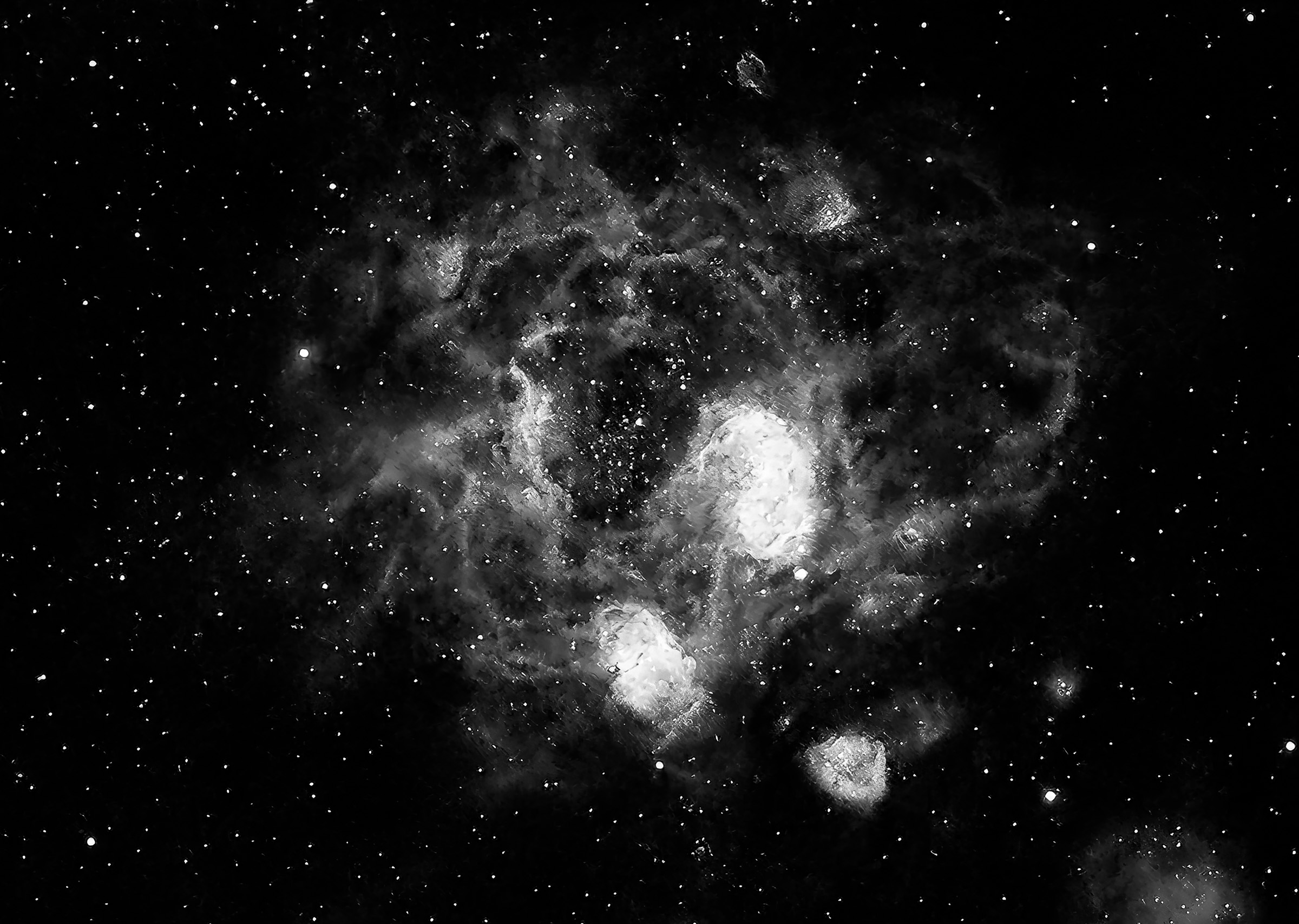
Monochrome image of Bean Nebula (NGC 1763), a stellar nursery 163,000 light-years distant in the Large Magellanic Cloud. Collections: LMC _ Southern Celestial Hemisphere
Click on image for larger view
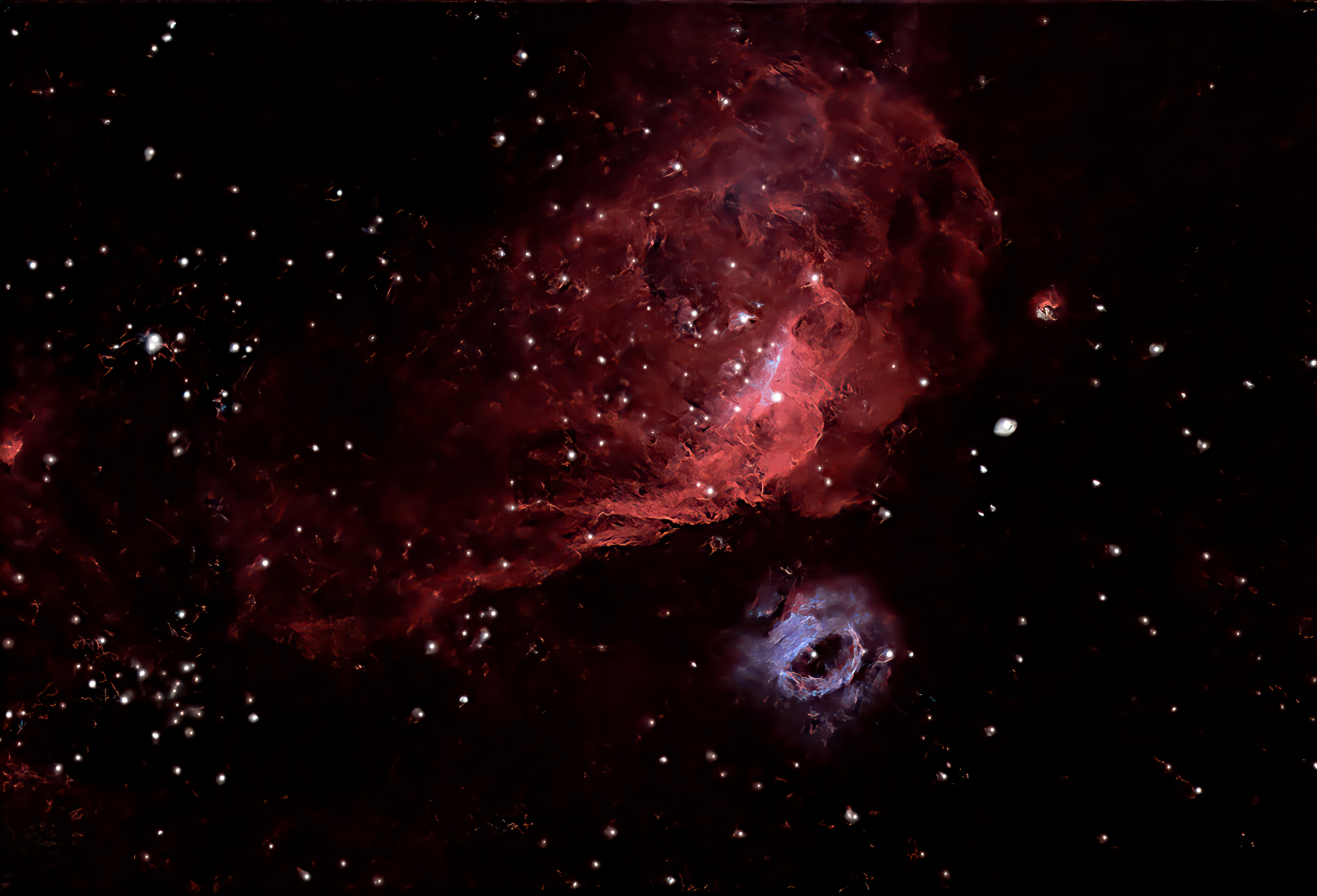
Cosmic reef, with giant red nebula (NGC 2014) and smaller blue nighbour (NGC 2020), 160,000 light-years distant in Large Magellanic Cloud. Collections: LMC _ Southern Celestial Hemisphere
Click on image for larger view
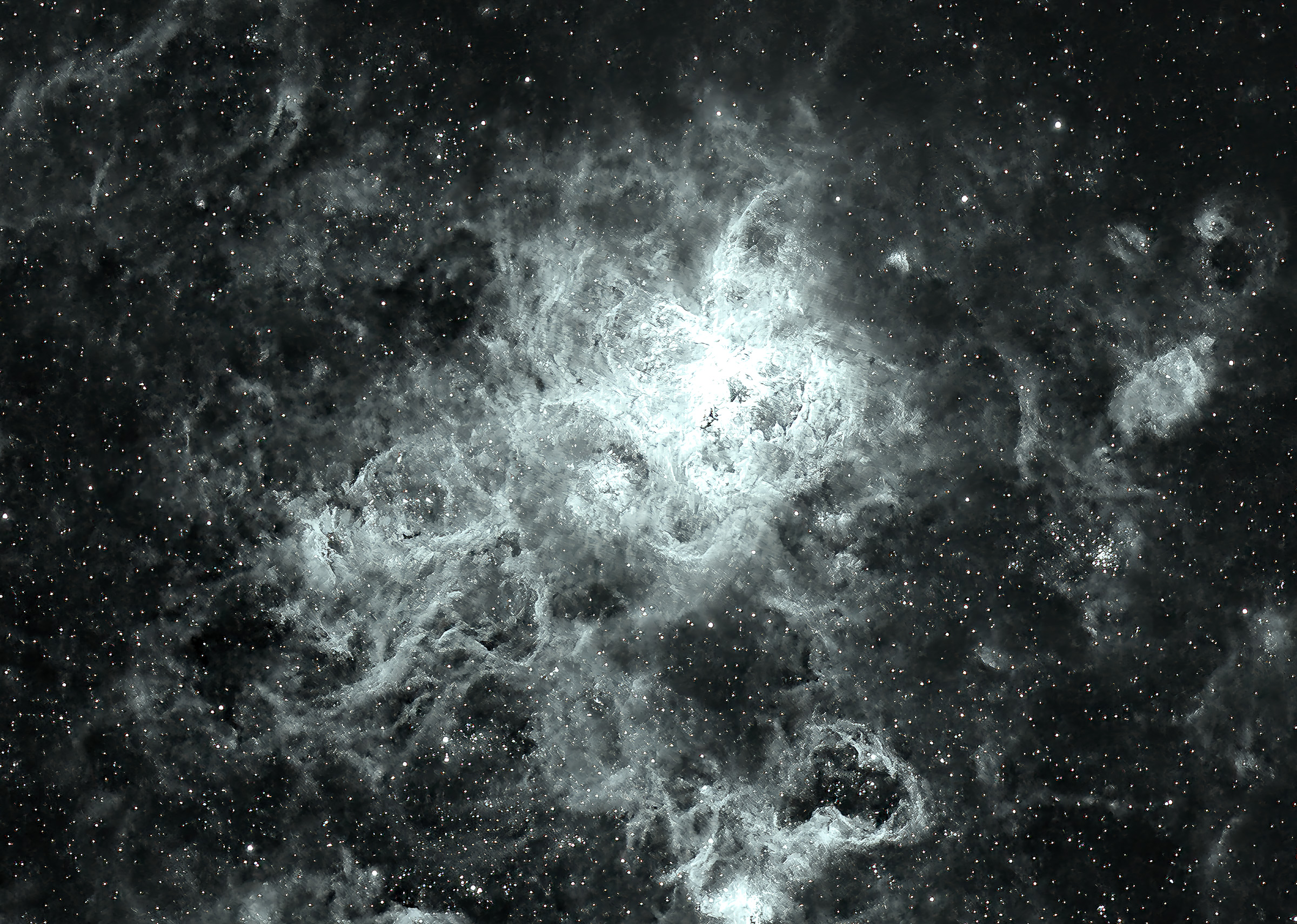
Monochrome image of Tarantula Nebula (NGC 2070), the most active starburst region in the local universe; only about 2 million years old. Collections: LMC